

















Strikes and rallies are planned over rising living cost and the shift of public funds to arms. Unions are demanding wage increases in line with inflation; while dockworkers in 17 countries are mobilising against the war.
Strikes are planned across Italy on Friday, with widespread disruption expected as trade union Unione Sindacale di Base called on both public and private sector workers to strike, mobilise and protest, including at a major demonstration in Rome.
 ADVERTISEMENT
Renewed student protests are also expected to return to the street in major cities across Italy.
Meanwhile, the Cobas unions, together with Adl, Clap and Sial, have also called for a general strike across the public and private sectors, excluding transport.
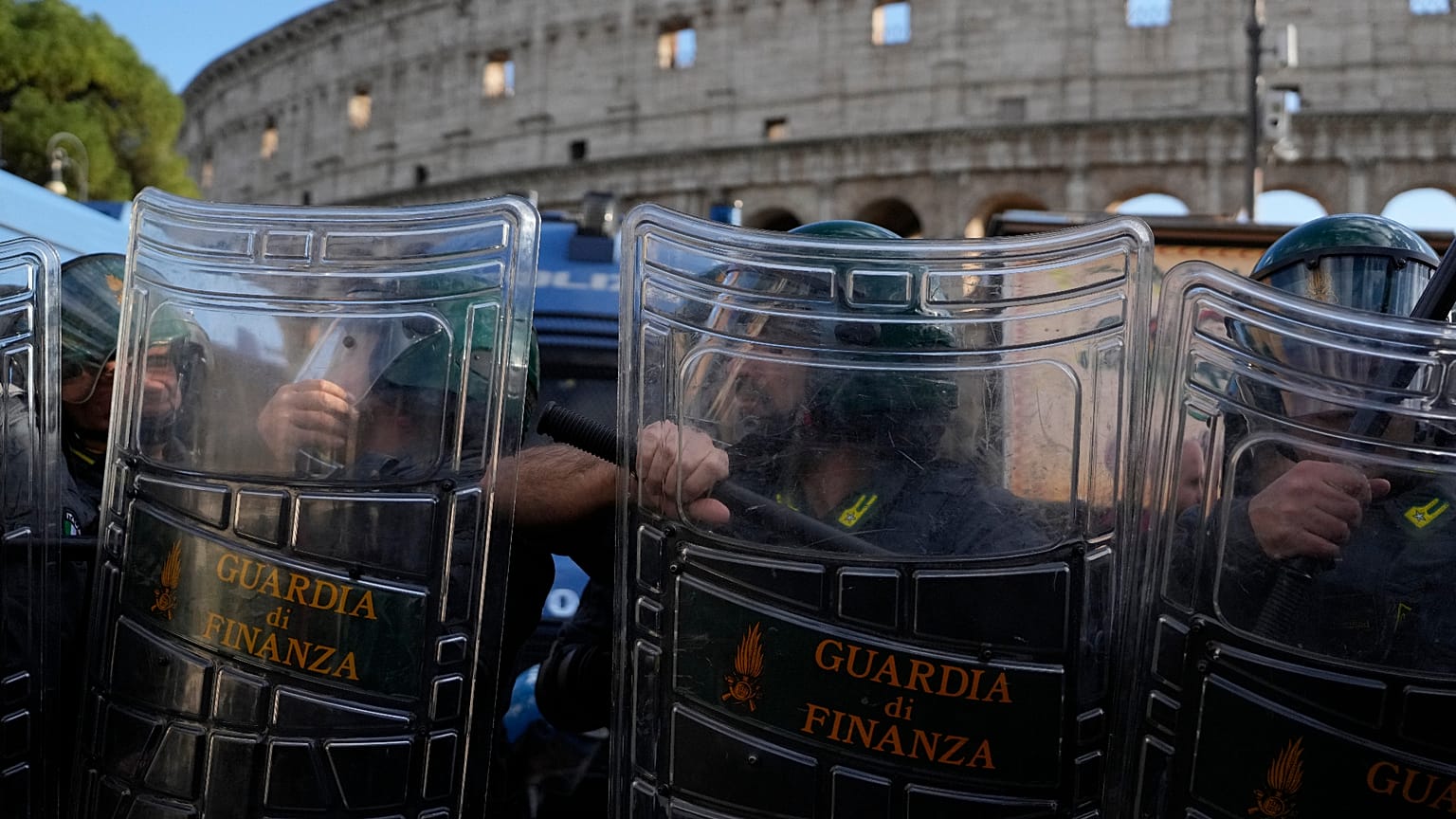
The strike will also be a new test for public order, as students are set to return to the streets in all the main cities across Italy.
Friday's protests are directed against the rising cost of living, which unions say makes it increasingly difficult for people to cover essential expenses, as well as military spending.
Rail services are expected to be disrupted from 21:00 on Thursday until 20:59 on Friday, while the strike in air transport is expected to last for the entirety of Friday.
In local public transport, the impact will vary from city to city. The strike is also expected to affect taxi services throughout Friday, while motorway staff will begin their strike in the evening on Thursday.
Also on Friday, dock workers will mobilise globally against arms trafficking, rearmament policies and the militarisation of ports.
The action has been organised by several unions, including USB in Italy, the CGT in France and other trade union organisations in Greece, Turkey, Morocco and the Basque Country.
According to the organisers, workers from more than 100 ports in 17 countries and four continents have joined the mobilisation.
In Italy the protests will affect, among others, the ports of Genoa, Livorno, Trieste, Civitavecchia, Ancona, Ravenna and Gioia Tauro.
What are unions demanding?
Among USB's key demands is for wages to rise in line with the cost of living, including through the reintroduction of the "scala mobile", a mechanism previously used to automatically adjust wages in line with inflation.
The union is also calling for measures to bring down the costs of essential goods, household bills and rents, and for a reduction in VAT on basic necessities.
According to USB, the government is allocating too many resources to military spending, while funding for health care, education and other public services remains inadequate.