


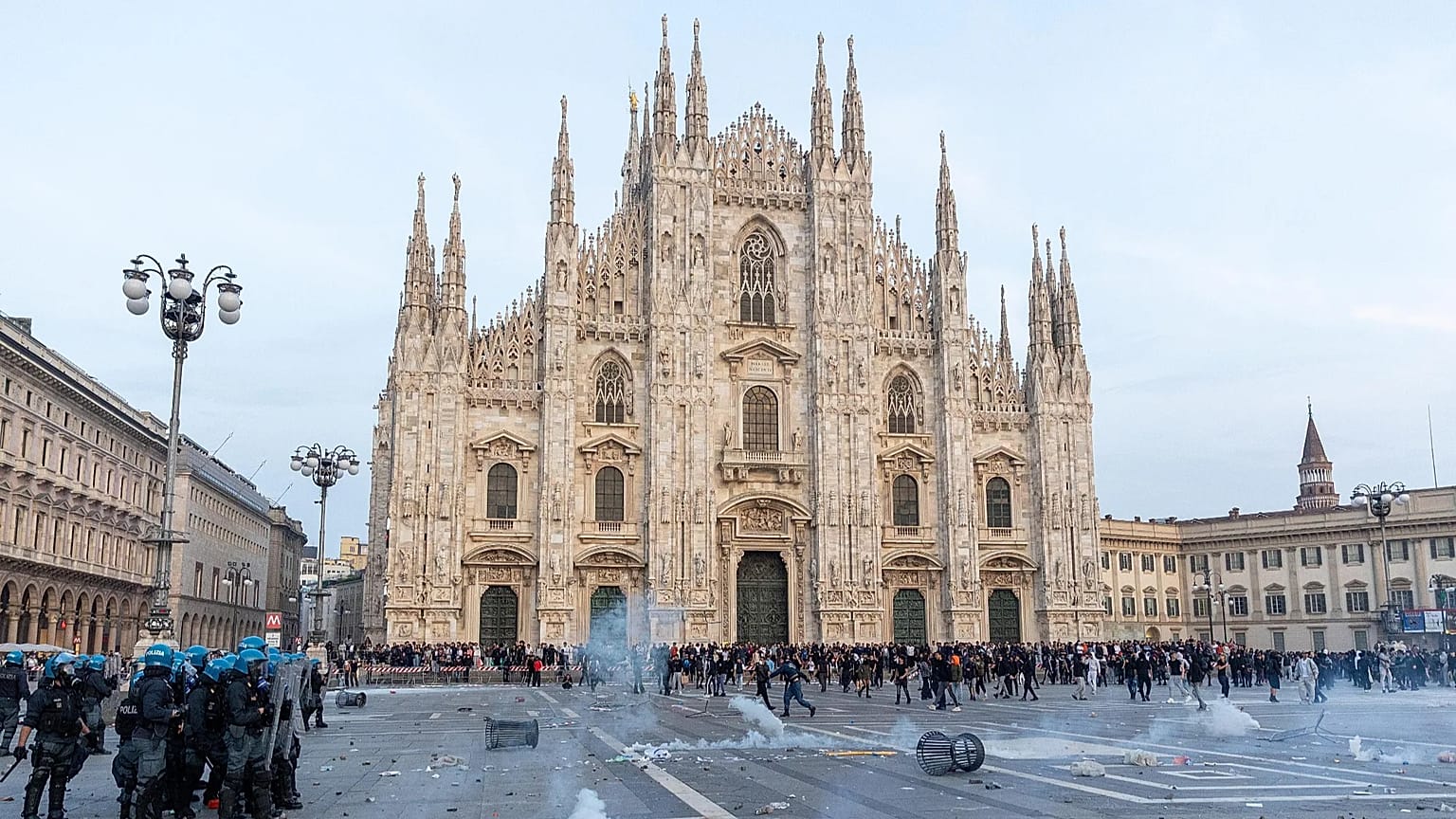


Meloni said nearly 200 police officers had been injured and 330 people detained, around half of whom she said were of "foreign origin".
Italy approved the deployment of an additional 500 troops to Milan on Tuesday following violent clashes at protests over the rising cost of living.
 ADVERTISEMENT
Demonstrations turned violent over the weekend in several Italian cities, including Milan, Turin and Bologna. Protesters clashed with police, while shops were looted and property damaged.
However, the cabinet stopped short of granting soldiers additional policing powers, reportedly following opposition from President Sergio Mattarella.
The deployment forms part of the government's new Public Security Decree, which introduces tougher measures targeting violent protests and juvenile crime.
"Destroying and stealing is not protest, it is crime, and the state's response must be firm," Prime Minister Giorgia Meloni said in a video posted on X after the cabinet meeting.
What does Italy's new security decree include?
The decree presumes that minors aged 14 to 18 can be held criminally responsible unless proven otherwise. Under the Rocco Code, the opposite applies: a minor's ability to understand their actions and their consequences must be established.
It also extends the use of "delayed arrests" to minors and allows judges to impose precautionary measures on those over 16, even if these disrupt ongoing educational programmes.
Another provision creates a new offence of "violent participation in public demonstrations", targeting people in groups of more than five who unlawfully use potentially harmful objects in a way that poses a concrete danger.
The Justice Ministry has also extended the use of delayed arrests under Article 382-bis of the Code of Criminal Procedure to offences including devastation and looting, attacks on public utility facilities, violent participation in demonstrations and group-related property damage.
The decree also makes prosecution automatic in all cases involving injuries inflicted on judicial police or public security officers. Currently, such offences are prosecuted automatically only in aggravated cases.
Justice Minister Carlo Nordio said people who organise groups for violent demonstrations, including through social media, could face four to 12 years in prison under a new offence.