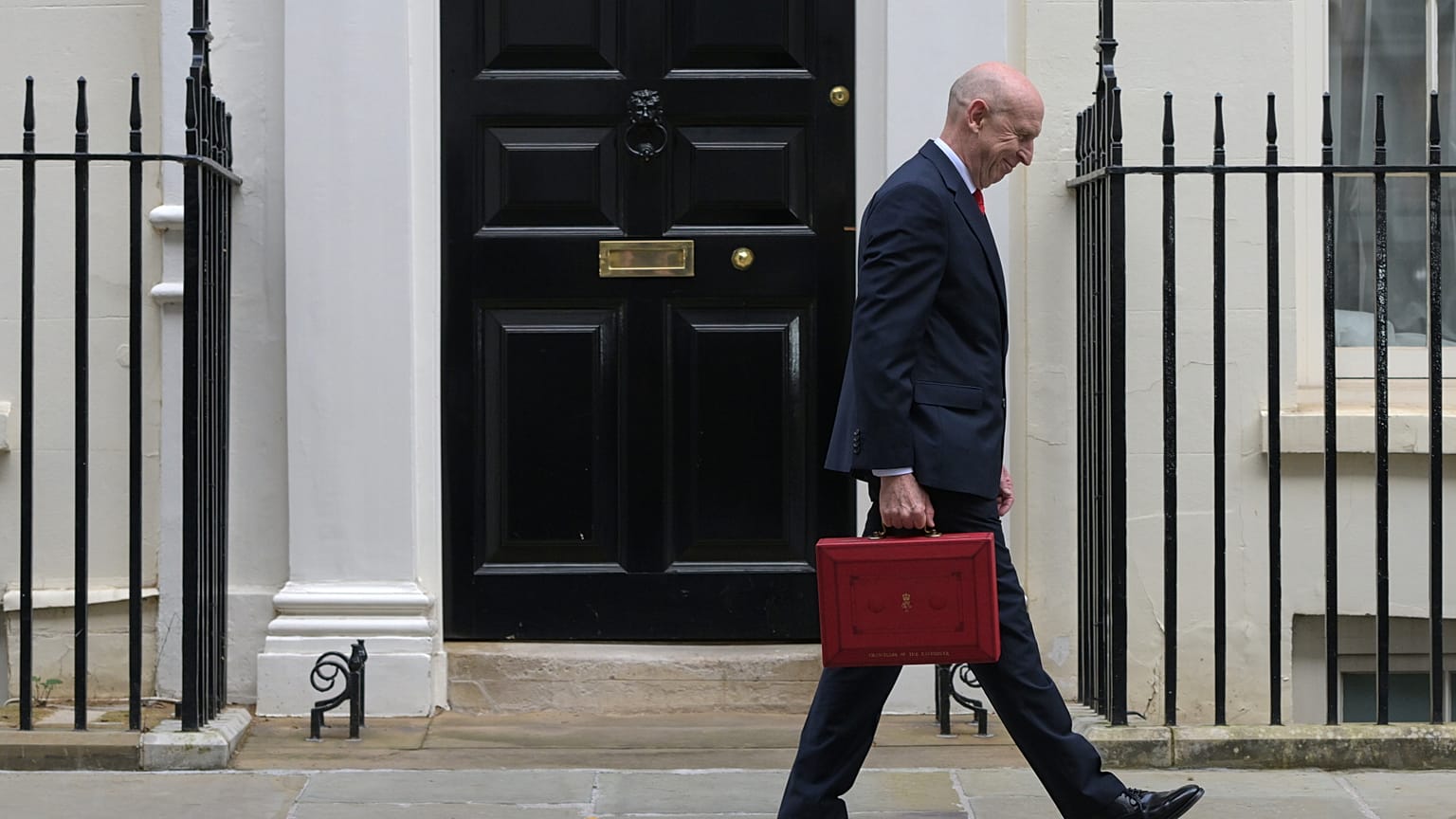













The UK's new Chancellor, John Healey, has delivered his first Budget in the role. Here's five key takeaways from his speech.
Britain's economy will grow slightly faster than forecast this year before slowing in 2027, finance minister John Healey said on Wednesday as he presented the government's annual budget.
 ADVERTISEMENT
Gross domestic product (GDP) is estimated to grow by 1.2% in 2026, Healey said, up from a government estimate of 1.1% issued shortly after the start of the US-Iran war.
He told parliament that GDP growth would slow to 1.0% next year, down from the 1.6% growth forecast for 2027 by Labour in early March.
Here are some of the key takeaways from his speech:
UK to lift tax rate on bank profits
Britain's Labour government will increase a surcharge on profits earned by banks operating in the country to help offset soaring energy bills.
The additional corporate tax rate will double to 6% to finance a one-off subsidy to millions of households struggling with higher energy costs, Healey told parliament.
Energy support to households
The Chancellor said the government would hand out a direct payment of £100 to 20 million households to help with soaring energy bills.
The measure is designed "to take the pressure off in the coldest months and see people through to the spring", Healey said, as gas and electricity prices surged largely because of the Middle East conflict.
First-time buyer ISA changes
Healey announced that a First-Time Buyer ISA will replace the Lifetime ISA.
He also said the changes to the ISA penalty would mean buyers would receive at least their original contributions back if the property costs more than the purchase limit.
“For every young person who is working hard, saving what they can, and dreaming of their first home, I’m taking action.
“I’m announcing that a first-time buyer ISA will replace the lifetime ISA. From today, I’m dealing with the ISA penalty, so that if the home you want costs more than the limit, you will get back at least what you put in,” he said.
Adjusted triple lock and new care service
The chancellor confirmed changes to the triple lock, a measure that ensures the value of the state pension rises each year in line with whichever is highest: inflation, average wage growth or 2.5%, and the creation of a new national care service.
“This will save £15bn a year by the end of the 2030s, £50bn by 2050,” he said.
A rising state pension and a national care service would work together to support older people when they needed it, “taking the burden off families, taken the burden off our NHS,” Healey added.
Business rates to be retained locally
Healey further outlined plans to devolve tax revenues, calling it a "roadmap to fiscal devolution".
He announced that "100% of business rates will be retained locally by the end of the decade".
"From next year, 20% of business rates revenue will go to mayors," he said, and from 2028 "a share of income tax receipts will go to mayors as well".