




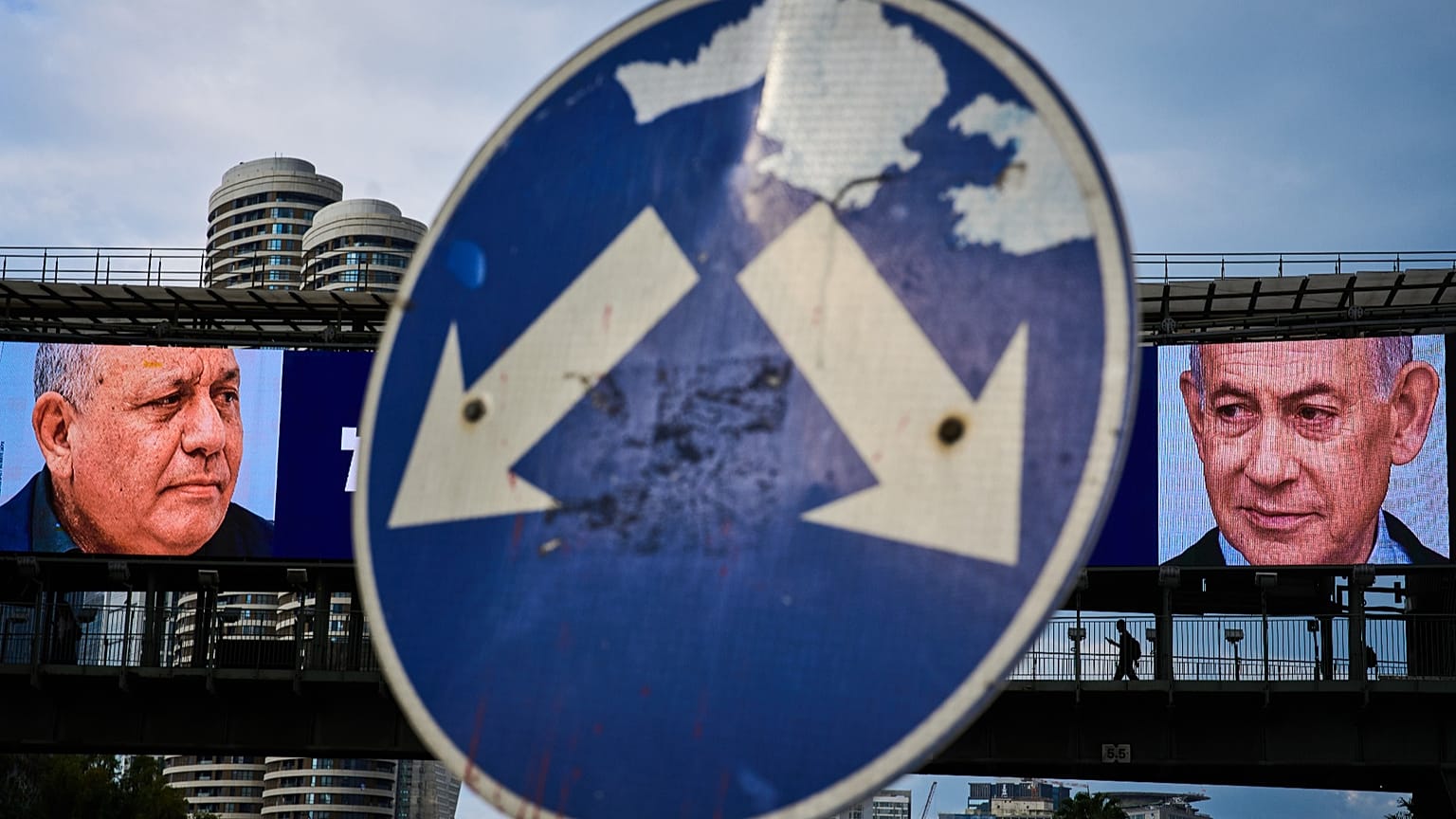














Israel's upcoming legislative election could reshape the country's political future amid deep divisions over Benjamin Netanyahu's leadership. Former government spokesperson Eylon Levy tells Euronews what is at stake and why another war with Iran may be imminent.
As Israelis prepare to vote in Tuesday's parliamentary election, questions over Prime Minister Benjamin Netanyahu's political future remain central to the campaign, alongside national security, accountability for the 7 October 2023 attacks and the consequences of three years of war.
 ADVERTISEMENT
Former Israeli government spokesperson Eylon Levy told Euronews that the debate over whether Netanyahu should remain prime minister has become the defining fault line in Israeli politics, making cooperation between parties increasingly difficult.
"The question of whether he should or shouldn't be prime minister has contaminated, frozen, poisoned Israeli politics for a decade now," Levy said.
"Like him or loathe him, he really is a once-in-a-century kind of leader," he added.
Netanyahu, Israel's longest-serving prime minister, faces questions over the responsibility for the security failures surrounding the Hamas-led attacks of 7 October 2023, while his ongoing criminal trial remains another source of political division.
Levy suggested that Netanyahu's eventual departure could fundamentally reshape the country's political landscape.
"The day after Netanyahu, whenever that happens, I think we can expect to see Israeli politics being realigned. Until then, the battle lines really are drawn around, yes Bibi or no Bibi," he said.
An election in the shadow of 7 October
The vote, Israel's first since the 2023 attacks, comes amid demands for a state commission of inquiry into the failures that allowed Hamas to carry out the assault.
"These elections are taking place in the shadow of the October 7 massacre and that issue is absolutely everywhere," Levy told Euronews.
He identified three central issues: responsibility for the attacks, Hamas's continued rule in Gaza and the social and economic costs of the war.
According to Levy, the unresolved question of Hamas's future has fuelled public anger, with political parties competing over who can deliver lasting security for Israel.
Prospect of renewed war with Iran
Beyond domestic issues, Levy predicted that military hostilities with Iran could resume after the US midterm elections on 3 November.
"I think that a return to war in Iran is extremely likely after the midterm elections," he said.
Levy described the current standoff with Tehran as unsustainable, pointing to tensions over the Strait of Hormuz and Iranian military activity in the region.
He also suggested that US President Donald Trump was reluctant to resume hostilities before the midterms because of concerns about oil prices.
"President Trump has said he doesn't want to return to the war before the midterms, clearly worrying what will happen to oil prices," Levy said.
According to Levy, Netanyahu would be likely to seek a more decisive outcome from any future confrontation, including the removal of Iran's leadership.
Yet for Levy, the prospect of change extends beyond Israel's regional security policies. He argued that Netanyahu's eventual departure could allow political parties to cooperate across divisions that have shaped Israeli politics for years.