














Fossil fuels are 'boiling our planet', says Guterres. Yet COP31 hosts Türkiye and Australia are expanding them, a new report shows.
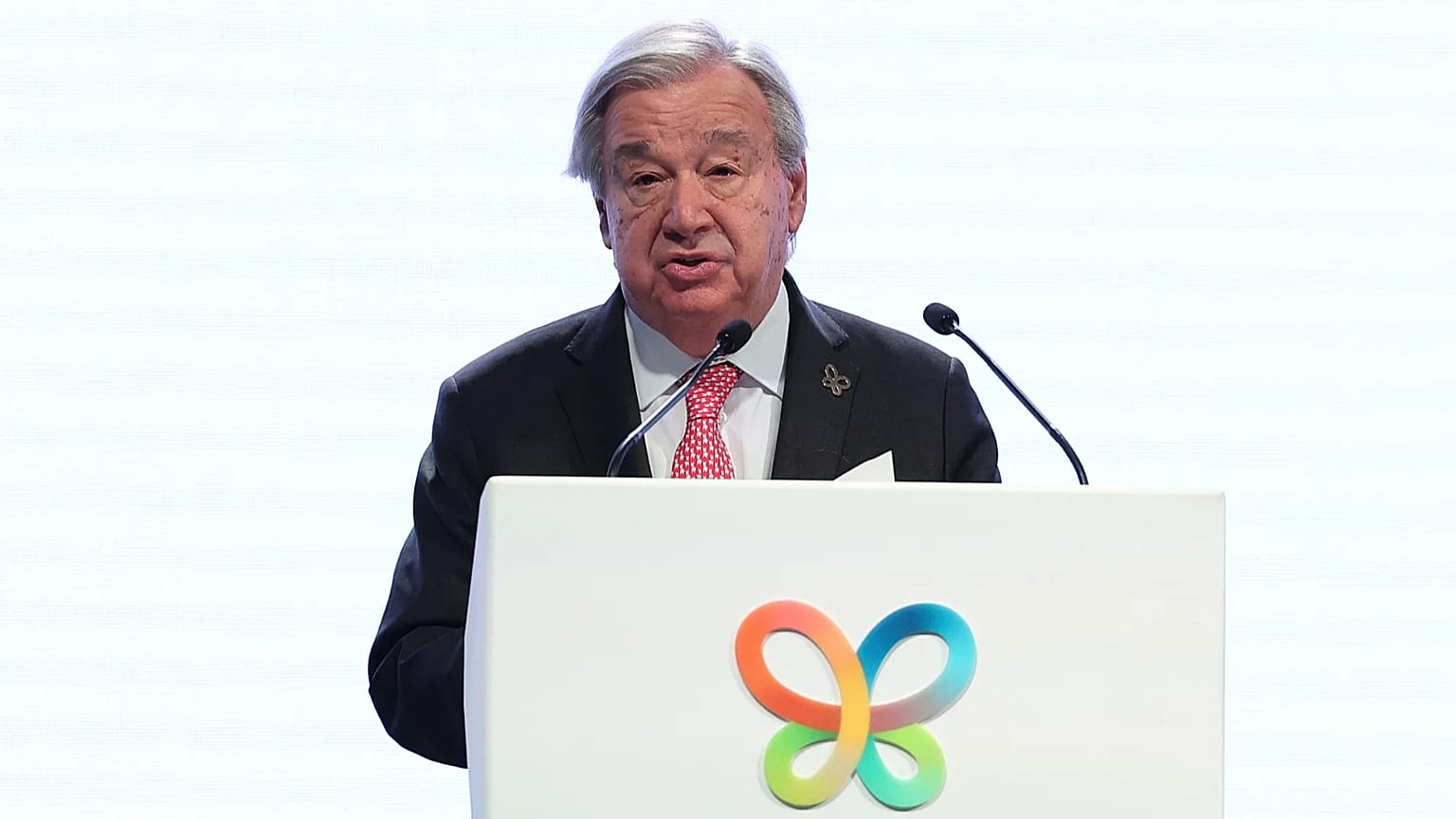
"Subsidising fossil fuels is subsidising suicide," UN chief Antonio Guterres told leaders today (16 October) ahead of next week's UN biodiversity summit, COP17.
 ADVERTISEMENT
ADVERTISEMENT
ADVERTISEMENT
At an event in Yerevan, Armenia, Guterres said governments were still "spending money on the wrong things" and singled out incentives for fossil fuels.
He urged countries to stop subsidising the production of fossil fuels that are "boiling our planet and are the scourge of biodiversity".
"I urge governments everywhere to end these handouts once and for all, and to use the savings for people and planet instead," he said.
EU finance ministers earlier this month called for a phaseout of fossil fuel subsidies at the COP31 climate negotiations taking place in November.
Slow progress on pulling funding for nature-harming activities
Nations have made little headway since pledging in 2022 to reduce public spending on activities that harm nature such as mining, fossil fuel extraction and intensive farming.
Countries have vowed to reduce harmful subsidies by $500 billion (€447b) a year by 2030 but little progress has been made.
"Nature won't thrive on good intentions," Guterres said.
The United Nations says that for every dollar invested in protecting or restoring nature, about $30 (€27) still goes into activities that degrade it.
This includes an estimated $2.6 trillion (€2.3t) a year in public subsidies that negatively impact nature and the climate.
Nearly 200 nations are participating in the UN biodiversity negotiations in Yerevan starting on 19 October where a lack of finance for nature will be a core focus.
Guterres launched a report on 15 October showing that the world was off track to achieving the 2030 biodiversity targets enshrined in a landmark pact dubbed the Paris Agreement for Nature.
"The war on nature has not yet ended," he said.
What is the Paris Agreement for Nature?
Signed by nearly 200 countries and territories, the nature pact laid out 23 targets for halting and reversing nature loss by 2030. These included reducing pollution, protecting threatened species and conserving 30 per cent of the world's land and oceans, known as 30x30.
"It's not all bad news... There is progress, but not enough," Guterres told reporters in Yerevan. "We are far from what is necessary."
The report showed that government policies were insufficient to meet the centrepiece 30x30 biodiversity goal. Taken together, government pledges would cover only 27 per cent of land and inland waters by the end of this decade if enacted in full. For oceans, the figure would be just 12 per cent.
Other targets were lagging further behind. Guterres said countries must honour their financial pledges to developing countries.
The lack of finance has been identified as a particular barrier to achieving the biodiversity goals.
"Biodiversity is in crisis. Species are disappearing and ecosystems are collapsing," said Sue Lieberman from the Wildlife Conservation Society.
"Governments and all stakeholders must see that investing in nature is not a luxury, it is the very key to our survival."
He also emphasised tackling government spending that harms nature, pointing to the "very strong influence" of some sectors that had "too much power" over government including industrial fishing, fossil fuels and logging operations.
COP31 hosts ramp up fossil fuel production
A Global Witness report released this week reveals the power of that influence.
Using data from independent energy consultancy Rystad, the environmental NGO's investigation found that the two COP31 hosts Türkiye and Australia are ramping up fossil fuel production ahead of the major international climate negotiations taking place next month.
Turkish national oil firm TPAO is set to nearly triple gas production. Two of Australia's biggest fossil fuel firms are also on course to hike oil and gas production: Woodside are set to double liquefied natural gas production by 2032 while Santos is on course to increase crude oil production eight-fold by 2035, according to the report.
Türkiye has come under scrutiny for its centrepiece COP31 electrification target. While it aims to raise the global share of energy demand by electricity to 35 per cent, up from around 20 per cent, by 2035, it stops short of specifying how the electricity should be generated. This, critics say, could allow governments to count expanded gas-fired generation as progress towards electrification targets
Efforts to reach a global consensus on setting concrete targets or pathways for phasing out fossil fuels have stalled and the contentious issue is not an official item in the COP31 negotiations.
Earlier his year, about 60 nations demanding faster action on fossil fuels staged their own breakaway conference outside the United Nations process.
Separately from the COP talks, which operate on a consensus-based decision-making process, some countries – including Germany, France and the Netherlands – have released voluntary roadmaps away from fossil fuels. Brazil is expected to follow suit in November.