




























The government on Thursday submitted to parliament the proposed 2027 state budget, forecasting 2% growth and a surplus of 0.1-0.2% of GDP. The PS has guaranteed its passage by announcing it will abstain in the initial overall vote.
The government on Thursday early afternoon submitted to parliament the draft State Budget law for 2027, two days before the deadline, after approving it in the Council of Ministers that morning.
 ADVERTISEMENT
ADVERTISEMENT
ADVERTISEMENT
The document was handed over by the finance minister, Joaquim Miranda Sarmento, to the President of the Assembly of the Republic, José Pedro-Aguiar Branco.
The third State Budget from Luís Montenegro’s government once again has its approval guaranteed thanks to the Socialist Party (PS).
Socialist secretary-general José Luís Carneiro announced last week the intention to abstain in the vote on the bill in general terms, scheduled for 28 October, after Prime Minister Luís Montenegro offered assurances on four conditions set by the Socialists: a constitutional revision with a central role for PS and PSD, protection of current and future pensions, funding for investments that remain to be carried out after the PRR and support for the recovery of municipalities and regions hit by storms.
The detailed debate and vote will run from 29 October to 24 November, with the final overall vote set for 24 November.
PCP and the Left Bloc have already said they will vote against the government’s proposal. Chega has also threatened to vote against (source in Portuguese)if the prime minister does not agree to lower the retirement age, and has added another demand: a cut in VAT on fuel and the introduction of zero VAT on a basket of essential foodstuffs. Red lines the executive has already rejected.
The other parties have not yet announced how they intend to vote.
President of the Republic António José Seguro said on Thursday that he expects a "fruitful debate" to improve people’s lives "at a very difficult time".
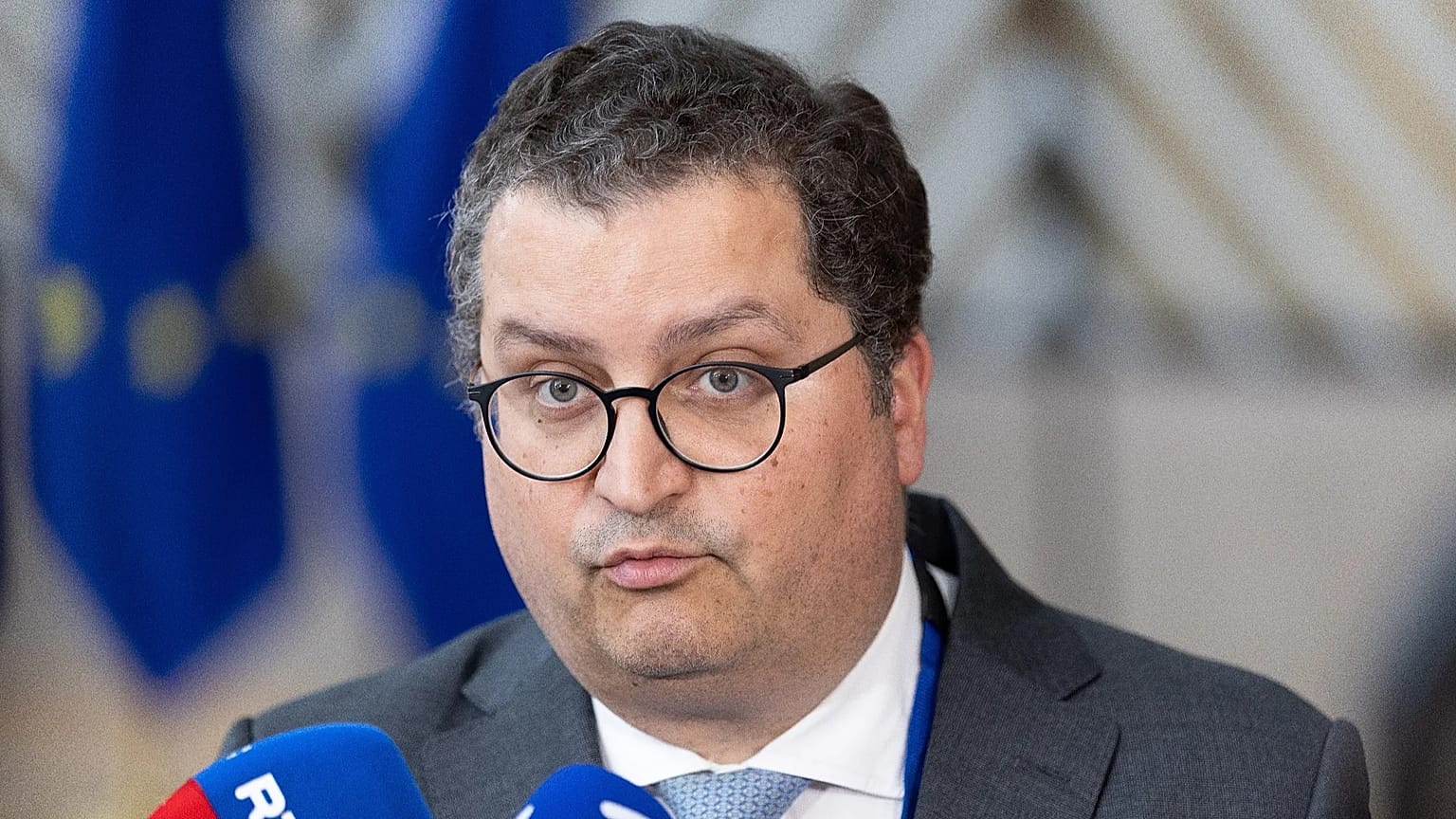
Speaking to journalists in parliament after meetings with the parties on the budget proposal, Finance Minister Joaquim Miranda Sarmento declined to say how much scope there is for negotiations.
The government estimates that the economic measures already adopted, which will continue to affect public finances in 2027, will have a impact of 4.8 billion euros next year, not yet counting any new policies to be included in the next budget.
On the macroeconomic front, for next year the government forecasts economic growth of 2%, in line with the trend of recent years, but representing a slight slowdown compared with the 2.3% expected for this year.
The government is projecting a budget surplus of 0.1% of Gross Domestic Product (GDP) next year.
In the document, the Finance Ministry revises upwards its inflation forecast to 2.9% for this year and expects a slowdown to 2.3% in 2027.
The government also projects that public debt will fall to 84.5% of GDP in 2027, three percentage points less than the 87.5% estimated for this year.
The cost of financing public debt will weigh more heavily on the state’s accounts, with the interest bill rising by 23.2% to 8.2 billion euros. That is equivalent to 2.4% of GDP, compared with 2% in 2026 and 2025.
Pensions, public sector wages and debt interest are among the main sources of pressure, joined by tax measures such as the updating of personal income tax (IRS) bands, the cut in the corporate income tax (IRC) rate and housing measures.
The finance minister said that the 2027 State Budget provides for a fresh reduction in IRS, through updating the bands, the specific deduction and the minimum subsistence threshold, mechanisms which by law have to be adjusted.
The PSD/CDS-PP government has decided to cut IRS rates from the 1st to the 6th band by between 0.3 and 0.5 percentage points, a measure with an estimated impact of 400 million euros, which will already be reflected in withholding at source in 2026.
The reduction will be 0.3 percentage points in the 1st band, 0.5 points from the 2nd to the 5th band and again 0.3 points in the 6th band.
The rates remain the same as those presented in September 2026, with retroactive effect.
The proposal also confirms a 3.88% update of IRS bands next year, below the 4.5% wage increase in the private sector envisaged in the social concertation agreement.
In practice, this means there is a risk that the tax burden will increase for taxpayers whose pay rises by more than 3.88%. Those who start earning more may move up into higher IRS bands, paying more tax and potentially seeing all or part of their pay rise disappear.
The minimum subsistence threshold set out in the 2027 State Budget, which is exempt from IRS, will track the minimum wage. The annual reference value for the minimum subsistence threshold is 13,580 euros, which, divided by 14 months, comes to 970 euros, the amount planned for the minimum wage in 2027.
Productivity bonuses, performance-related pay, profit-sharing and year-end gratuities will also be exempt from IRS, "up to a limit of 6% of the worker’s annual basic pay", according to the 2027 State Budget proposal.
The government estimates that IRC revenue will fall by 99 million euros in 2027 compared with the estimated outturn for 2026, a decrease of 1%.
"This trend reflects the 1 percentage point cut in the IRC rate, whose impact on revenue should be partly offset by the expected growth in economic activity," the document states.
The revenue impact of a one percentage point reduction is 300 million euros.
Last year the general IRC rate was cut from 20% to 19%, the rate applied to company profits in 2026.
In 2027 the general rate is cut by another point, from 19% to 18%, but this rate will only be applied to 2027 profits, affecting public accounts in 2028.
The government’s goal is to reach 2028 with an IRC rate of 17%, reducing it by one percentage point per year. The rate will be 15% for the first 50,000 euros of profit for micro, small and medium-sized enterprises (SMEs).
The government expects, on the other hand, to raise a further 300 million euros in taxes in 2027 through measures to combat fuel tax fraud that were approved this year.
The State Budget proposal also foresees a 5.2% increase in revenue from the tax on petroleum products (ISP), reaching 3.8 billion euros. The government attributes this growth to private consumption. For 2026, ISP revenue is expected to be 3.6 billion euros.
The government also anticipates for 2027 a 139 million euro (8.1%) increase in tobacco tax revenue, taking it to 1.9 billion euros.
Revenue from tax on alcohol, alcoholic drinks and drinks with added sugar or other sweeteners (IABA) is expected to rise by 27 million euros (7.5%), reaching 392 million euros.
The document also confirms a 50 euro increase in the solidarity supplement for the elderly (CSI) in 2027, with the reference amount rising to 720 euros.
The government’s programme envisages this amount reaching 870 euros in 2029, compared with the current 670 euros.
This strengthening of the CSI has a budgetary impact of 100 million euros booked in next year’s State Budget.
Overall Social Security spending on support for the most vulnerable elderly is budgeted at 709 million euros in 2027, 38 million euros more than the amount budgeted last year.
A rise in the minimum wage from 920 to 970 euros is also planned. The tripartite agreement on wage increases and economic growth for 2025–2028, signed in October 2024 between the government, the four employers’ confederations and UGT, revised upwards the trajectory of the national minimum wage. The agreement provides for annual increases of 50 euros, with the goal of reaching 1,020 euros in 2028.
In the civil service, the multi-year agreement in force sets pay increases of 2.30% in 2027, with a minimum update of 60.52 euros.
If the increase laid down in the agreement is implemented, the basic pay in public administration is expected to rise to 995.51 euros in 2027.
The same agreement also provides for an update of the meal allowance, currently set at 6.15 euros, by 15 cents per year until 2029.
The government has also decided to maintain support for access to a first home, including a public guarantee on mortgage credit for house purchases and exemptions from property transfer tax (IMT) and stamp duty for young people.
The executive foresees the "continuation" of these measures, specifically "the public guarantee for the purchase of a first home, as well as exemptions from IMT and stamp duty on the acquisition of a first permanent home".
According to data provided by the government, these supports "have already benefited almost 120,000 young people", with an average purchase price of 200,000 euros.
The public guarantee allows the state to act as guarantor for young people up to the age of 35 buying their first home for their own permanent residence. It can cover up to 15% of the initial loan capital, making it possible to obtain financing for 100% of the purchase price, with no need for an upfront deposit.
The government also plans to strengthen Porta 65, the programme supporting young people in renting.
You can follow the presentation of OE2027 here