






























Kazakhstan wants artificial intelligence to become more than a digital tool: the country is seeking to make it a new engine of economic growth, from universities and factories to energy and infrastructure.
Chatbots alone will not build a true AI economy. The real shift comes when artificial intelligence truly becomes part of how people earn a living, how companies make things and how governments make decisions.
 ADVERTISEMENT
ADVERTISEMENT
ADVERTISEMENT
"People should start to recognise that AI is not a toy. AI is not chatbots," Lee Kai-fu, founder and CEO of 01.AI and chairman of Sinovation Ventures, told Euronews in the Kazakh capital, Astana.
"AI needs to become the tool with which people make a living. Then, and only then, does this become a people's digital economy."
That leap from a conventional economy to an AI-driven one ran through the AI & Digital Bridge forum, which brought government officials, tech companies, investors and experts to Astana.
For Kazakhstan, the ambition is to use AI not merely to modernise existing industries but also to help the country reform its manufacturing industry and move further up the value chain.
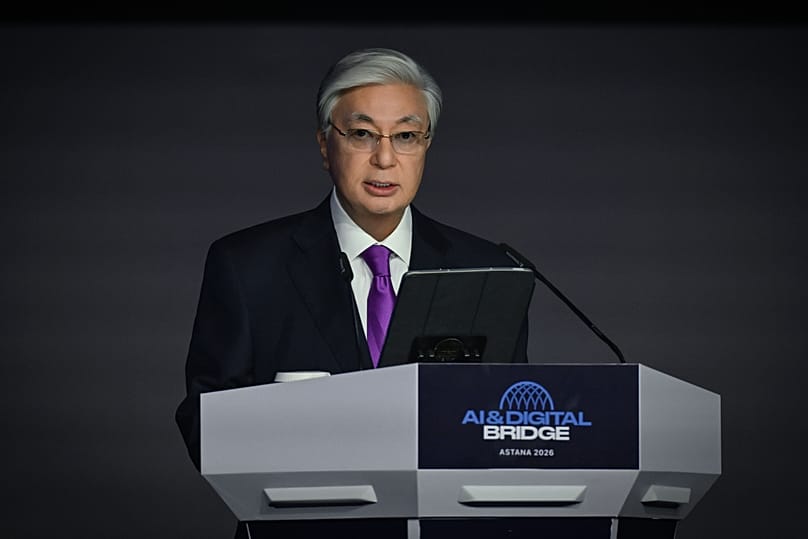
“The true value of AI lies in augmenting human capabilities,” President Kassym-Jomart Tokayev said during the third meeting of the Artificial Intelligence Development Council, held alongside the forum.
“Competition is no longer limited to natural resources, capital, and markets; it now extends to the speed at which production efficiency can be improved,” Tokayev said.
The country's IT sector is already expanding abroad. IT service exports exceeded €860 million last year, while Kazakh digital solutions are now used in more than 100 countries.
Digital Development Minister Zhaslan Madiyev said Kazakhstan was developing all five layers of the AI economy, from energy infrastructure, chips and cloud platforms to language models and applications.
“We see the greatest potential for Kazakhstan in applied AI: in creating and scaling solutions that increase the efficiency of the economy and business, as well as the quality of people’s daily lives,” Madiyev said.
The potential market is significant. Madiyev cited estimates putting the global addressable AI market at more than €43 trillion.
AI and the factory floor
The 2026 UN Industrial Development Report identifies AI as one of the five transformative megatrends reshaping the global economy.
For Kazakhstan, this matters because the country is trying to reduce its dependence on raw materials and increase the share of higher-value-added production.
In the first eight months of this year, industrial production reached almost €90 billion, while manufacturing grew by 8.4% year-on-year, according to Tokayev.
But maintaining that growth will require more than increasing production volumes.
“To sustain high rates of economic growth, we must increase labor productivity, modernise the industrial base, and expand the production of high-value-added goods,” Tokayev said.
AI could help companies achieve that by allowing engineers to make more accurate decisions, automating processes and giving managers real-time information about production.
At the AI Development Council meeting, Tokayev instructed the government to identify companies for comprehensive AI transformation, accelerate the transition from pilot projects to commercial applications, develop industrial databases and reduce risks for investors.
Building the people behind the technology
But AI infrastructure alone will not create an AI economy. Kazakhstan also needs people capable of developing and using it.
Lee Kai-Fu argues that fears about AI destroying jobs miss a more important shift: workers who learn to use AI effectively could gain an advantage over those who do not.
“People are always wondering how can I get a job? AI is taking my job. That is not so, because it is you who knows how to use AI that can make the most money,” he said.
That philosophy is already being incorporated into Kazakhstan's education system.
The forum saw the launch of Qazaq AI Research University (QAIRU), the country's first specialised research university focused on artificial intelligence and the first AI-enabled university in Central Asia.
“Qazaq AI Research University is set to become not only a center for training highly qualified specialists but also a leading hub for applied research. Its entire research program must be directly aligned with the practical needs of economic development,” Tokayev said.
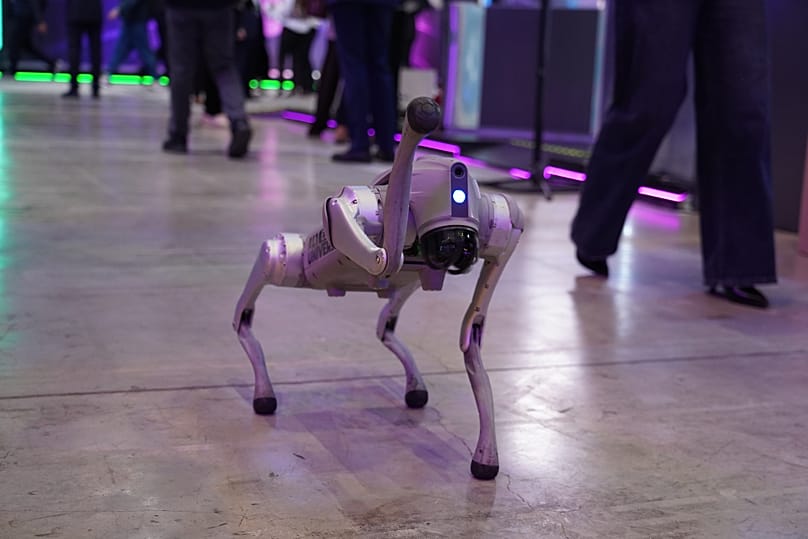
The university started operating on 1 September with 528 bachelor's and master's students. Its programmes cover machine learning, physical AI, industrial AI and smart systems, AI systems engineering and security, intelligent unmanned aerial systems and digital law.
Students also use AI throughout their education, including for coursework, lectures, scheduling and tracking their progress.
The infrastructure challenge
Kazakhstan's ambitions, however, face challenges that extend well beyond education.
Research by the MIT Kuo Sharper Center for Prosperity and Entrepreneurship (MIT KSC) assessed AI readiness in four Central Asian countries and Azerbaijan, looking at regulation, infrastructure, human capital, academic programmes and private-sector adoption. Researchers interviewed 650 startups and 130 companies.
The region has strong political support for AI, but access to critical infrastructure remains a constraint.
“We see that Central Asia rapidly building its own infrastructure for AI. We see a strong political will backed with funding in AI, both infrastructure and academic programs. But at the same time, we see some major constraints, like access to microchips,” said Shamil Ibragimov, MIT KSC Director of Research.
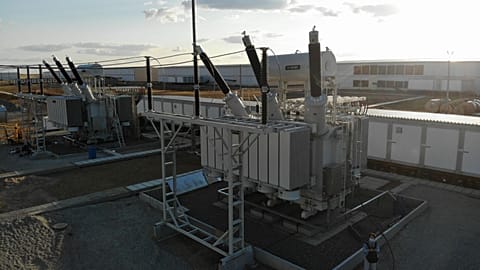
Electricity could become another bottleneck as demand for data centres grows.
“One of the major constraints is a deficit of electricity in the region. Most countries in the region are facing the dilemma of choosing how to use power capacity, do you build more data centres or do you focus on the general audience?”
The issue illustrates the physical side of the AI race. Algorithms may be digital, but they depend on chips, data centres, cloud infrastructure and large amounts of reliable electricity.

From forum to economic transformation
The scale of AI & Digital Bridge reflects Kazakhstan's growing focus on the sector. The forum attracted around 25,000 visitors, 300 speakers and almost 200 startups and IT companies, with 62 memorandums and agreements signed.
The event was part of the AI Month programme, running from September 23 to October 23, and included the AI & Digital Bridge Awards 2026 and the final of the Astana Hub Battle. Four startups won €21,500 each, while other participating companies secured funding of up to €170,000.
But the forum's real significance lies beyond the deals and announcements.
Kazakhstan is trying to turn AI from a technology sector into an economic infrastructure — one that can raise productivity, strengthen manufacturing, create new businesses and change how people work.
Whether that strategy succeeds will depend less on how many AI projects the country launches than on whether those technologies make their way into factories, businesses, universities and everyday life.