

















Gains in political representation and business participation sit alongside persistent expectations about women’s responsibilities at home.
When Shohida Ibragimova started a business in Uzbekistan, paid work had to fit around her responsibilities at home: looking after her children, preparing meals and fulfilling family expectations.
 ADVERTISEMENT
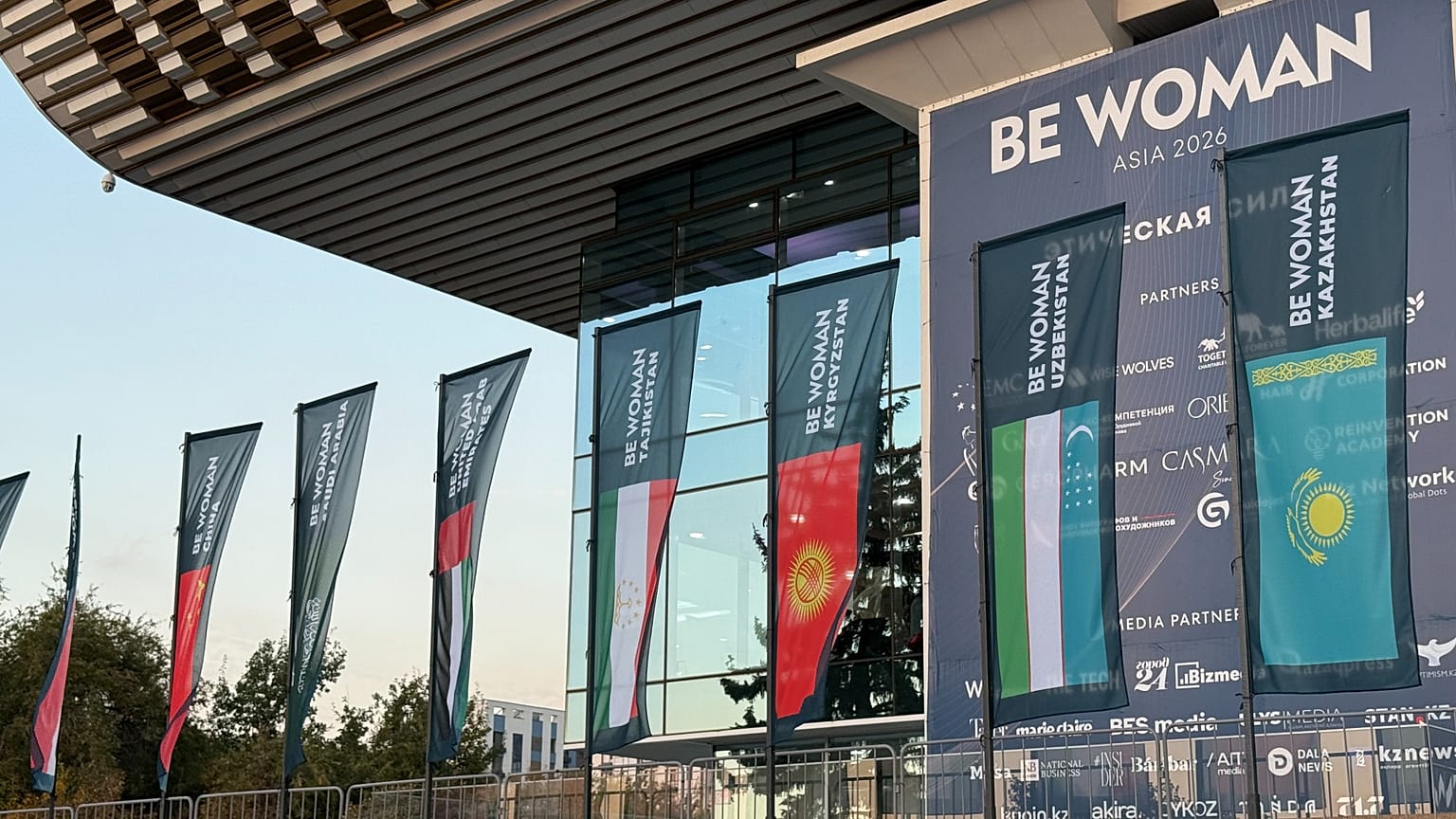
Ibragimova, the financial literacy expert and a mother of five, spoke at BE WOMAN ASIA 2026, a two-day international forum in Almaty. Working on her microbusiness from home, she told Euronews, offered a way to earn while meeting those obligations.
Despite its name, the event extended beyond gender issues, with sessions on business, technology, leadership and parenting. Its international speaker lineup included supermodel and philanthropist Natalia Vodianova, Zuckerberg Media founder Randi Zuckerberg and Oscar-winning filmmaker Sharmeen Obaid-Chinoy, alongside prominent business leaders and changemakers from Central Asia.
The forum featured four stages, hosting discussions on topics ranging from ethical leadership and entrepreneurship to technology and social change.
Uzbekistan: Expanding opportunities, enduring responsibilities
Women accounted for 43% of registered individual entrepreneurs in Uzbekistan at the start of 2025, according to government figures. In the World Bank’s 2024 Enterprise Survey, 12.3% of firms had a woman as their top manager.
For Ibragimova, the appeal of home-based enterprise is closely connected to expectations about women’s responsibilities. “Ours is a very traditional country,” she said. Describing jobs that can extend well into the evening, she added: “We have to choose between family and work.”
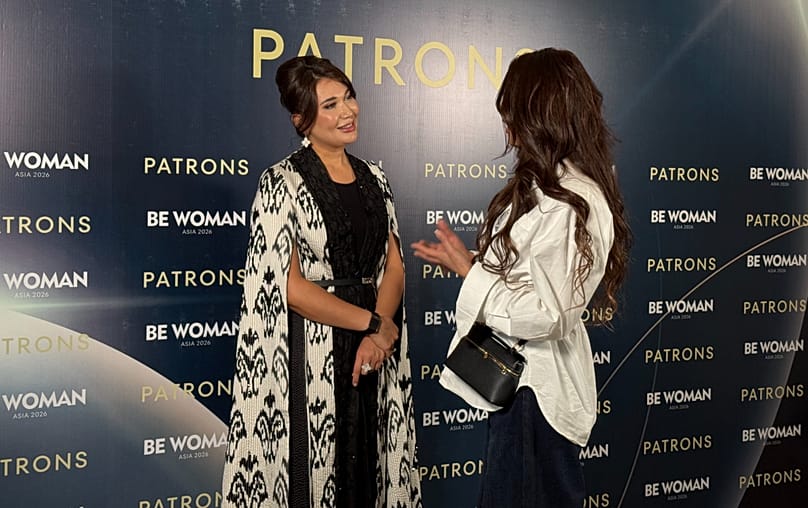
Now a vice-rector at the Central Asian University, where she leads a project supporting women, Ibragimova also sees younger couples increasingly supporting each other’s professional ambitions.
Her experience echoes findings in the 2025 UN Development Programme report. Among women entrepreneurs surveyed in Uzbekistan, 48% described balancing work and family as a big or very big problem – the most significant obstacle reported.
Business is not the only area in which women’s participation has expanded. Women won 38% of seats in Uzbekistan’s lower house of parliament in the 2024 election, up from 32% in 2019 and 16% in 2014, according to the Inter-Parliamentary Union.
Speaking on a panel at the forum, Orzigul Kozikhonova**,** Chairperson of the Committee on Youth, Women, Culture and Sports of the Uzbek Senate, highlighted opportunities for younger women in education, science and entrepreneurship, alongside the country’s gender equality strategy through 2030.
“The opportunities available now are very broad,” she said.
Kazakhstan: representation and everyday expectations
In neighbouring Kazakhstan, women now hold 49 of the 145 seats (33.8%) in the Kurultai, the country’s recently formed unicameral parliament. This is the highest proportion recorded since Kazakhstan gained independence in 1991.
“We firmly believe that there can be no truly just and prosperous society without the full participation of women,” Kazakhstan’s Vice Minister of Culture and Information Yevgeniy Kochetov told the forum.
National earnings figures illustrate another dimension of equality: women’s average earnings were 28.2% lower than men’s in 2025, according to the Kazakh Bureau of National Statistics.
Financial literacy expert Assel Aulbekova points to expectations that persist alongside women’s professional achievements. Drawing on her work and visits to cities across Kazakhstan, she says women may run businesses and support relatives financially yet still be judged unsuccessful if they are unmarried or have no children.
Expectations surrounding family life can also affect employers’ decisions, according to Zhanna Urazbakhova, a practising attorney and member of the Almaty City Bar Association.
When asked about barriers to women reaching leadership positions, she said: “I don’t see any legal barriers. It is more about gender stereotypes – that a woman should take care of the household, that a woman cannot be a good leader.”
She also described discrimination during recruitment linked to assumptions about pregnancy and childcare.
ForCeren Güven Güres, Head of the UN Women’s Central Asia Liaison Office and representative of its Kazakhstan Country Office, changing laws can happen much faster than changing attitudes. She pointed to the division of unpaid work in Kazakhstan.
“The global average is 2.5 times more hours, but let's look at Kazakhstan. What are Kazakh women doing? The average woman spends 4 hours and 6 minutes per day on unpaid care and domestic work more than twice compared to the 1 hour and 50 minutes spent by men,” she said.
She added that “We need to work more with men and boys than women and girls to change the mindset.”
Who shapes decisions and new technologies?
For Güres, participation also concerns the responsibilities women hold. She called for women to lead ministries beyond portfolios traditionally associated with them, such as family affairs and gender equality.
The question of who helps shape decisions extends to emerging technologies. Around 22% of artificial intelligence professionals globally are women, according to the UN’s Gender Snapshot 2026.
Alongside women’s representation in the sector, there is the question of how AI systems are built and whose experiences are reflected in their data.
“Technology is never neutral. Context makes all the difference,” AI governance and public policy expert Titi Akinsanmi told Euronews.
She stressed the importance of understanding how AI systems have been developed and what data they have been fed. Since not everyone can assess this themselves, she said, governance must provide ways to address bias.
Policy shifts in Kazakhstan and Uzbekistan are expanding women’s political and economic roles. Yet as data from the region's two largest economies show, full transformation remains closely tied to changing domestic expectations and the sharing of unpaid care work.