

















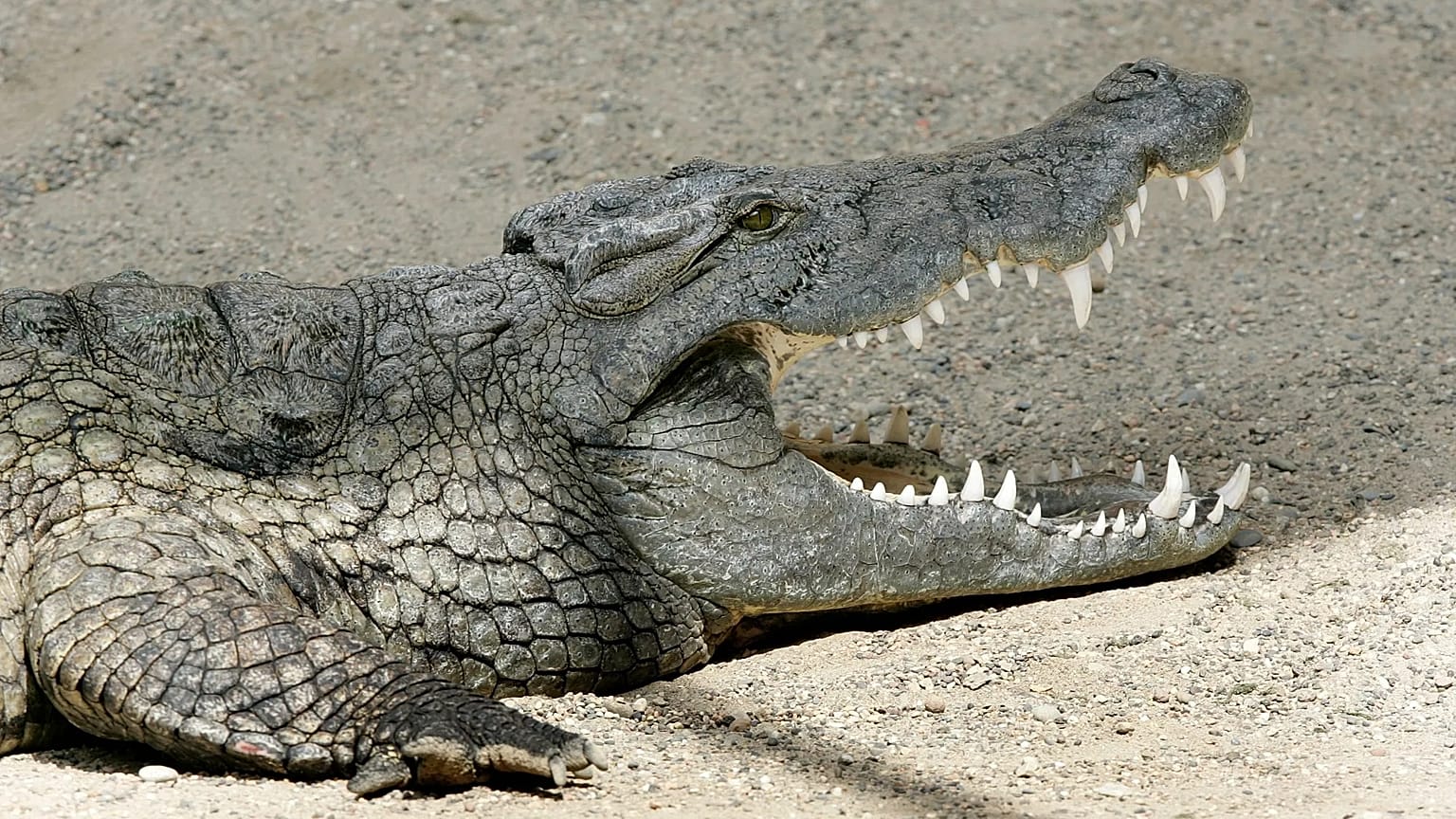













A skull found nearly a century ago has helped Egyptian and European researchers revise part of the crocodile family tree, shedding light on the Mediterranean's prehistoric wildlife and revealing an unexpected connection to the Great Sphinx.
Scientists have identified a new crocodile genus from a 45-million-year-old Egyptian fossil after using CT scans to re-examine a skull recovered nearly a century ago.
 ADVERTISEMENT
ADVERTISEMENT
ADVERTISEMENT
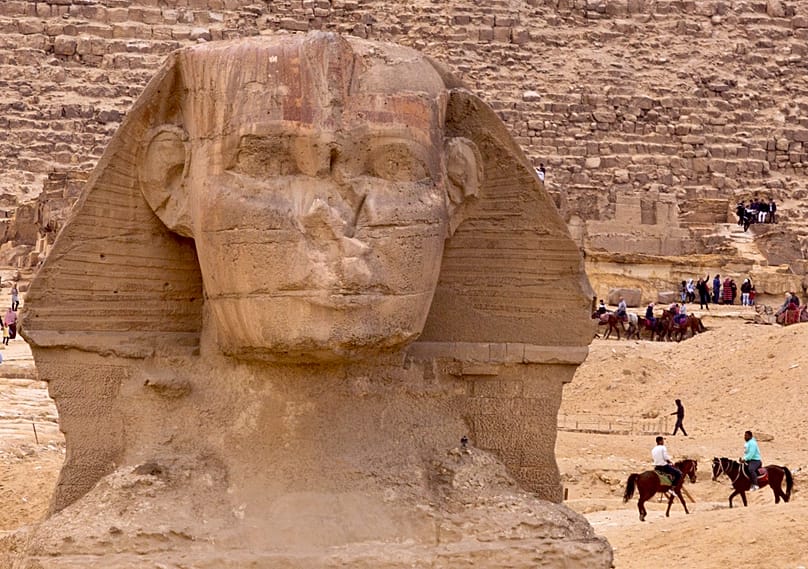
The fossil comes from the Mokattam Formation, the same limestone formation from which the Great Sphinx was carved. Like the monument, the skull is missing the tip of its snout.
Researchers from Egypt, the UK, Sweden and Germany have named the animal Herugavialis cairensis. The findings were published in Royal Society Open Science.
The animal was first described in 1927 as Tomistoma cairense, placing it in the same genus as the living false gharial, which has a long, narrow snout.
But the new examination revealed differences in the skull's structure and the animal's evolutionary relationships. Among its distinctive features were raised, projecting eye sockets.
Those differences prompted the researchers to place the species in a separate genus, changing a classification that had stood for almost a century.
Paul Burke of the Swedish Museum of Natural History led the study, co-led by Philip Mannion of University College London.
Mannion said in a statement that the resemblance between the fossil's missing snout tip and the Sphinx's absent nose helped inspire the name, which honours the Egyptian god Heru.
About 45 million years ago, much of the region lay beneath shallow seas. Herugavialis lived alongside at least two other species of long-snouted crocodiles.
The animal belonged to a group whose only surviving members are the Indian gharial and false gharial. Fossils show that their relatives once had a far wider distribution, with more than 40 species recognised.
The researchers suggest that cooling and falling sea levels reduced suitable habitats around the Mediterranean, while later warming may have allowed their diversity to recover.
Studying more fossils could help explain how these ancient crocodiles spread around the Mediterranean and why they later disappeared from the region.