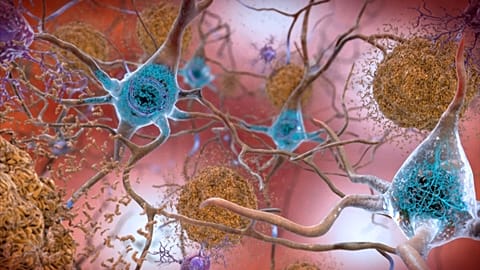
















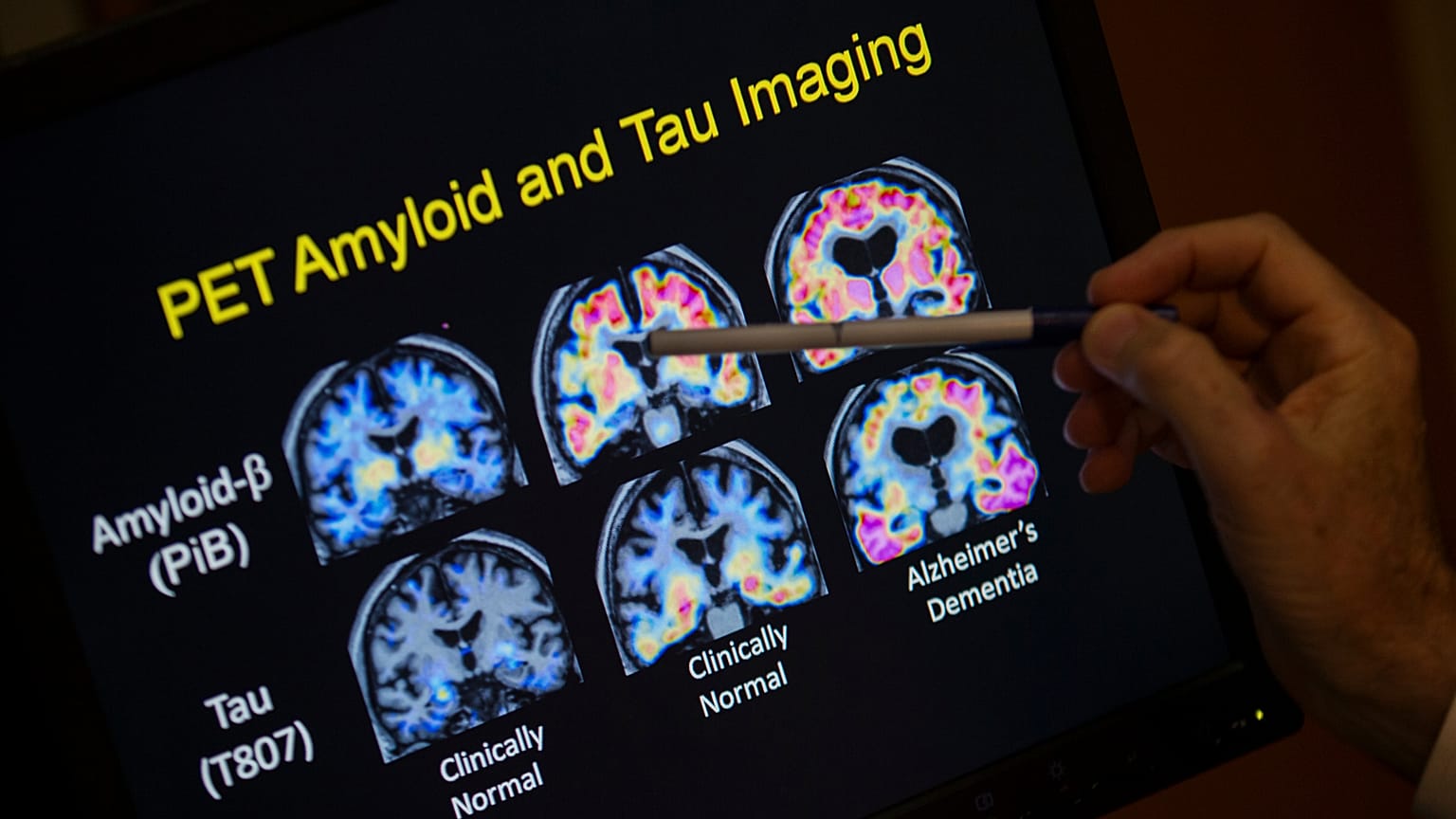













The molecule RSQ-020 targets the Tau protein, which, when it folds incorrectly and forms clumps, is implicated in many severe neurodegenerative diseases.
A Greek research team led by Giorgos Skretas has developed an innovative pharmaceutical molecule that, in preclinical tests, restored learning and memory capacity in animal models with characteristics of Alzheimer’s disease.
 ADVERTISEMENT
ADVERTISEMENT
ADVERTISEMENT
The discovery is the result of collaboration between scientists at the Alexander Fleming Biomedical Sciences Research Centre, the National Hellenic Research Foundation and the spin-off company ResQ Biotech. The molecule, RSQ-020, acts by targeting the Tau protein which, when it folds abnormally and forms aggregates, is linked to the onset and progression of serious neurodegenerative disorders.
The development of RSQ-020 relied on a new technological platform created by the same research group. The method uses modified bacteria which can produce an enormous number of different candidate molecules while simultaneously indicating which of them have genuine biological activity. The aim is to pinpoint substances capable of repairing the malfunction of proteins that have lost their normal structure.
This approach differs markedly from the traditional route to drug discovery, said Giorgos Skretas, director of the Institute of Bioinnovation at the Alexander Fleming Biomedical Sciences Research Centre and collaborating researcher at the Institute of Chemical Biology of the National Hellenic Research Foundation.
According to him, classical drug development is based on finding a molecule that “fits” a specific protein target, like a key in a lock. However, the proteins involved in misfolding diseases do not have a stable shape but change constantly, which makes it particularly difficult to develop effective treatments.
“Instead of simply looking for a molecule that will bind to a specific site on the protein, we look directly for one that delivers the desired effect. Our technology allows us to see when a faulty protein is restored, because the bacteria we use emit a green signal when that happens,” the researcher said.
How it works in practice
In practical terms, the scientists inserted a human protein they are studying into a bacterium and programmed it to light up only when this protein returns to a more normal state. At the same time, the same cells produce billions of different small molecules, each representing a potential solution to the misfolding problem.
When a bacterium emits light, this is a sign that it contains a molecule which has achieved the desired objective.
In this way, instead of relying on lengthy tests carried out exclusively under laboratory conditions, researchers can, within a short period of time, identify molecules that are already working inside living cells – an environment that more closely mirrors the real conditions of a human disease.
The technology was initially developed with a focus on amyotrophic lateral sclerosis (ALS) and the SOD1 protein, but its potential applications extend to many other neurodegenerative conditions. Protein misfolding is a common hallmark of diseases such as Alzheimer’s, Parkinson’s and other serious disorders of the nervous system.