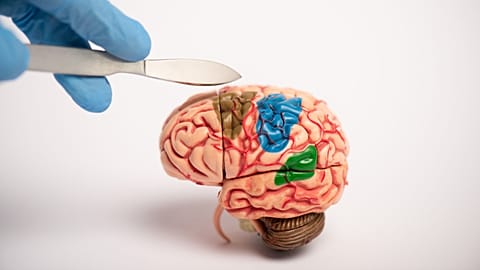
















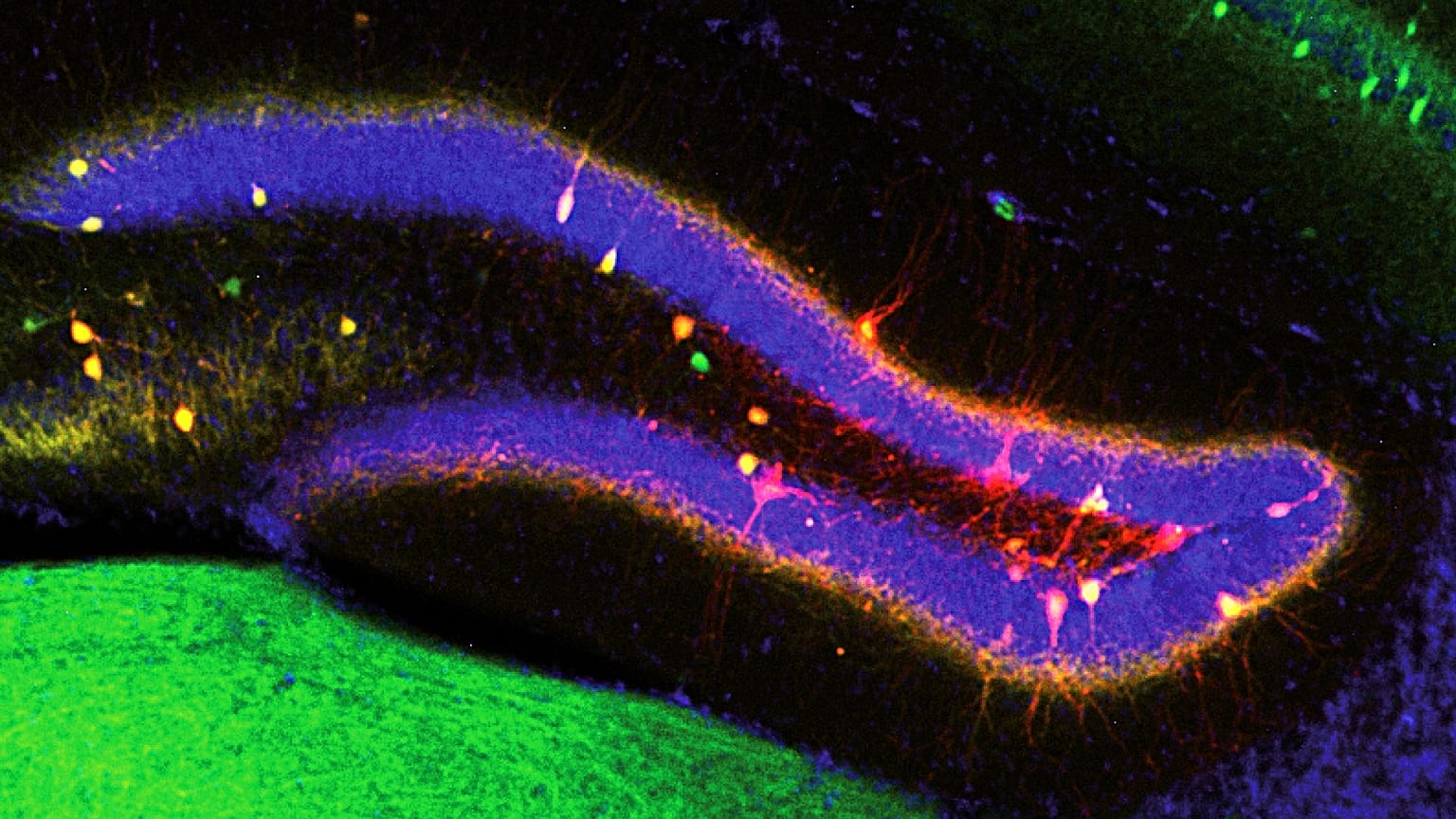













A joint study by three Spanish institutions shows how certain hippocampal neurons safeguard existing memories even as new information about events is stored.
Imagine, for example, a building site in your neighbourhood. The human brain can remember three key stages of it: the original state before the renovation, the construction work itself, and the final outcome once the project is completed. But how does it manage not to muddle those three memories?
 ADVERTISEMENT
ADVERTISEMENT
ADVERTISEMENT
The Institute of Neurosciences, a public research centre made up of CSIC and Miguel Hernández University, believes it has found this neurological mechanism in its new study published in the journal 'PLOS Biology' (source in Spanish).
The team at its Neuronal Network Plasticity laboratory thinks the brain uses a region of the hippocampus known as the dentate gyrus, which is dedicated to forming new memories. There, a specific type of neuron inhibits the activity of other cells to help integrate new experiences.
To test this idea, the researchers studied this inhibition process in mice, increasing or reducing it. "With lower-than-usual levels, their behaviour was more consistent with better memory retrieval and a more detailed recollection," explains Encarni Marcos, co-lead author of the study and head of this line of research at IN CSIC-UMH.
However, there are no fixed levels of inhibition that are always better or worse for preserving as much information as possible. The computational model the team used for the experiment showed that, with a lighter memory load, reduced inhibitory activity is beneficial, but that this is no longer the case once the amount of information rises sharply.
The study suggests that, depending on the type of memory, the dentate gyrus of the hippocampus may either favour the incorporation of new inputs or, conversely, hold an existing memory more firmly against new stimuli. It depends on the contextual importance, or what the team describes as task demands. "What we take from these results is that there is a mechanism that dynamically adjusts the mode of operation by using inhibition," Marcos concludes.