















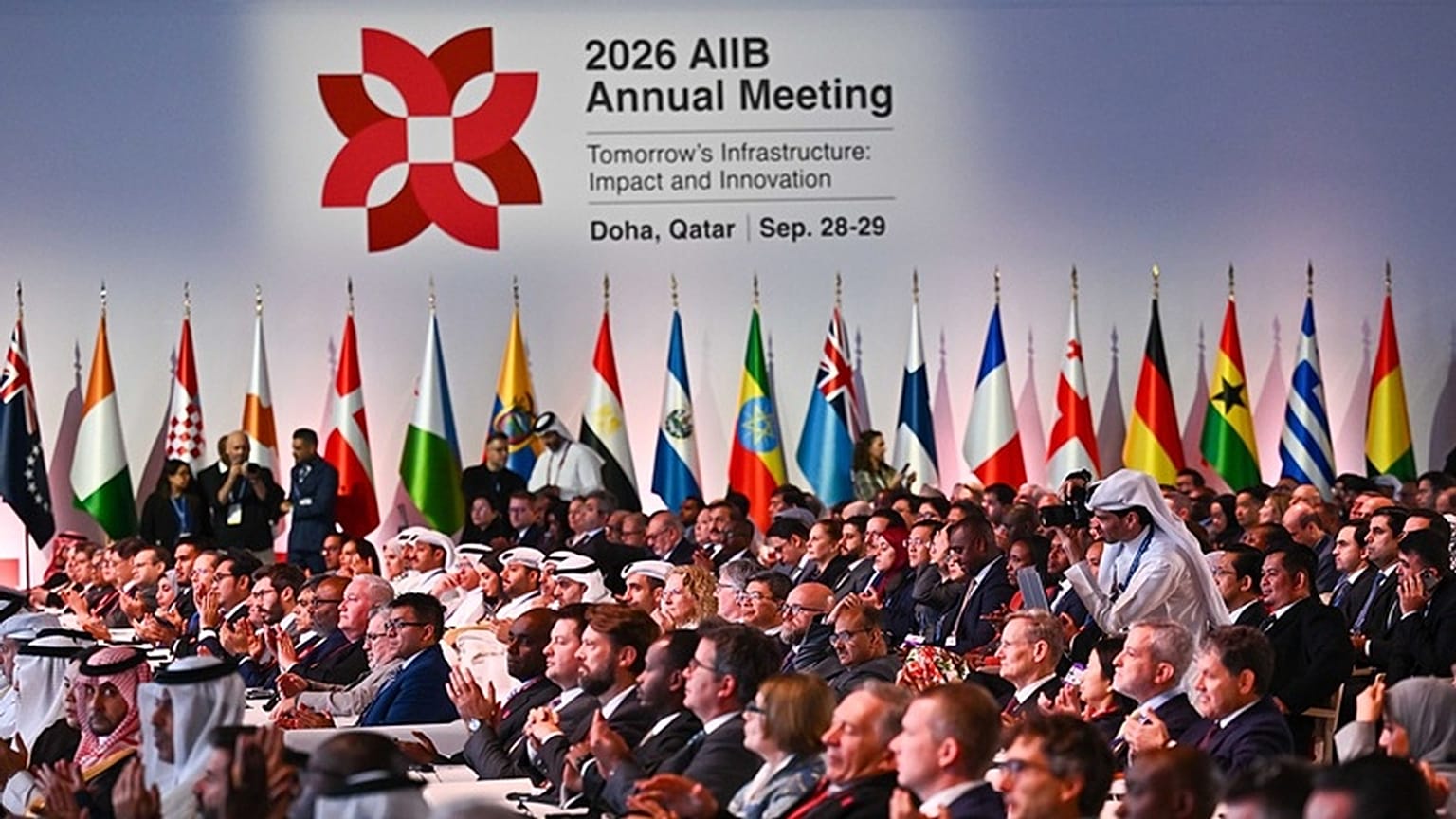














The 11th AIIB annual meeting brings policymakers, investors and business leaders from around the world to Doha to explore how technology, sustainability, connectivity and investment are reshaping the way cities and economies develop.
Financing the infrastructure of the future is a growing global challenge, as countries work to meet their development goals.
 ADVERTISEMENT
ADVERTISEMENT
ADVERTISEMENT
The 11th edition of the Asian Infrastructure Investment Bank's (AIIB) annual meeting tackles one of the most critical questions in sustainable development: how to finance the infrastructure of the future and ensure it delivers for the communities it serves.
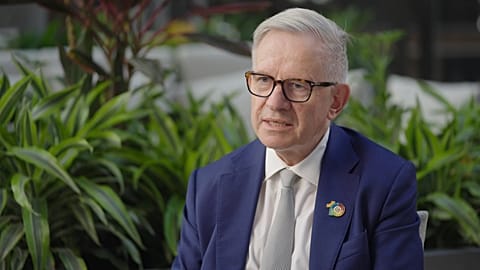
At her first annual meeting as president of the Beijing-based bank, Zou Jiayi said AIIB aims to broadly double its annual financing to around €17.6 billion by 2030, while focusing on areas where it believes it can add the most value.
“We will focus on infrastructure that supports climate resilience, renewable energy, digital transformation, regional connectivity, nature conservation, and people-centred development. We will leverage modern technology and mobilise private capital. Innovation is how we deliver impact,” she said.
In 2025, AIIB approved €9.4 billion in financing for 57 projects, with 71% of approved financing supporting climate-positive outcomes, surpassing its target. It also mobilised €4.3 billion in private capital.
Building on multilateralism
AIIB has teamed up with other multilateral development banks as part of its efforts to invest in global infrastructure projects.
The bank has established co-financing agreements with the World Bank, the Asian Development Bank, the African Development Bank and the European Bank for Reconstruction and Development, while also working with major banking institutions across multiple regions.
At the end of 2024, 131 of AIIB’s 303 approved projects had been co-financed with other multilateral development banks.
The model, designed to pool resources and share expertise, has gained added significance at a time when global trade is becoming more fragmented, disrupted and challenged by rising protectionism.
For AIIB, cooperation remains central to the bank’s mission.
“Cooperation is also at the heart of infrastructure. Infrastructure facilitates connections, and building it requires collaboration across borders, institutions, and markets,” Zou added.
Qatar’s role
Qatar, the host country and a founding member of AIIB, sees itself as part of that effort.
Qatari finance minister Ali bin Ahmed Al Kuwari reaffirmed the Gulf state’s commitment to advancing AIIB’s goals, even as the country faces uncertainty amid regional disruptions.
“Qatar comes to these discussions as a founding shareholder, as an investor in infrastructure across Asia and beyond, and as a country that has learned this year how much resilient infrastructure matters,” he said.
Qatar was among AIIB’s founding members in 2015, joining an institution that has since grown to 111 approved members across the world. The bank is now a $100 billion-capitalised multilateral development bank, with a mandate extending beyond Asia.
Creating impactful change
Qatar’s involvement extends beyond its position within AIIB. Through the Qatar Fund for Development (QFFD), the country has sought to combine development assistance with longer-term investment, supporting infrastructure, healthcare and education projects internationally.
QFFD believes that institutions like AIIB can help create partnerships and identify opportunities for co-investment, while increasing the capital available for sustainable development. For QFFD, the broader strategy is to help communities use grants to create a self-sustaining investment loop for themselves.
“We want to empower them to be development partners and to shift from grants to loans and investment to enable them to grow and generate income and have a more sustainable life, which eventually helps in developing others' lives,” said Noora Khalid Mohammed, the assistant manager of the investment department at QFFD.
Infrastructure in action
From Indonesia to the Maldives, Turkey to Egypt and Uzbekistan, AIIB’s strategy is being put into practice through projects spanning transport, energy, healthcare, digital connectivity and climate resilience.
In 2025 alone, the bank approved financing for projects ranging from climate-resilient roads in the Ivory Coast to a public-private partnership hospital in Kazakhstan and climate-adaptive water management in Cambodia.
The 12th edition of the bank’s annual meeting is set to be held next year in Baku, Azerbaijan. The Central Asian country is already working with AIIB on green energy and other infrastructure projects, including railway and solar initiatives.
With trillions of dollars still required every year to ensure that global development happens at the same pace, both the key and the challenge lie in unlocking the capital needed to build the infrastructure of the future.
Read more