




























Kazakhstan is using Chinese investment, technology and logistics links to move beyond raw-material exports and build a manufacturing and value-added export hub.
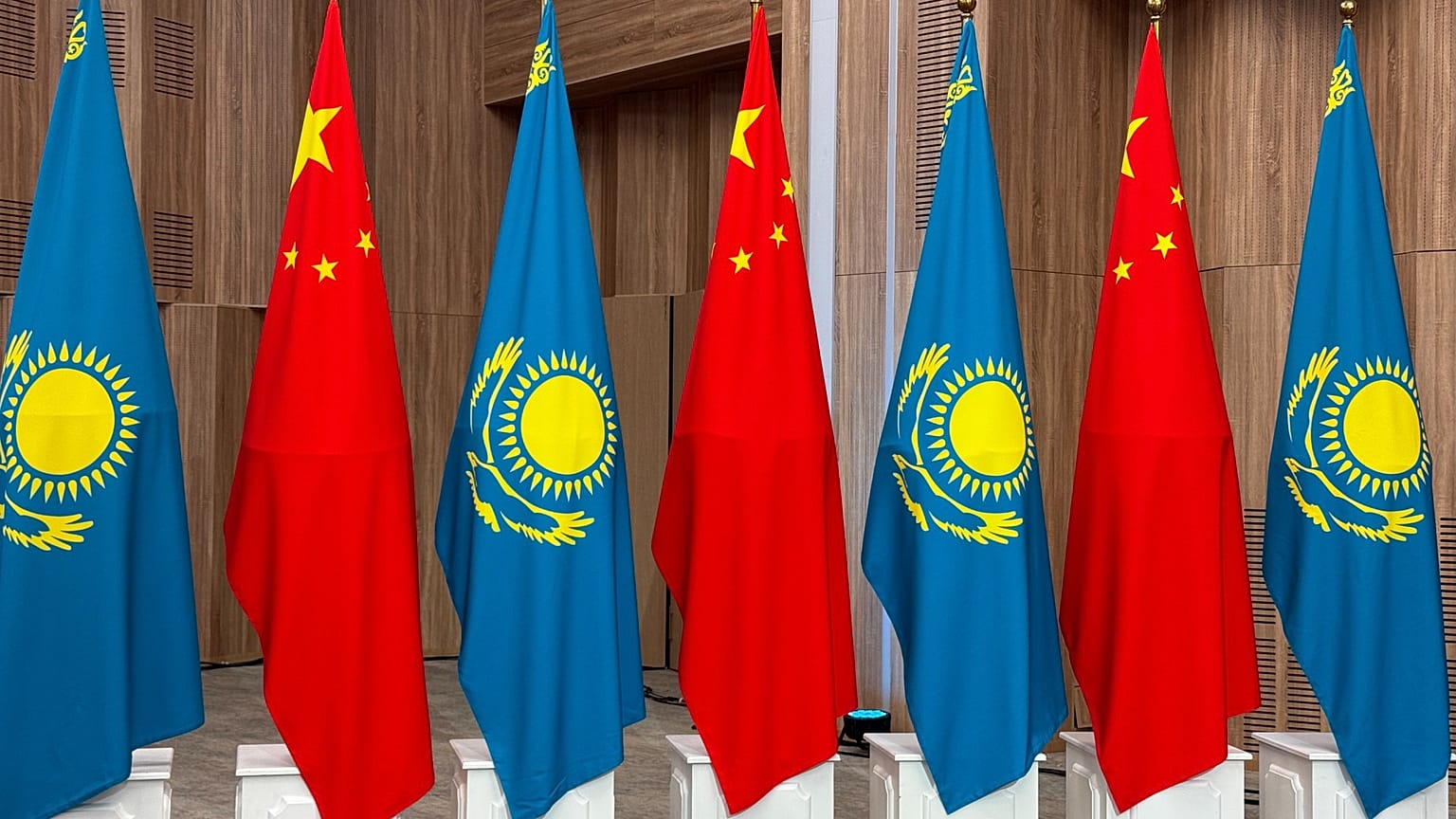
Kazakhstan is leveraging Chinese capital and technology to transform from a raw-materials exporter into a regional high-tech manufacturing and logistics hub. That strategy was on display at the Kazakhstan-China Investment Forum in Almaty.
 ADVERTISEMENT
ADVERTISEMENT
ADVERTISEMENT
The event brought together hundreds of businesses from both countries, with almost 40 commercial documents emerging from the forum, according to the Kazakh Invest company.
The meeting comes at a high point in economic ties between the two countries. Bilateral trade reached a record €42.7 billion last year, while Chinese foreign direct investment in Kazakhstan rose to an all-time high of €2.4 billion.
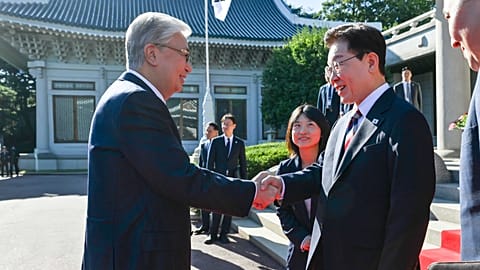
Outlining a new strategy for economic partnership between Astana and Beijing, Kazakh President Kassym-Jomart Tokayev stated:
“This provides a solid foundation for taking our partnership to a new level – from implementing individual investment projects to creating fully-fledged production ecosystems and jointly entering the markets of Central Asia, the Eurasian Economic Union, the South Caucasus and Europe. In this regard, I propose launching the Kazakhstan-China programme “Common History, Destiny. Designed and Made in Both China and Kazakhstan.”
The latest focus shifts from pure commodity transit toward onshore processing, manufacturing localisation, and exporting value-added goods.
Turning grain into higher-value products
One of the clearest examples comes from agriculture. China's Dalian Hesheng Holdings Group is developing a deep wheat-processing complex in northern Kazakhstan. The first stage involves around €570 million in investment and is expected to produce glutamic acid, gluten and other products using biofermentation technology.
The project aims to process low-margin raw grain near its source into products worth several times more than before export.
"Our idea is to process agricultural product like wheat from €175 per ton to the final product, which is more than €800, or even more than €8,000, and then transport," Sun Yao, Dalian Hesheng Holdings Group's Deputy CEO, told Euronews.
The company says China will be the main destination for its output, but some products could also be sold in Europe, the Middle East and North America.
The project is also more advanced than a simple memorandum. Kazakhstan signed an investment agreement with a Dalian Hesheng subsidiary earlier this year.
Official plans envisage initial processing capacity of one million tonnes of wheat annually, with the possibility of expanding to three million tonnes as later stages are completed.
The logistics question
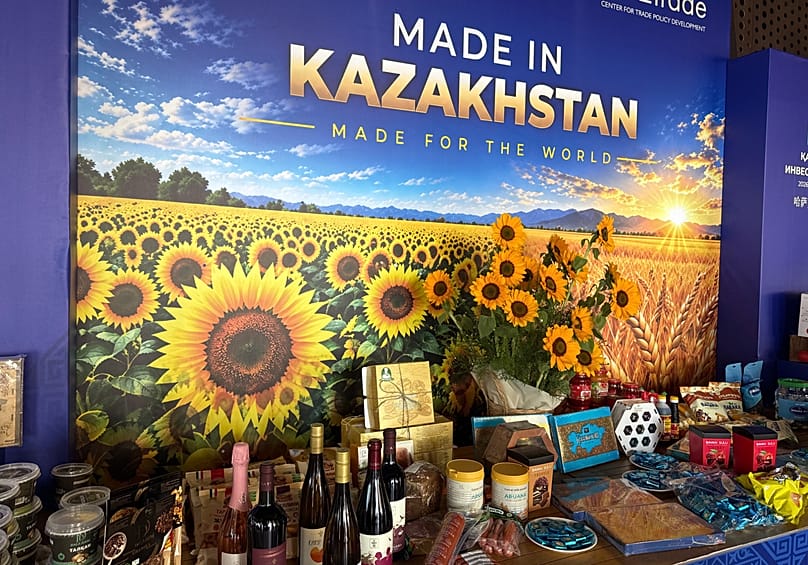
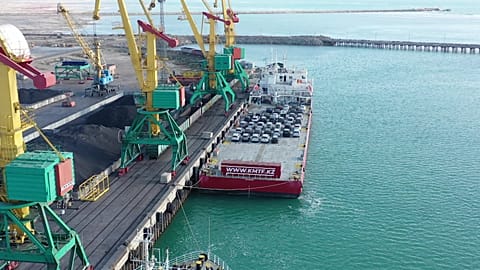
Exporting processed goods from the world's largest landlocked country hinges on transport efficiency. This elevates the Trans-Caspian International Transport Route, or the Middle Corridor, which links China with Europe through Kazakhstan, the Caspian Sea, Azerbaijan, Georgia and Türkiye.
Kazakhstan expects the number of container trains using the corridor to reach 3,000 a year by 2029, according to President Tokayev.
For exporters, the route offers clear financial benefits. Yadykar Ibragimov, a representative of Kazakhstan's National Association of Oilseed Processors, notes that products with higher added value are financially beneficial, because the higher the value of the product, the smaller the share of transportation becomes, eliminating concerns for transportation costs.
He points to Kazakhstan's rapidly growing vegetable-oil trade with China. A container of Kazakh sunflower oil can reach eastern China in around 12 days, he said, compared with up to two months for shipments by sea from Black Sea ports.
"I don't consider the lack of access to the sea a disadvantage for Kazakhstan," Ibragimov said. "If a buyer in eastern China orders oil from Black Sea ports, their money is tied up for one and a half or two months. With Kazakhstan, it is two weeks at most."
Kazakhstan became China's second-largest supplier of sunflower oil in 2025. At the same time, it has emerged as the EU's third-largest supplier of sunflower meal. The Middle corridor can open access to the Middle East, Türkiye, and Europe.
Can Kazakhstan move into high-tech manufacturing?

Kazakhstan's Nero Group and Chinese robotics company Ubtech Robotics are working to localise the production of robots in Almaty. The facility is expected to produce up to 50,000 educational robotics kits a year, with the localisation of service and humanoid robots planned from 2027.
Nero Group’s CEO Yerlan Nabiyev says exports to other countries, including European markets, are among the options being considered.
“Demand for robotics is huge, and we are receiving many requests from abroad. While our priority is building domestic capacity first, our agreement with Ubtech grants us the rights to export across Central Asia, Eurasia, and potentially Europe,” he said.
A Kazakh company selling Chinese cars in Europe
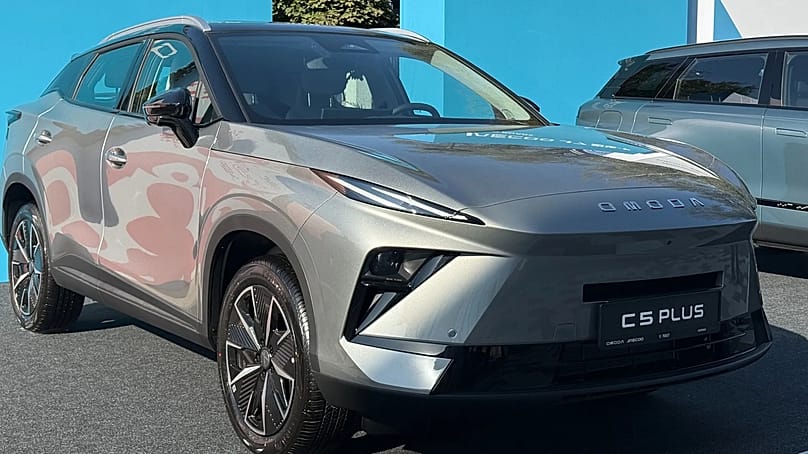
Astana Motors, one of Kazakhstan's largest automotive businesses, has expanded beyond its domestic market to distribute Chinese brand vehicles in the European Union.
The company now operates as a distributor in the Czech Republic, Slovakia and Poland. CEO Beknur Nessipbayev said the company secures distribution rights by competing in tenders against other operators.
"We compete with these companies and win the tender on competitive terms," he told Euronews.
At the same time, its domestic plants in Kazakhstan are scaling up assembly for local and regional demand. Under a new licensing agreement signed this summer with Chinese Chery Holding Group, Astana Motors rolled out its first vehicles this September.