




























Scientists are debating if fusion energy will stay science fiction – or if it could really replace fossil fuels in the future.
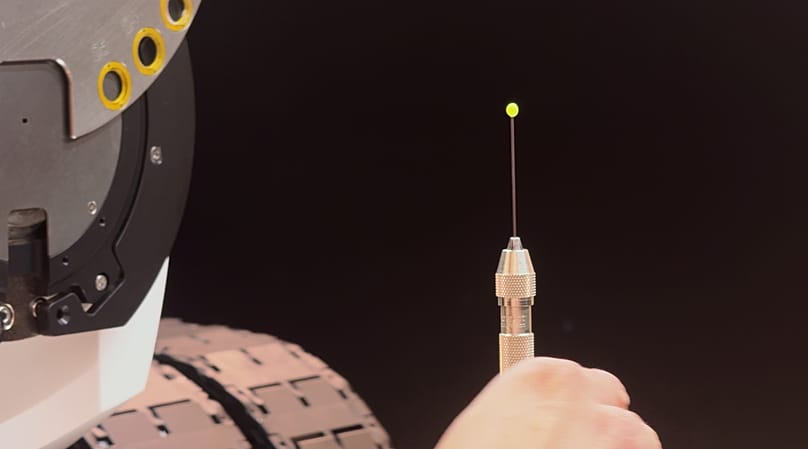
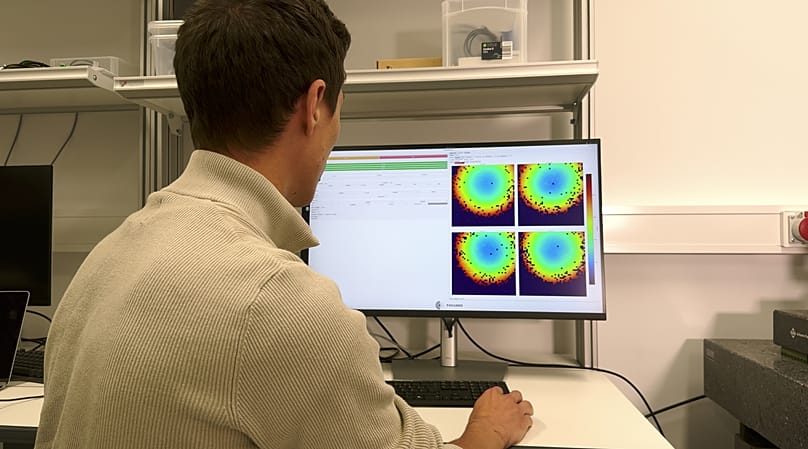
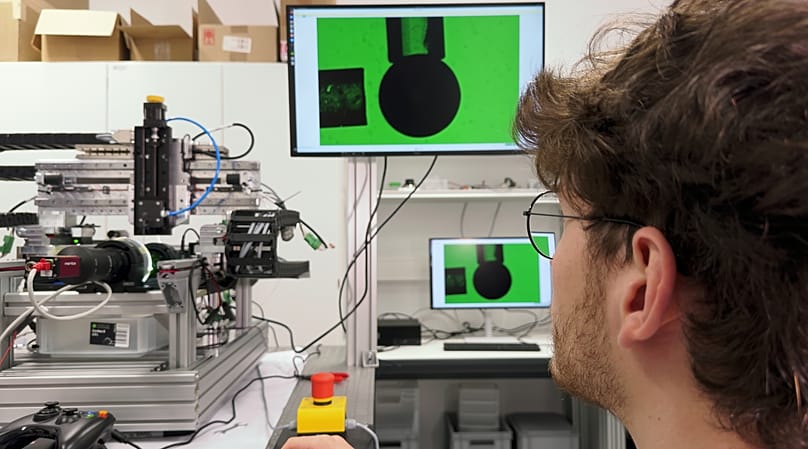
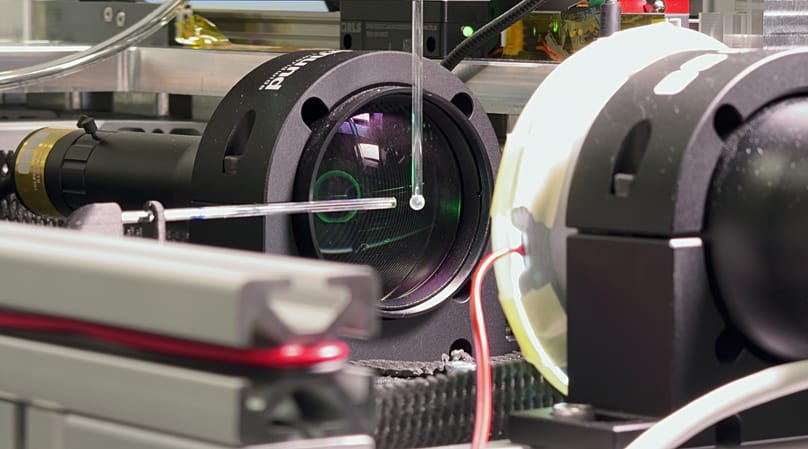
It is a special moment when the doors of one of the world’s largest laser-fusion fuel laboratories swing open: scientists slip on blue full-body protective suits, mechanics tinker with precision milling machines, and laboratory technicians peer through high-powered microscopes at fuel pellets just four millimetres in size.
 ADVERTISEMENT
ADVERTISEMENT
ADVERTISEMENT
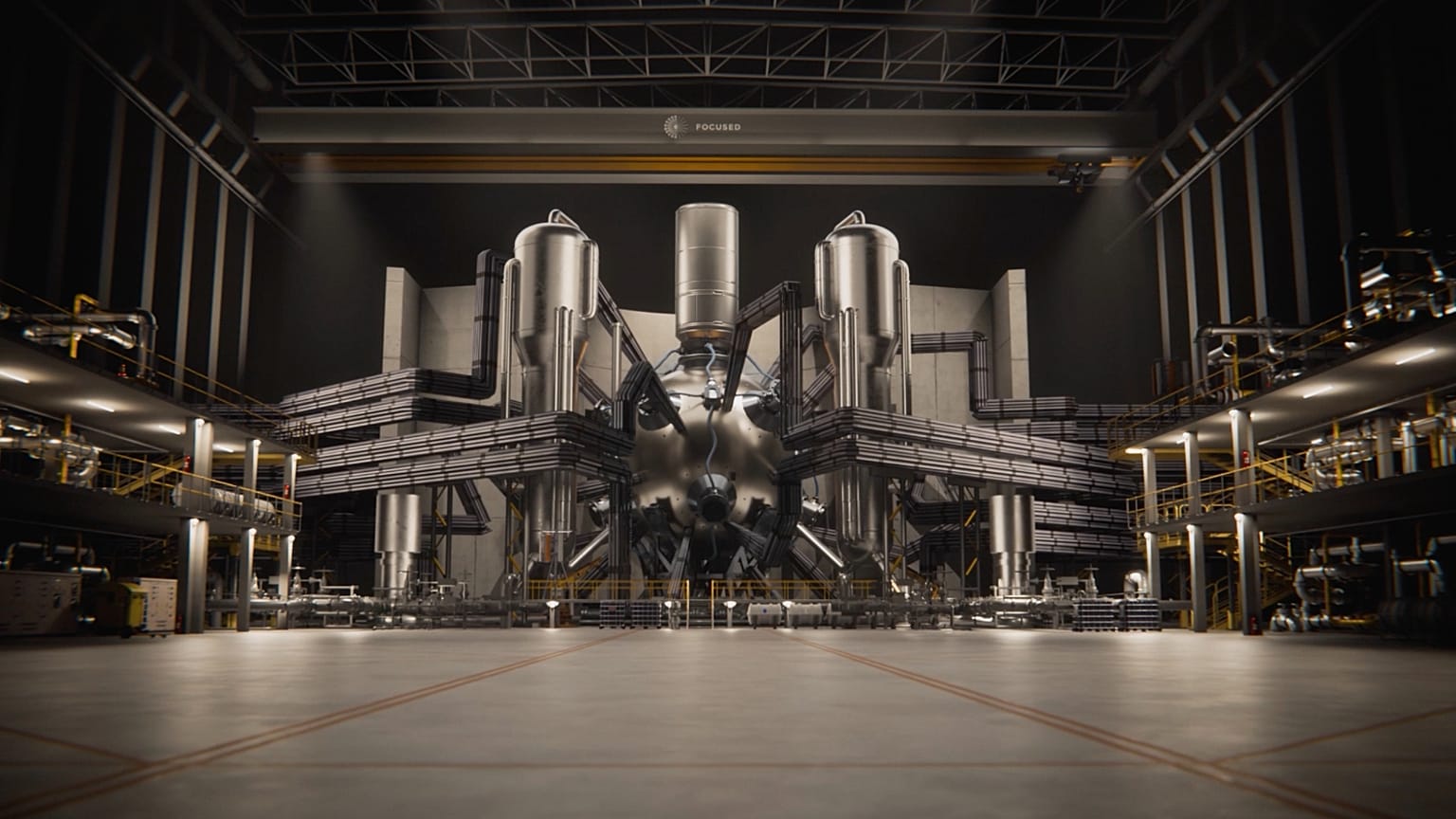
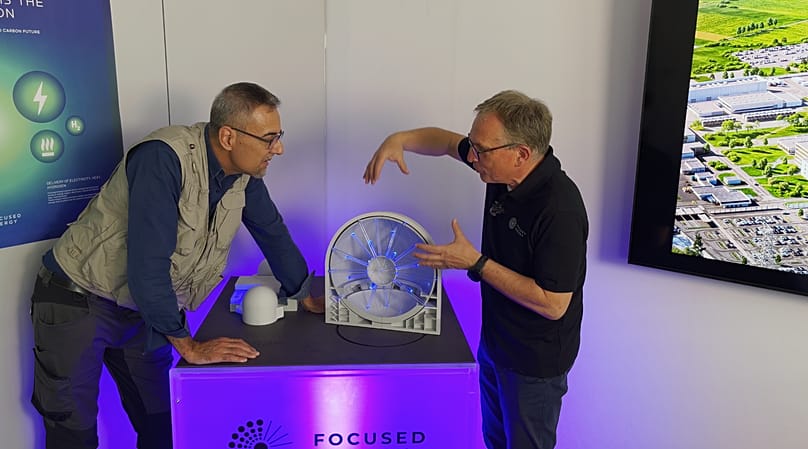
We are in Darmstadt, an industrial city in the western German state of Hesse. Here, at the headquarters of the start-up Focused Energy, an international team of highly motivated specialists aims to develop laser fusion to the point where it is ready for industrial application. The company’s goal is to have its first commercial laser-fusion power plant operating in 15 years at the earliest.
Is nuclear fusion really the answer to energy security?
“As humanity, we need carbon-free energy. Renewable energies alone will not be enough. Humanity’s energy demand is far too great,” argues Ulrich Sigel, Vice President of Focused Energy. “If we want to decarbonise, we need fusion energy for all sectors: transport, aviation, shipping, industry, heating – this is where a huge market for CO₂-neutral energy generation is emerging.”
Professor Sven Linow of the Scientific Climate Advisory Board of the Hessian state government, however, is sceptical. “My personal view is that we should not go for it,” he replies when asked by Euronews Earth whether large sums of money should continue to be poured into the development of fusion energy.
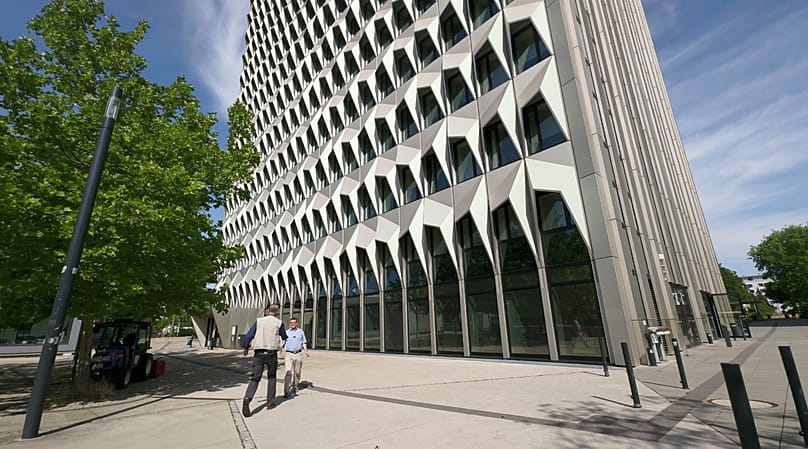
It is a sweltering hot day when we meet Linow for an interview in the shade of the futuristic high-rise building at Darmstadt University of Applied Sciences. “No one has yet demonstrated that it really works,” says Linow.
In the US, experiments have shown that, in the crossfire of numerous high-power lasers, light atomic nuclei can actually fuse, releasing energy in the process. However, in order to generate a stable supply of electricity for consumers, these extremely complex experiments would have to be ‘scaled up’.
For a commercial power plant, such laser-induced fusion would have to take place 10 times per second – around the clock. Even the most optimistic staff at Focused Energy admit they are still a long way from achieving this.
Problems with fuel supply aren’t deterring investors
Linow’s main argument against fusion energy, however, is a different one: the fuel supply. “The problem is tritium,” says the professor. “There are [an estimated] 50 kilograms of it worldwide. In 12.3 years, only half of that will remain; it decays with a half-life of 12.3 years. To start up a fusion power station, you need a few kilograms of it, and then you use it up. You’d have to regenerate the tritium within the power station. Nobody has ever tried that before. There is no demonstrator; there is no laboratory experiment in which this has been successfully tested. There are only ideas,” he says.
Speaking to Euronews Earth at Focused Energy’s head office, Sigel admits there are still “unresolved issues” with tritium recovery, but says this is more of an engineering challenge than a fundamental problem of physics. For research labs trying to tackle fuel cycle problems, “this is an exciting engineering task, and that’s something we’re good at in Germany,” says Sigel. “I’m optimistic that we’ll solve it.”
Sigel’s optimism is shared by some politicians. German Chancellor Friedrich Merz (CDU) has thrown his weight behind the project, announcing Germany’s goal to put “the world’s first fusion power plant online”, as has the Hessian state government. As the Minister-President of Hesse, Boris Rhein (CDU), said: “Nuclear fusion could be the game-changer in energy supply.”
International investors also seem enthusiastic: in an initial funding round in the spring, $240 million (€207m) was raised – the largest series A financing in the global fusion industry. The German energy company RWE increased its investment by €60 million.
So why are Professor Linow and the Hessian state government’s Scientific Climate Advisory Council speaking up against fusion energy?
Is nuclear fusion diverting funding away from more realistic solutions?
In part, they question whether the money and political attention devoted to fusion would be better spent on technologies that can cut emissions today.
“The region’s energy supply is set to be climate-neutral by 2045. Will the first large-scale fusion power stations be connected to the grid by then? And the answer is: no, that’s not going to happen,” says Linow. His message is clear: first and foremost, renewable energy sources should be rapidly expanded, the electricity grids modernised and sufficient electricity storage capacity created.
Ulrich Sigel of Focused Energy emphasises that they do not wish to compete with renewable energy sources. In his concept, fusion energy would complement renewables by providing low-carbon electricity even when the sun isn’t shining and the wind isn’t blowing.
The company is pressing ahead. “We want to have the demonstrator up and running in five years,” Sigel tells Euronews Earth. “The first pilot power station should be operational in 10 years, and the first commercial power station in 15 years.”
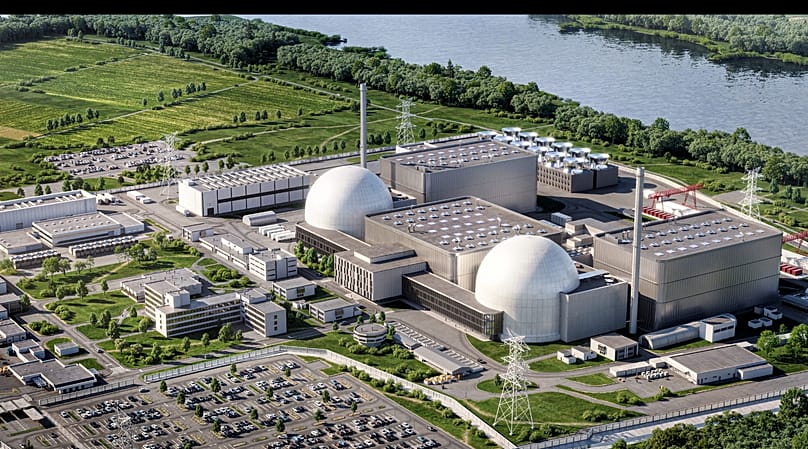
Nuclear power vs nuclear fusion: What’s the difference?
Fusion power stations are intended to replace their climate-damaging coal- and oil-fired counterparts and serve as an alternative to nuclear fission power stations.
Nuclear fission splits heavy atoms to release energy and is used today, while nuclear fusion joins light atoms to release even more energy but remains experimental.
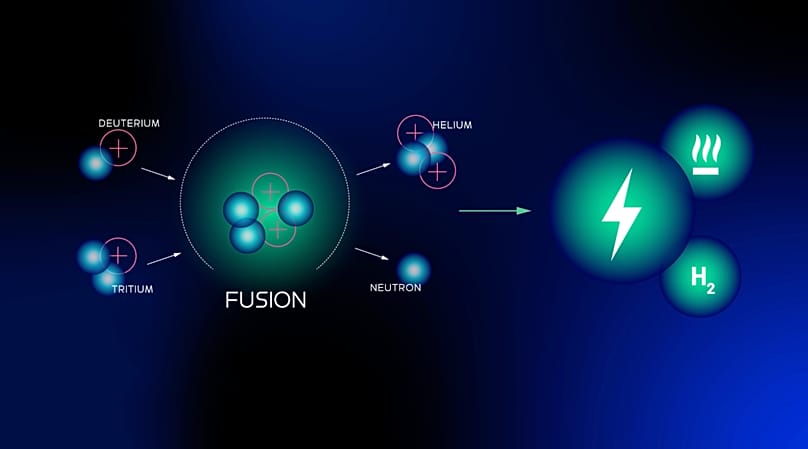
Compared with nuclear power stations, “fusion power stations really only have advantages,” says Sigel. “We don’t need enriched uranium, which might have to come from Russia or elsewhere. We don’t produce long-lived radioactive waste that then has to be managed for an eternity in some final repository."
Ulrich Sigel: Our operations are much safer. There are no chain reactions, no uncontrollable reactions. We can press a button to switch off the laser, and the power station shuts down,” he claims.
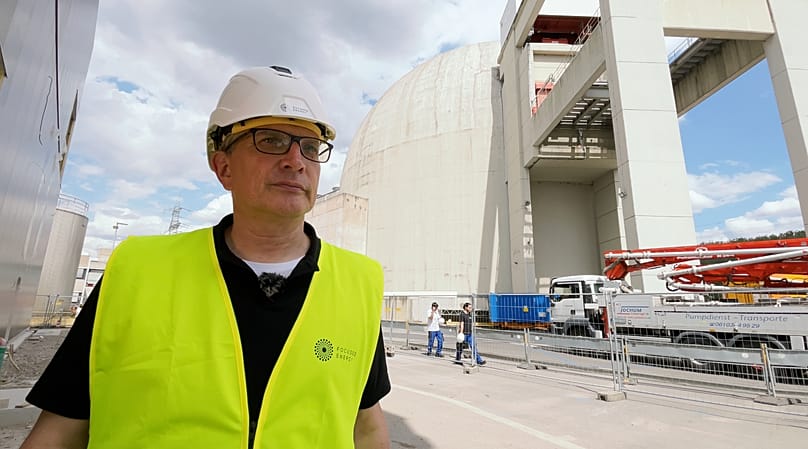
Professor Sven Linow counters that, in fusion power plants, the inner reactor compartment must be replaced “roughly every two years”. After all, even nuclear fusion is not entirely free of radioactivity. “The reactor vessels must be removed regularly and allowed to decay,” he explains.
In some cases, “you can’t handle them again until several hundred years have passed – perhaps even 1,000 years. Consequently, at some point there will be 200, 400 or 500 of these reactor vessels – which are relatively large – stored on the site. And you’ll have to secure them first.”
Focused Energy’s Sigel acknowledges that radioactive “activation of, for example, the reactor wall” does take place. However, he claims, “We can reduce this activation to 60-to-80 years by using special low-activation steels... The steel will simply be stored on the power station site for that long and can then, once the decay period is over, be returned to the cycle and recycled as normal,” he claims. “We’re talking here about manageable doses and very manageable timeframes.”
Is nuclear fusion a sound investment?
Renewable energies are now relatively inexpensive in terms of investment. Fusion energy, on the other hand, requires very high investment. Is it even worth the effort? Yes, says Sigel; no, says Linow.
“When it comes to renewable energies, you mustn’t just calculate the production costs, but also the system costs,” says Sigel. “In other words: what does it cost to get the energy from A to B? We need transmission grids. Then, of course, we don’t always have wind and sunshine, so we have to provide back-up power stations and battery storage. That’s why fusion energy will be absolutely competitive [compared to] renewable energy,” he claims, though fusion plants would have their own system costs to consider too.
Professor Linow takes the opposite view: “It is foreseeable that fusion power will be by far the most expensive form of energy, significantly more expensive even than nuclear fission power. At least 20 cents per kilowatt-hour, perhaps even two or three times that.”
Sigel counters: “We use water as fuel and breed the tritium in the reactor itself. The main cost factor for us is the capital expenditure. However, the power station will be able to operate for a very long time, and that will result in low electricity generation costs within the power station itself.”
Linow arrives at a very different conclusion when looking at the big picture: “I don’t have a good feeling about this. An estimated €35 to 40 billion will be invested in ITER (a magnetic fusion demonstrator). Then DEMO is to be built, which will cost at least as much. On top of that, we have around 50 fusion start-ups, all working simultaneously to prepare fusion power stations.
“Many billions are currently being poured into this, and that is money that is lacking elsewhere. We should set priorities and say: first of all, let’s build what’s necessary to prevent the climate from spiralling completely out of control. We must ensure that we have a reasonably stable society on this planet. Once we’ve achieved that and still have the funds to spare, then we can move forward with fusion.