












A survey of nearly 10,000 employees across Europe and the Americas has found that most believe AI flatters their professional reputation, with 64% admitting they have used it to complete work they could not have done alone, raising an awkward question for managers deciding who to promote.
Office workers have a quiet new advantage and their bosses cannot always see it.
 ADVERTISEMENT
ADVERTISEMENT
ADVERTISEMENT
Research published on Tuesday by Use.AI, a platform that bundles several large language models into a single subscription, surveyed 9,684 working adults in the US, UK, Canada, the EU and Latin America.
The study found that 52% said AI had made them appear more experienced than they actually are, painting a picture of delivered results running ahead of underlying skill.
Some 64% said they had used AI to complete work they would otherwise have been unable to do independently, while 43% said it had helped them take on responsibilities they did not yet feel qualified to handle.
A further 35% conceded they would struggle to perform parts of their current job without it, and a quarter worried their employer believes they are more capable than they really are.
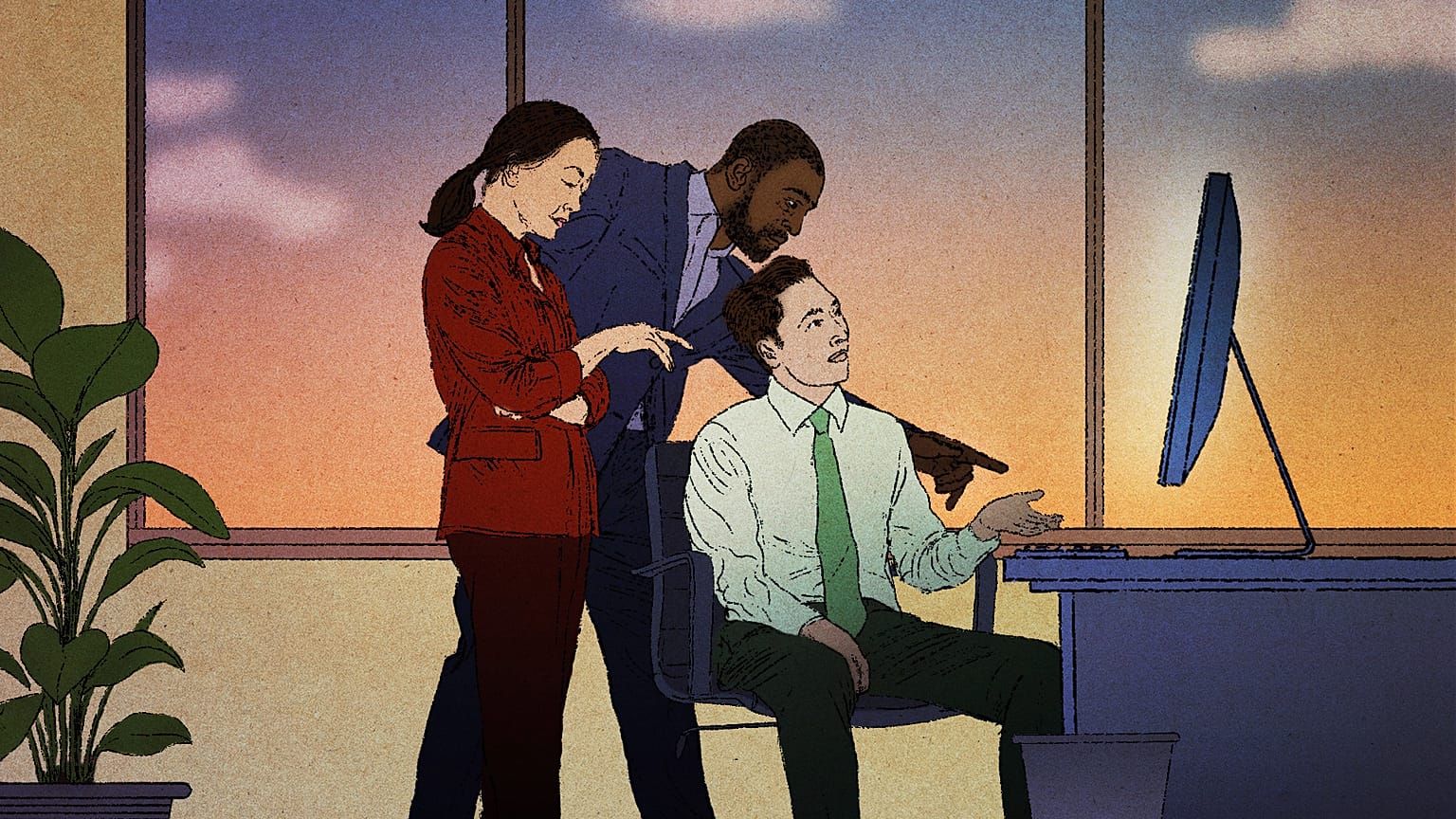
Managers are indeed often unaware, with 39% of workers saying they had submitted AI-assisted work without mentioning it and 30% had accepted praise for work the technology substantially produced.
Neither necessarily breaks any rule, since most workplaces have no disclosure requirement, but it does mean performance is being judged without knowing how much of it was outsourced.
The consequences reach into career progression as 19% said AI-assisted work had contributed to a promotion.
Should you have to tell your boss?
The obvious remedy, requiring employees to declare when they have used AI, is one the company behind the research does not support in full.
"I do not think companies should require employees to disclose every interaction with AI," Ihor Herasymov, co-founder and CEO of Use.AI, told Euronews.
"That would quickly become impractical as these tools become embedded in everyday software and routine work," Herasymov explained while proposing a narrower test.
"The more useful threshold is whether AI materially shaped the substance of the work. If it generated a significant part of an analysis, recommendation, presentation, code or other consequential output, employees should disclose that assistance."
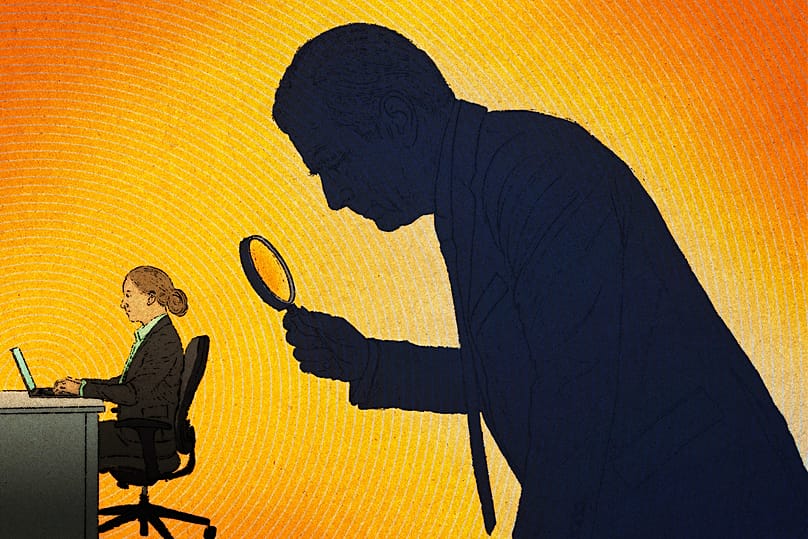
The intent, he said, should not be to police staff.
"The purpose should not be surveillance. It should give managers enough context to judge both the work and the human contribution to it," Herasymov said while adding that a workable policy "should focus on material AI assistance, verification and accountability, while making clear that the person submitting the work remains responsible for understanding and defending it."
How managers should actually measure performance
None of this establishes that those employees were unqualified, since using AI skillfully is itself a professional skill that is increasingly relevant.
The difficulty is that finished work no longer reveals what it once did about the person who produced it, which matters most when a company is deciding who is ready for more responsibility.
"Finished output still matters, but it is becoming a less complete measure of capability," Herasymov told Euronews.
"Employers also need to understand whether someone can explain the reasoning behind their work, detect flaws in an AI-generated answer, make decisions with incomplete information and respond when the technology produces something wrong or unexpected," Herasymov explained.
To this end, the CEO of Use.AI singled out one skill in particular.
"Problem framing is particularly important. Can someone define the right question, challenge an assumption and explain why one course of action is better than another? That is much harder to infer from a polished final output alone," Herasymov stated.
However, few employers have solved performance assessment in the age of AI.
"We do not yet see a settled model for assessing this. Organisations are still working out how AI should change performance and promotion decisions," Herasymov said, adding that "the distinction between what someone can produce with AI and what they actually understand will become much more important in those decisions."
Tool or crutch?
Asked whether the finding that 35% of workers would struggle without AI troubles a company that sells access to it, Herasymov did not dismiss the concern.
"Yes, I think that finding deserves to be taken seriously," he said.
"The concern begins when someone can produce an answer with AI but cannot reliably recognise when that answer is wrong, explain why it is appropriate, or make a sound judgment when the system has no reliable answer. At that point, the relationship starts to look less like augmentation and more like dependency," Herasymov told Euronews.
He framed it as a trade-off rather than a verdict.
"AI can make people faster and extend what they are able to do. But if those gains come with weaker independent judgment, that is a trade-off employers and technology companies should be willing to recognise and address."
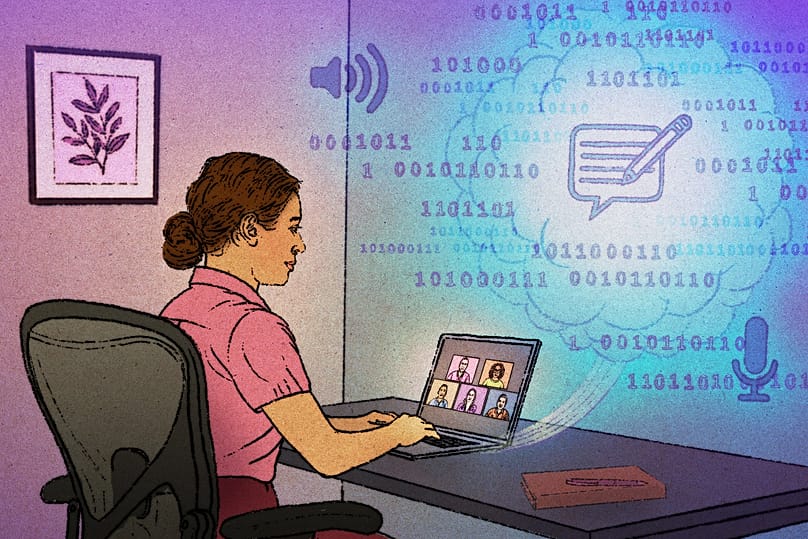
However, the technology is not standing still while employers work this out.
According to Ventureburn citing data from METR, a US non-profit that evaluates the impact of AI systems on society, the time it takes for AI autonomy to double has compressed from an eight-month trend to just 4.7 months.
The same compilation records a 1,400% year-on-year increase in AI's autonomous capabilities between early 2025 and early 2026 while access has observably expanded just as quickly.
Downloads of AI tools rose from 15,000 to 11.8 million, a growth of 780 times, while publicly available MCP tools grew 35-fold to around 177,000.
MCP, or Model Context Protocol, is a standard that lets AI assistants plug directly into other applications and data sources, so they can carry out tasks rather than merely describe how to do them. It enables what is commonly referred to as "agentic AI".
That trajectory sharpens the problem the survey identifies. As more of the work happens without a person directing each step, the finished product reveals progressively less about the person who signed their name to it.