

















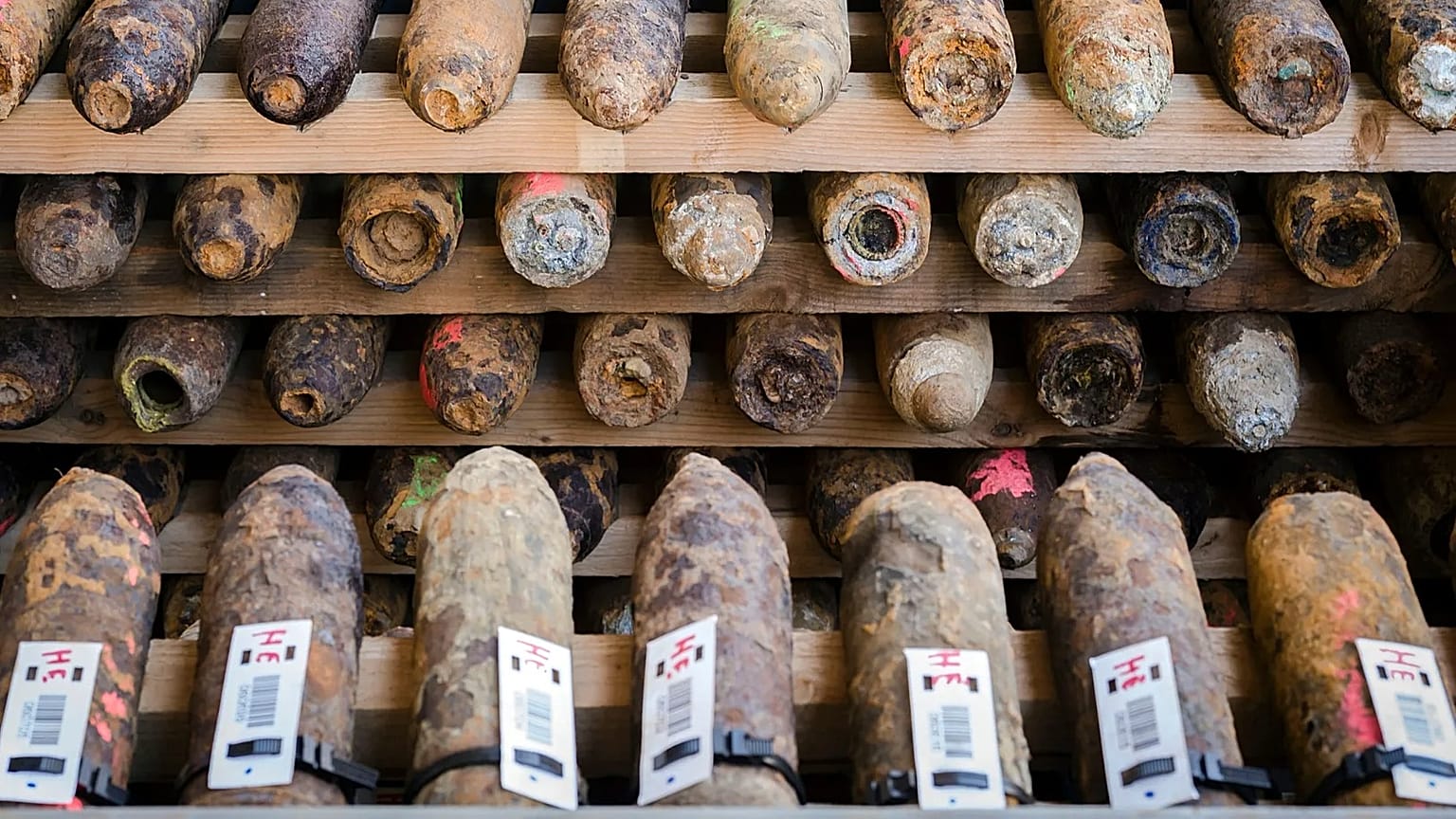














Droughts across Europe have also been churning up military vehicles and weapons from the era, with shrinking rivers revealing German warships, a Wehrmacht motorbike, and a bomb.
Devastating wildfires that have ravaged Europe over summer have been unveiling a potentially deadly new threat - unexploded ordnance from World War I and World War II.
 ADVERTISEMENT
ADVERTISEMENT
ADVERTISEMENT
Fires have burned through huge areas of land in western Europe in recent months as the continent has battled scorching temperatures and droughts, and firefighters have faced the additional threat of exploding shells.
Explosions have been reported in France, Germany, Belgium, and the Netherlands.
“Climate change is now doing the work of unburying and reactivating what was previously stable,” Sarah Njeri, a peace and conflict scholar at London’s School of Oriental and African Studies, said.
One fire close to the city of Bordeaux in southwestern France has revealed a hoard of what is thought to be World War II-era ammunition, while in the province of Liège in eastern Belgium, local governor Hervé Jamar said emergency services were adapting to account for munitions buried in a fire area and that “a few sporadic detonations" had been heard recently.
Liège has seen a particularly fierce fire in the High Fens area, which stretches over the border into Germany. The Battle of the Bulge, one of the bloodiest battles of the Second World War, was fought in and around the High Fens. German forces launched a major offensive against Allied forces in the region on 16 December 1944, achieving some initial success as they caught American troops by surprise. But the attack fizzled out by the end of the month as Allied reinforcements poured in and German resources dried up.
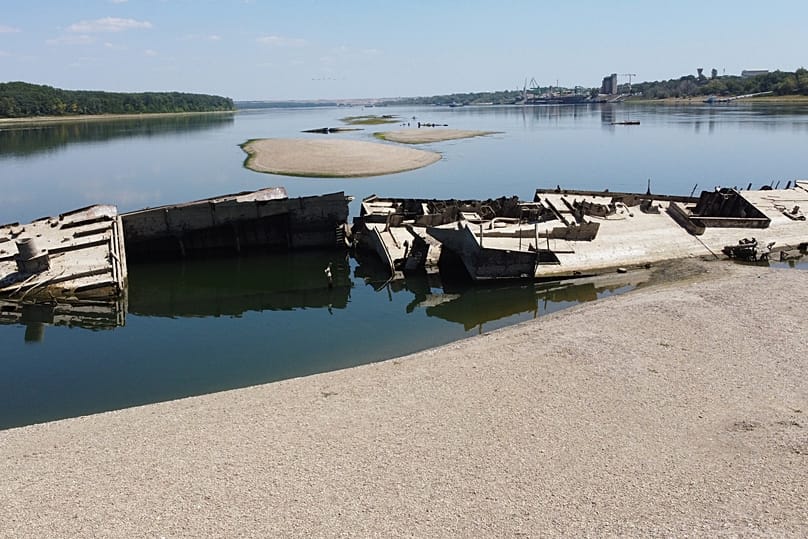
Droughts across Europe have also been churning up military vehicles and weapons from the era, with shrinking rivers revealing German warships, a Wehrmacht motorbike, and a bomb.
Christina Greene, a researcher at the University of Arizona, said “the legacy of war keeps creeping up” due to climate change.
“It's reliving the legacies of war and conflict in a way that we haven't had to deal with in a while in certain places," Greene said.