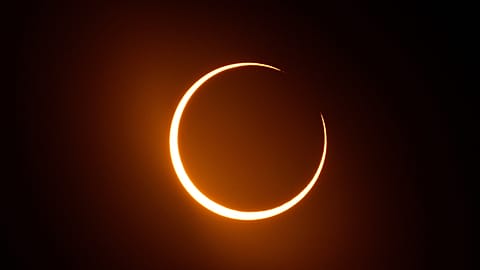















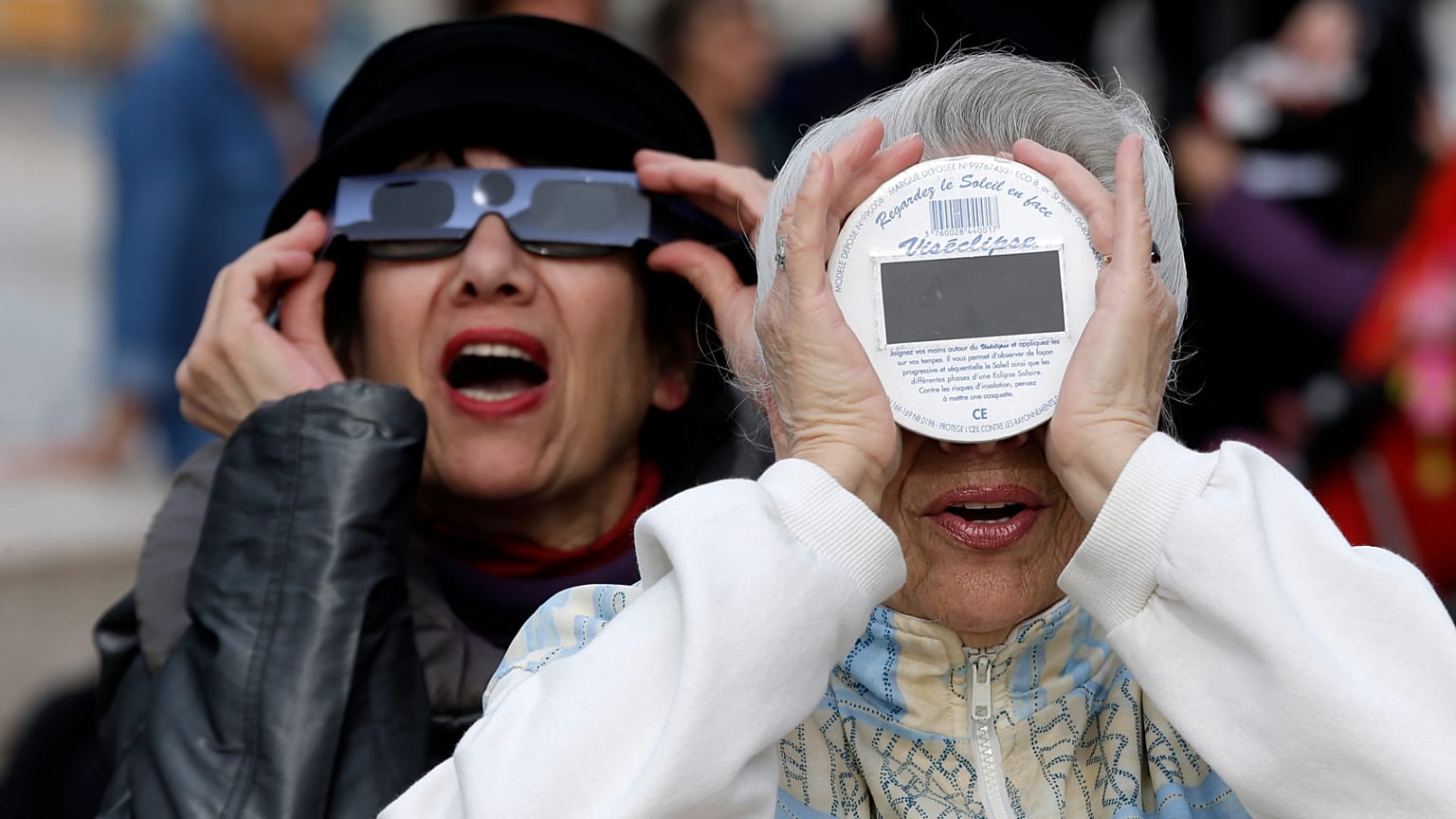













This Wednesday 12 August, a solar eclipse will be visible across parts of Europe. The eagerly awaited event requires eye protection, and shops selling viewing glasses are already crowded.
For several days now, special observation glasses have been flying off the shelves in pharmacies and specialist shops in France. With demand constantly rising, some outlets are already out of stock, while others are placing repeated orders in an effort to satisfy customers.
 ADVERTISEMENT
ADVERTISEMENT
ADVERTISEMENT
"We were out of them for three days, but this morning we received a good supply for Wednesday evening," says pharmacy assistant Aurélie Letavi, speaking to AFP.
Demand is so high because these protective glasses are essential.
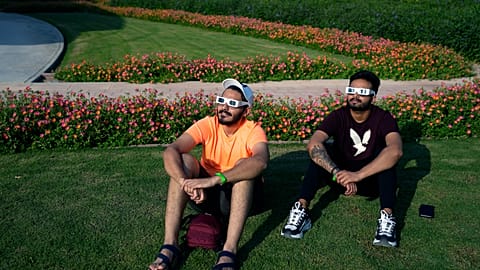
To watch the eclipse – the moment when the moon moves between the Earth and the sun – you absolutely must wear special glasses that comply with the ISO 12312-2 standard and are CE certified, which are vital to protect your eyes.
They are sold in pharmacies, at opticians and in certain specialist chains, priced between €1.50 and €4 each.
Retinal burns and irreversible eye damage
Experts are unanimous: looking at this solar eclipse with the naked eye can have long-term consequences. Within seconds, the sun's rays can burn the retina and cause irreversible damage to the eyes.
"The danger comes from retinal burns. Because we tend to stare at the sun, that burn will occur at the macula or just next to it. This area is very small, about 500 microns in diameter. It is where the cones and rods are found, and it is this area that allows you to see colours and to have sharp, detailed vision. So if you burn this area, you lose your fine vision. And that damage is irreversible", warns Dr Eric Frau, ophthalmologist and retina specialist.
The last total solar eclipse visible in Europe was in August 1999. At that time, 1,024 people consulted a doctor in mainland France after the eclipse. Of these, around 300 showed retinal abnormalities, according to the Institute for Public Health Surveillance (InVS) (source in French). One hundred and forty-seven patients (14%) had retinal damage and 106 (10%) had corneal damage.
Watching the solar eclipse: a few rules to follow
In France, the Ministry for the Economy and the Ministry of Health have launched a public awareness campaign (source in French) ahead of the event.
They have issued a few guidelines so as many people as possible can enjoy the moment without taking risks.
- Before the eclipse -When buying protective glasses, choose identified and reputable sellers (opticians, specialist retailers, pharmacies, recognised associations);-Check for the presence of the CE mark (ISO 12312-2 certified glasses);
- During the eclipse
-Do not look at the sun for more than three consecutive minutes;
-Take breaks between viewing periods to rest your eyes;-Be especially vigilant with children, who are often less aware of the danger."It is not more dangerous for a child. It is just that children are harder to supervise. And if they suffer a burn, they will be affected for the rest of their lives", explains Dr Frau.
The solar eclipse on Wednesday 12 August will also be visible from northern Spain, Iceland and Greenland. After that, it will be 2081 before a similar spectacle is seen again across France.