




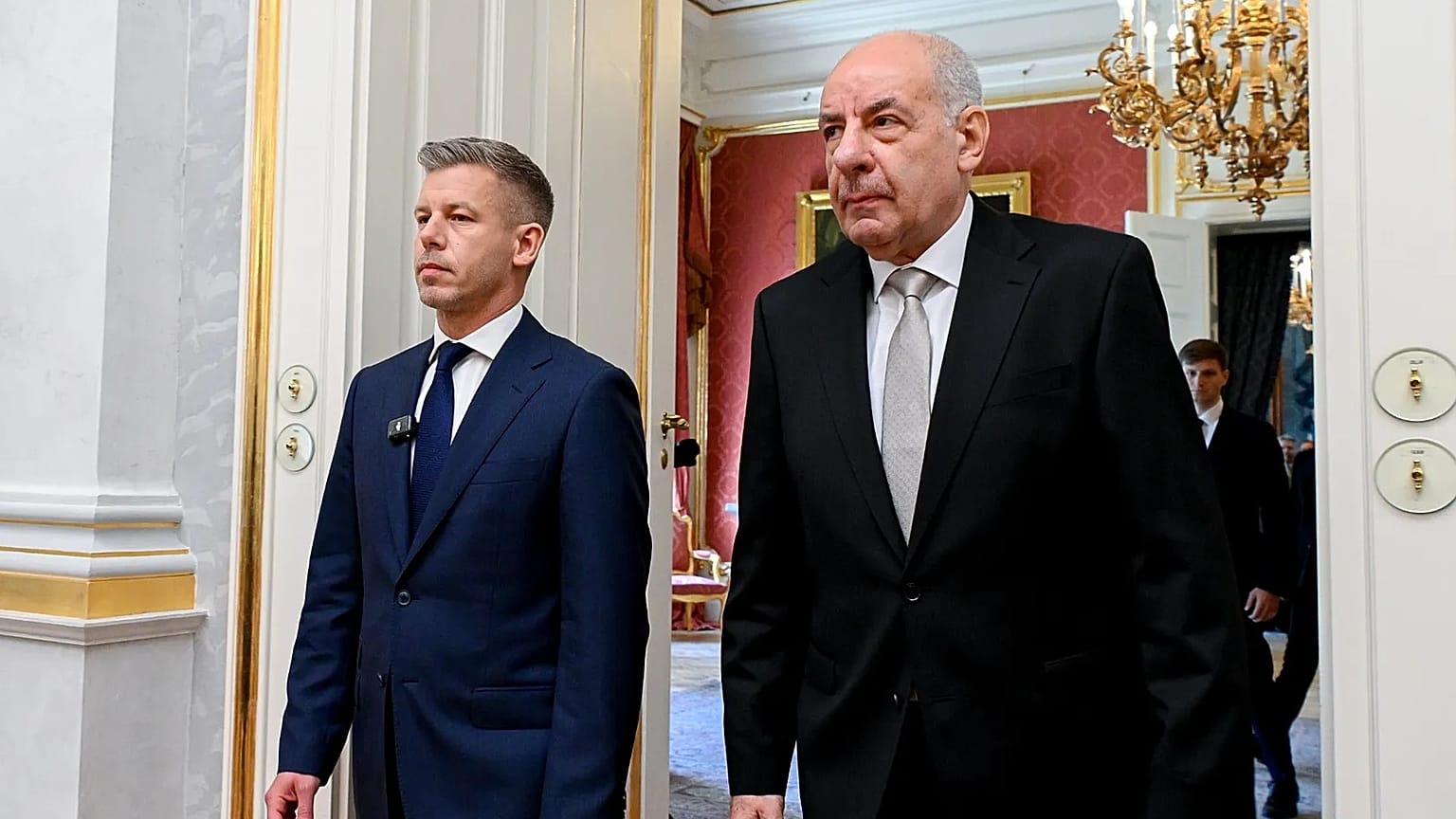













Hungary's parliament has approved a constitutional amendment to remove President Tamás Sulyok from office, with Prime Minister Péter Magyar accusing him of being Orbán's puppet. But he refuses to resign and argues the move in unconstitutional. What happens next? Euronews explains:
The Hungarian parliament amended the constitution on Monday to remove the country's president, Tamás Sulyok, as part of Prime Minister Péter Magyar's plan — dubbed "purgatorium" — to dismantle the political legacy of his predecessor, Viktor Orbán.
 ADVERTISEMENT
ADVERTISEMENT
ADVERTISEMENT
The issue is considered the first political test for Péter Magyar's Tisza Party, which came into power after its landslide victory in April's election.
While the attempted removal of the president enjoys popular support, the process could backfire legally, experts said. Euronews explains the details of the fight between the prime minister and the president of Hungary.
Why is Magyar targeting President Sulyok?
Magyar, who won a landslide victory in April's election, has repeatedly urged Sulyok to resign, branding him a puppet of Orbán.
Magyar's overarching aim is a complete overhaul of the political system — he has promised not merely a change of government, but a change of regime. He has called the 70-year-old president unworthy of the post, citing his failure to stand up to Orbán's divisive rhetoric and attacks on the rule of law.
Central to Magyar's argument is that Sulyok failed to defend opposition activists and politicians allegedly targeted by secret service activity during the election campaign.
"He should have defended constitutionality when one of its most important foundations was at risk," Magyar said. "The rule is that the secret service protects the Hungarian state and can never become the private army of the ruling party."
Legal expert Tamás Lattmann said the ruling party is also concerned about the president's power to pardon convicted individuals.
"If they want to initiate criminal proceedings against key figures from the previous government, there is a risk the president could pardon those people and prevent impeachment," he said.
Has the President responded?
Yes, essentially by saying he will not be ousted.
Sulyok argues that parliament has no grounds to cut short his mandate, warning that the move could plunge Hungary into a constitutional crisis. He has ruled out resigning, describing Magyar's move as a threat to democracy.
"The question is whether this force will sweep away internationally recognised and accepted principles of the rule of law, as well as genuine representative democracy," Sulyok said in a statement on Sunday.
What about Fidesz?
For them, it's also political.
Fidesz, the party that appointed Sulyok as president in the first place, has described the attempt to remove him as a step towards "tyranny" and called a protest against it.
Former Prime Minister Viktor Orbán, responsible for his nomination in the first place, has called on Hungarians to resist a "forced' ousting in a social media post. The problem for Orbán is that he is no longer as popular or powerful as he was, ousted himself in landslide.
"If the president is forcibly removed from office, Hungary has the right to resist. And we will," Orbán said.
What is the process for removing him?
Following parliament's constitutional amendment on Monday, Sulyok has five days to decide whether to sign it. If he does, the amendment will enter into force and he will lose his job.
If he refuses, parliament will begin impeachment proceedings on the grounds that he has failed to fulfil his constitutional duties and ask the Constitutional Court to revoke his mandate — a risky strategy, according to Lattmann.
"The Constitutional Court may determine that Tamás Sulyok did indeed violate the constitution by refusing to sign the amendment, but that the breach is not serious enough to justify his removal," Lattmann said.
"In that case, the court could leave Sulyok in office, despite finding that he acted unconstitutionally. Since the court still has a Fidesz-appointed majority, that is a realistic possibility."
Lattmann also questioned plans to temporarily replace the president with the speaker of parliament, noting that under Hungarian law this is only permitted when the president is unable to carry out his duties.
He argued that refusing to sign legislation does not automatically mean the president is unable to perform the functions of the office, potentially raising further constitutional questions. In addition, Sulyok could argue he is fit for office, except the prime minister does not want him.
Is this all legal?
The governing Tisza Party argues that removing the president was a key election pledge backed by a majority of voters. Magyar repeatedly signalled during the campaign his intention to remove key officials appointed under the Orbán government, and a May poll by the 21 Research Centre found that 67% of Hungarian voters want Sulyok removed.
"Tamás Sulyok has become a symbol of the Orbán regime, so he is a completely legitimate target for the prime minister," Lattmann said.
Sulyok, however, insists there are no constitutional grounds for his removal and argues that the separation of powers must be respected.
"I have no reason to resign; there is no constitutional basis for my removal," Sulyok said last week, adding that the amendment is aimed at a single individual and therefore undermines the rule of law.
What is Brussels saying?
The European Commission says it is monitoring developments surrounding the constitutional amendment. In June, EU Justice Commissioner Michael McGrath told Euronews that such personnel changes could be legitimate.
"It is inevitable when you have such a seismic change in the political landscape of a country that there will be changes in personnel," McGrath said.
Meanwhile, nearly 50 MEPs have called on the European Commission to address the issue as a matter of urgency.
Sulyok has requested an opinion from the Venice Commission, the Council of Europe's constitutional advisory body, composed of independent legal experts helping states to align with international democratic standards.
The Venice Commission is considered to be independent and impartial. After their delegation visited Hungary in June, experts will discuss the matter in October.