




























Experts warn that fossil fuel interests and 'attacks on science' have stalled one of the most contentious climate debates once again.
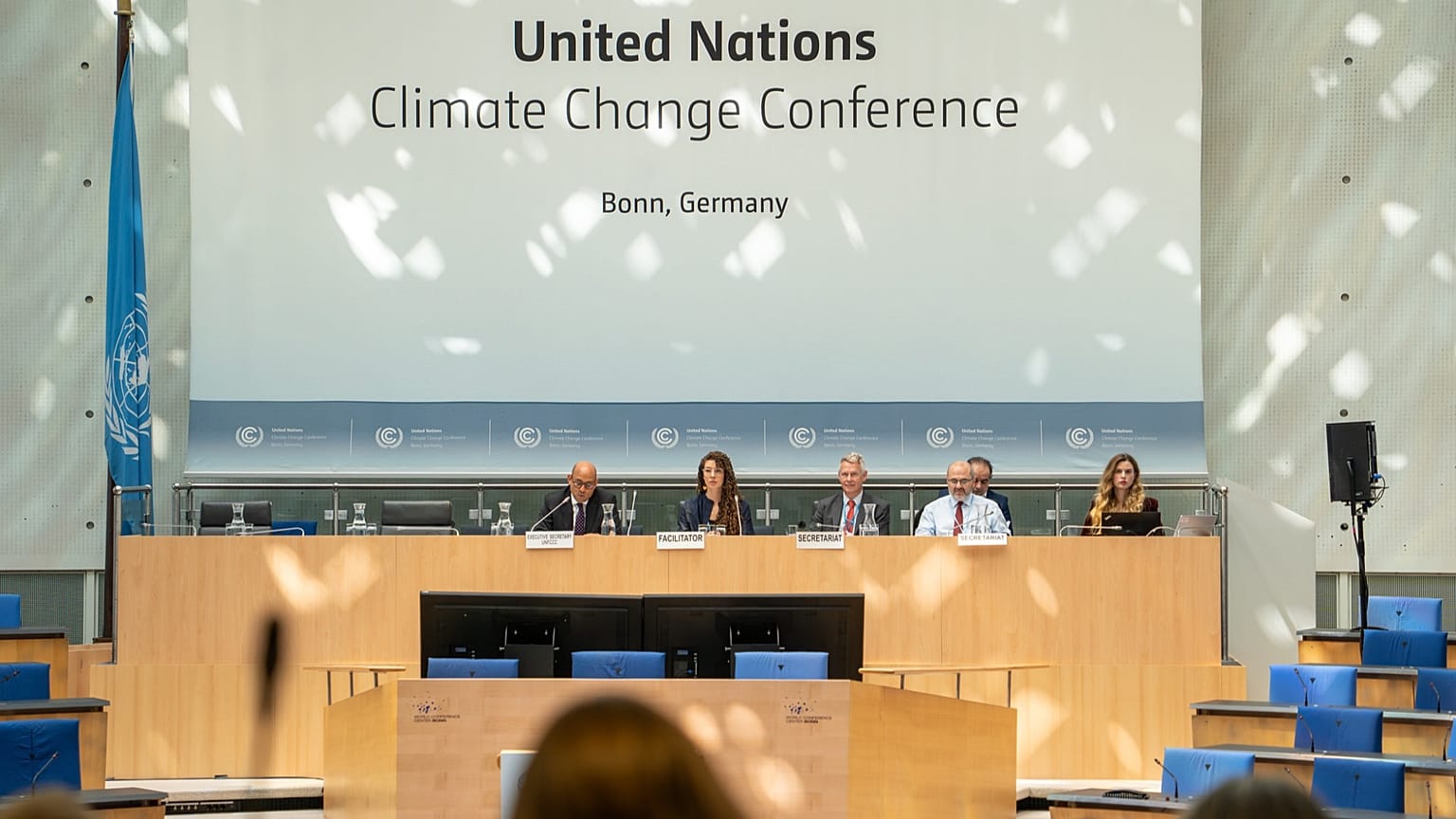
Mid-year UN negotiations in Bonn were pushed into overtime last night, as countries failed to agree on a financing deal to help developing countries adapt to climate change.
 ADVERTISEMENT
ADVERTISEMENT
ADVERTISEMENT
Executive Secretary of the United Nations Framework Convention on Climate Change (UNFCC) Simon Stiell called out the “you-first-ism” of nations refusing to deliver commitments before others do so.
“There remain significant divides, and significant work for the intersessional period ahead,” he added.
While some progress was made on the ‘Just Transition’, which aims to ensure that the benefits of moving away from fossil fuels are shared fairly, the talks were overshadowed by questionable interests and growing scrutiny over who actually gets a seat at the table.
Some argue that the Bonn talks were frustrated by a “small group of fossil fuels interests” attacking the science of climate change behind closed doors, French news agency AFP reports.
The allegations have been made by delegates representing the EU, Switzerland and dozens of developing nations.
“There are powerful interests desperate to protect their wealth and influence,” says Fiji’s head of delegation Sivendra Michael. “We are seeing certain countries holding the process hostage as vulnerable people suffer heat stress, king tides [the highest predicted high tide of the year at a coastal location] and storms, drought and famine.”
Did fossil fuel interests block progress at the Bonn climate conference?
As well as sending government officials, nations attending UN climate talks can bring non-governmental representatives in their delegations. This could include Indigenous leaders, youth delegates, academics and business representatives – some of whom may represent fossil fuel interests.
Bonn suffered “coordinated attacks across the negotiation rooms by the small number of fossil fuel interests,” according to Manjeet Dhakal, an adviser to the 44-nation Least Developed Countries bloc, who did not single out any country by name.
The Earth Negotiations Bulletin, which released daily reports on the negotiations, says India and the Arab Group – which includes oil-rich Saudi Arabia, the UAE and Kuwait, among others – opposed attempts to call for scientific bodies like the UN’s IPCC to counter climate change misinformation, as they said it could be used to discredit genuine scientific debate.
Similarly, an attempt by the UK and EU to remove a reference to “varying perspectives” on the concept of climate tipping points was opposed by Saudi Arabia and coal-dependent India, who argued that the issue is neither settled nor clear.
India further suggested deleting a reference to “irreversible changes” and opposed a text on limiting the magnitude and duration of the “overshoot” past the Paris Agreement’s 1.5°C limit – something that most delegates, including the EU, were pushing for.
Scientific findings are clear that faster emissions reductions – which could keep the 1.5°C target within reach – are necessary, feasible and will bring major benefits for health, energy security, jobs and affordability, says Climate Action Network (CAN) Europe.
On Tuesday (16 June), the chair and chief negotiator of the Alliance of Small Island States (AOSIS) said she was “extremely troubled by the attempts to delink and undermine the best available science” at Bonn, AFP reports.
Shiva Gounden, Head of Pacific at Greenpeace Australia Pacific, argues that an “unrelenting war on climate science” took place in Bonn to try to erode warming targets.
“But we refuse to let these rooms become detached from the Pacific’s reality, where a breached 1.5°C will drown our history and displace our heritage, as saltwater bleeds into the Vanua (land) that has sustained us for generations,” he adds.
Prospects of a fossil fuel phaseout at COP31
These frustrations are familiar territory for UN climate talks, which require unanimous consensus on decisions.
Last year’s COP30 in Brazil drew criticism when it ended with a final text that avoided any roadmap for phasing out fossil fuels – despite becoming a flashpoint discussion.
This result prompted the launch of the first international conference dedicated to mapping a fair and orderly transition away from fossil fuels in Santa Marta, Colombia, earlier this year, which was positioned as complementary to COP and explicitly excluded fossil fuel lobbyists. Donald Trump was also snubbed from the event.
“Enthusiasm around a just transition away from fossil fuels keeps building, thanks in no small part to the recent Santa Marta, Colombia conference and the Brazilian COP Presidency’s forthcoming roadmap,” says David Waskow of the World Resources Institute.
“Expectations are mounting for countries to craft their own tailored national roadmaps to shift off fossil fuels.”
‘We came here to negotiate a better future’
AOSIS worries that countries have not laid a strong enough foundation for success at COP31, which will be held in Türkiye in November.
"We came here to negotiate a better future,” says Marshall Islands climate envoy Tina Stege. “We’re in the midst of an energy crisis, risking an overshoot of 1.5°C with continued fossil fuel dependence that hurts us all, but especially the most vulnerable.
“Here in Bonn we’ve seen attacks on science, and we’ve seen a push to counter those attacks - from the islands, but also from so many others. The science tells us we need 1.5°C; it tells us we need to close the finance gap; it tells us the future will be safer, healthier, and more liveable if we take bold decisions. It’s time we listen."