




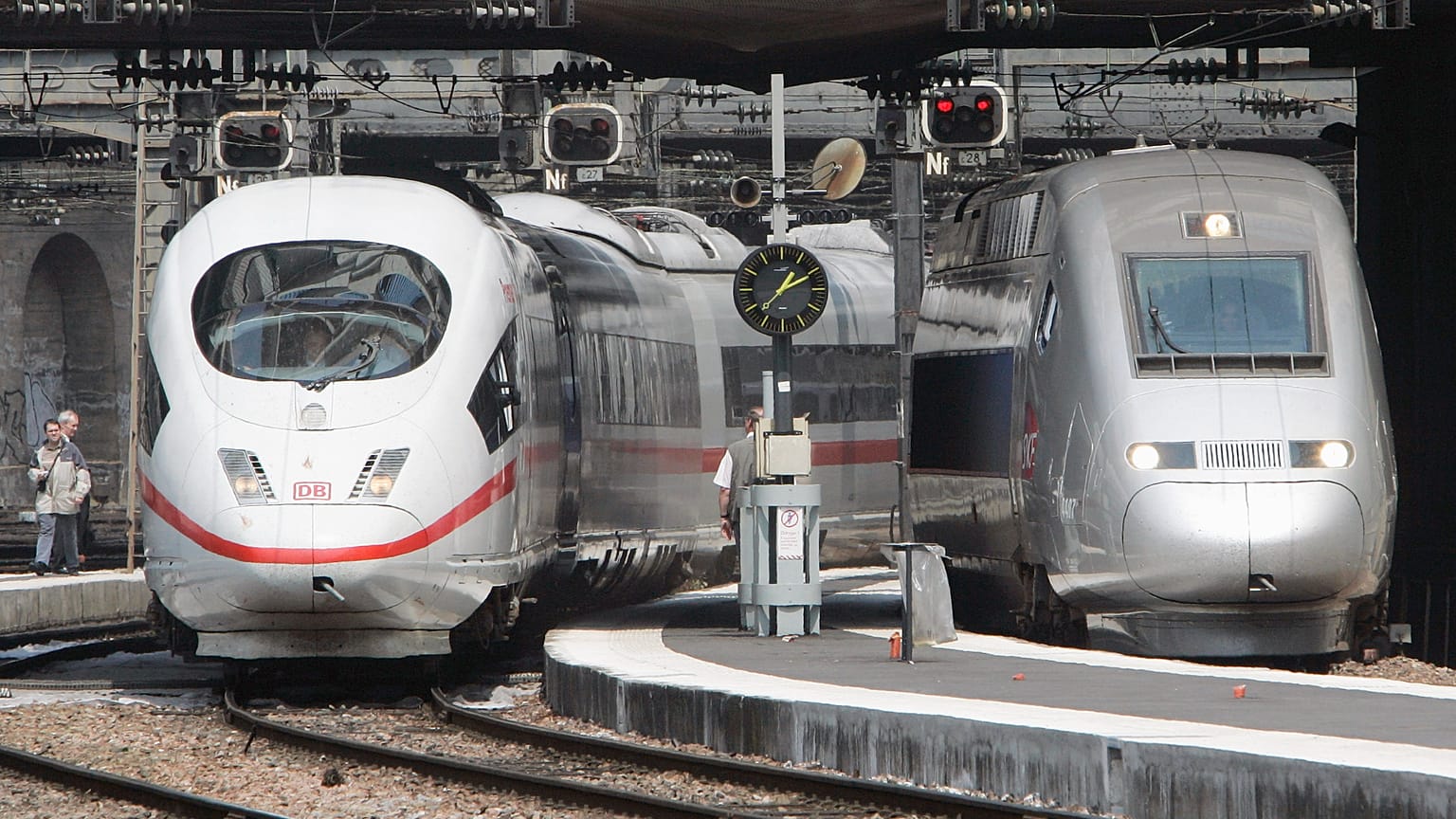













The European Commission has just unveiled its "One journey, one ticket" initiative. It will simplify cross-border train travel as passengers face increasing delays and cancellations.
The new Passenger Package, announced on 13 May, is a fundamental shift toward a unified, digital, and legally protected rail network. It moves away from the current, fragmented European system, where thousands of train journeys are disrupted, leaving millions stranded.
 ADVERTISEMENT
ADVERTISEMENT
ADVERTISEMENT
The new "single ticket" will allow travellers to combine multiple rail segments, regardless of operator, into one single booking. This ensures transparency protections and full, consistent passenger rights for the entire journey. If delays occur, passengers are protected, with operators required to provide rerouting, assistance, accommodation, and compensation (such as 25 per cent for 60–119-minute delays and 50 per cent for 120+ minute delays).
The nightmare of train travel
The European rail ticket system routinely fails to let passengers book a cross-border trip from point A to point B in one seamless transaction.
On Europe's busiest transit corridors, data shows that one in five international rail journeys simply cannot be purchased as a unified ticket through major operator platforms. This fragmentation gets dramatically worse over longer distances, where more than half of all train journeys spanning over 900 kilometres cannot be booked end-to-end.
Public frustration has forced the issue onto the highest political stages. A 2025 Eurobarometer survey showed that 25 per cent of Europeans struggle to book tickets combining different multi-train journeys, with 43 per cent not booking them at all because the multi-app booking process is a hassle. This means that planning a sustainable continental train ride takes, on average, 70 per cent longer than booking a commercial flight.
Greens MEP Lena Schilling points to cross-border routes where journeys exist physically but disappear digitally depending on where travellers search.
"When you want to travel from Paris to Barcelona or wherever, there is a train ticket on the French booking service, but you can't book it if you're Spanish over your own booking system. So, it's the same train, the same connection, but one booking app is showing you this option because it's a direct train ... and on the Spanish side it's not."
Monopolies and regional isolation
Dominant national rail operators protect their market shares by actively restricting ticket data access and keeping independent platforms from displaying or selling their full range of fares. Through this closed ecosystem, these monopolies stifle competition from smaller rail startups and third-party vendors who could otherwise offer travellers more transparent, cheaper alternatives.
According to Schilling, some of the resistance comes from operators concerned about losing control over customer relationships and pricing visibility: "They need to share their train connections not just with each other, but also with independent train operators like Trainline. They are afraid to lose customers."
This digital gridlock is another major barrier to the EU’s goal of a single, highly integrated economic market because it isolates regions behind incompatible national infrastructure walls. While commercial aviation does seamlessly link European cities, the fragmented rail network makes regional divides worse and makes remote, or border communities feel cut off from central economic hubs.
"[...] trains, a good connection, and real connection are really vital," for a solid European Union, said Schilling.
The new package is a continuum
The Passenger Package builds on a comprehensive set of long-term rules on the liberalisation and interoperability of the European railway system.
By addressing the end-to-end ticketing system, the package goes beyond the Commission’s four previous railway packages launched between 2001 and 2016. These focused more on market opening, competition, and safety, failing to link the ticketing business with Europe’s reality of multi-operator journeys.
The 2012 Single European Railway Area Directive allowed railway companies to operate services throughout the EU under a unified legal framework, effectively integrating Europe's railway market into a single, connected system. Today, this allows citizens to enjoy cross-border mobility, including purchasing end-to-end tickets for trips across the bloc.
A multi-leg train journey is feasible when national road transport systems are interconnected. The 2010 Intelligent Transport Systems Directive (ITS) improved interoperability among member states' rail systems by accelerating the deployment of traffic and transport management technologies across the bloc.
The new package can enhance passenger rights across the EU, building on the 2021 Rail Passenger Rights Regulation. This regulation established a clear minimum standard for rail passengers in all member states. Key provisions included the right to rerouting or reimbursement for delays of over 60 minutes, access to clear information about ticket prices, timetables, and delays, and the ability to file complaints easily.
What are the benefits for passengers?
The package aims to eliminate the current issue where cross-border or multi-operator rail trips are difficult to book because tickets are split across multiple platforms.
Passengers can now combine tickets from different operators into one single ticket for multi-leg journeys. This simplifies the booking process, allowing users to compare options and make a purchase all in one go on a single website, rather than using multiple apps.
“[...] you just open your one train app, whatever it is, your national broadcast or any other app, and then you just search for the connection you need and buy it with one click”, said Schilling.
Finding tickets across different websites will become easier because train companies are now required to allow third-party platforms to sell their tickets. Larger providers must also show all railway services available in their country on their ticketing websites, not just their own.
Operators must present travel options in a neutral and transparent manner, allowing consumers to choose their preferred journey. Platforms’ default settings must include greenhouse gas emissions as a filter, allowing users to rank trips by carbon footprint.
Travellers are fully protected in the event of journey disruptions. In addition to guaranteeing compensation for the overall delay, the railway company responsible for the disruption will need to reroute passengers to their final destinations at no additional cost. Assistance, including meals and refreshments, is foreseen, with accommodation for overnight stays.
On passenger rights, Schilling wants clear rules on train connections. “[...] you have this one booking system, but then the problem is, how much time do you need to change between one train and the next one? So I want to have a minimal time that is always thought through to change at the train station because otherwise you miss it, and what then?" .
Impact on companies and infrastructure
According to the Commission, open data breeds competition. So this framework will give smaller, low-cost startups the visibility they need to challenge monopolies and drive down ticket prices. For operators, it’ll provide a standardised data-sharing network that reduces administrative friction and unlocks access to a wider pool of cross-border passengers.
It also benefits the broader infrastructure by serving as a policy lever to compel member states to modernise tracks, synchronise national signalling systems, and eliminate physical border bottlenecks.
"If a lot of people ask for something, we must think of how we can increase supply, how we can increase infrastructure," argued Schilling.
However, the Community of European Railway and Infrastructure Companies (CER) already issued warnings. They consider the mandatory distribution deals an unprecedented regulatory overreach.
CER argues that forcing major national rail companies to sell competitor products strips operators of commercial freedom and disincentivises investment in their own, often costly, ticketing technologies.
Alberto Mazzola, executive director of CER, explained that the proposal risks shifting power away from rail operators and towards digital intermediaries, third-party apps that would gain market leverage.
"[...] the platform that is dominant will impose conditions on the market", Mazzola said. "Now it is no longer a commercial relation where two partners are equal. One will have an obligation, and the other one will have a right."
They argue that once platforms become sufficiently powerful, they could demand higher commissions, potentially increasing costs for rail operators and ultimately passengers.
CER also explained that ticketing remains a secondary issue compared with Europe's physical infrastructure gaps.
"You have the infrastructure, then we have the trains, then we have the tickets. We don't start with the tickets," Mazzola said.
Europe has spent decades expanding roads while parts of its rail network have contracted. According to CER, the focus should instead be on increasing network capacity and accelerating cross-border high-speed rail.
"People want to see a good price and a short duration. To reduce the duration of the trip, you need to go high speed."
Unified ticketing remains a symbolic gesture without physical rail connections to back it up. A single ticket is useless if congestion or incompatible signalling systems, such as the varied national versions of the European Rail Traffic Management System (ERTMS), prevent trains from running smoothly across borders.
Therefore, the success of this legislation hinges entirely on accelerating physical integration, with the Commission linking this to 2026 funding projects that ensure the rail infrastructure can deliver on the promise of seamless travel.
The road ahead
The Commission must now submit its recommendations to the Parliament and Council for review and approval. Member states must accelerate the implementation of the ITS to ensure smooth operationalisation of the simplified booking system.
As part of the package, co-legislators also need to greenlight two additional initiatives, the Multimodal Digital Mobility Services (MDMS) and the Single Digital Booking and Ticketing Regulation (SDBTR). The MDMS enhances transparency and promotes fair competition in the bloc’s ticketing market, while the SDBTR increases the availability of rail tickets on digital platforms.