




























For some 300 kilometres, groundwater flows underground between France, Germany and Switzerland. It is Europe’s largest groundwater reserve, yet a new study reveals it is heavily polluted.
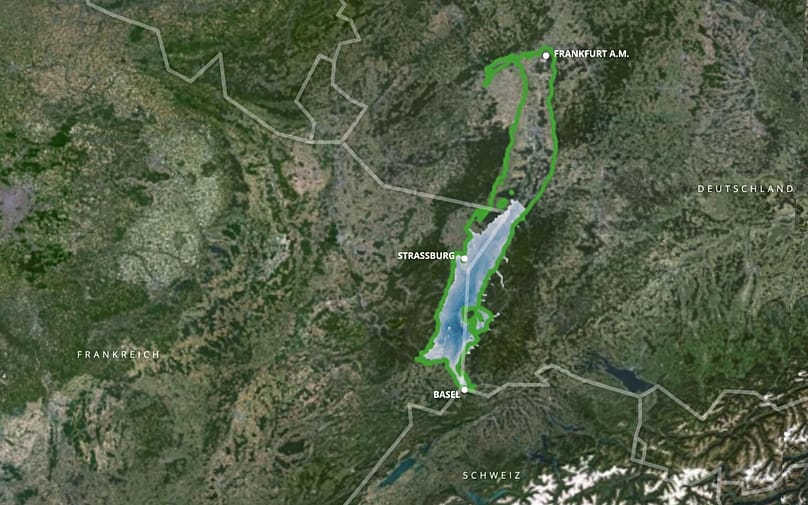
From Frankfurt to Basel, deep underground lies a treasure that supplies more than five million people in the region with drinking water. It is Europe’s largest groundwater reserve. It stretches for around 300 kilometres below the surface and feeds, for example, the Upper Rhine and numerous wetlands.
 ADVERTISEMENT
ADVERTISEMENT
ADVERTISEMENT
But this huge groundwater reservoir is heavily polluted, as a study published in June has shown. Plant protection products, pharmaceutical residues and synthetic industrial chemicals, so‑called per- and polyfluoroalkyl substances (PFAS), are contaminating the groundwater; corresponding trace substances have been detected.
This underground basin with a capacity of 150 billion cubic metres is not only vital for drinking water, it also has an impact on countless animal and plant species. New discoveries are made again and again, such as the groundwater crustacean species “Parabathynella baden-wuerttembergensis”. A journey beneath the surface between Germany, France and Switzerland.
Underground: the invisible river in the Rhine Valley
The reservoir extends from Frankfurt am Main across the French border to Strasbourg and further south to Basel in Switzerland. The volume of water is hard to grasp – 150 billion cubic metres corresponds to roughly 60 million Olympic-sized swimming pools.
The groundwater reserve in the Upper Rhine Valley is roughly equivalent in size to three interconnected Lake Constances underground. Lake Constance itself contains around 48 billion cubic metres of water.
Groundwater is the term used when the surrounding soil is permanently saturated with water. The layers above are not constantly moist; this is known as the unsaturated soil zone. Depending on the season and rainfall, the water table can rise or fall.
The groundwater used for drinking water is often only a few, or at most a few hundred, metres deep. In some places it flows just about a metre below the surface, slowly northwards. But in the Upper Rhine Graben drilling has already reached 3,335 metres towards the Earth’s core. The so‑called “Frankenthal 10” operation was carried out between Mannheim and Worms and is considered the deepest borehole to date.
The deepest known section of the Upper Rhine Graben is the so‑called Heidelberger Loch, where the groundwater lies at a depth of more than 500 metres. Researchers say other areas are as little explored as the deep sea.
Pesticides and pharmaceutical waste: pollution from harmful substances
As Europe’s largest groundwater body, the Upper Rhine Valley supplies almost five million people in the catchment area with drinking water. Compared with other major reservoirs in Europe, it is therefore one of the most valuable groundwater systems.

For quite some time, however, the area has been increasingly exposed to human-made pressures. In particular, the excessive use of fertilisers and pesticides is placing growing strain on the groundwater, as shown by the findings of the cross-border Ermes-II study (source in German) from June 2025.
At 96 percent of the 1,500 monitoring sites examined – spread along the Rhine between southern Germany, northern Switzerland and eastern France – at least one micro-pollutant was found. Plant protection products (pesticides) were identified as the main cause. But in addition to agriculture, nearby towns and cities, industrial plants and numerous wastewater treatment plants are also contributing to the environmental burden.
However, the tests look at raw water. Drinking water is not taken directly from the groundwater; before distribution it undergoes special treatment. The quality of the groundwater only determines the extent to which the water has to be treated before it meets public health standards.
What the cocktail effect has to do with our drinking water
At 59 percent of the monitoring sites at least one drinking water limit value was exceeded, the study’s authors reported when they presented their findings. One particularly widespread substance is trifluoroacetic acid (TFA), which scientists describe as the “ultimate PFAS”.
PFAS, also known as “forever chemicals”, are man-made substances used by industry in the production of numerous consumer products such as electronic devices, paints, cars and cosmetics. TFA is the PFAS compound most frequently detected in groundwater. It is therefore considered to be ubiquitous in the environment.
The experts involved in the study also speak of a “cocktail effect”. When certain substances or groups of substances occur together, their toxic effect can be amplified – even in small quantities. Exactly what impact this has on health and the environment is still poorly understood.
The aim of the study, which has been running for three years, is to identify the reasons for the deterioration in groundwater quality. This should make it possible to develop measures to prevent further decline. Regular analyses have been carried out since 1991.
“The results show that the protection of groundwater continues to face major challenges,” said Dr Dirk Grünhoff, president of the State Office for the Environment in Rhineland-Palatinate. The data, he added, provides a solid basis for addressing these challenges and deriving concrete measures.
Micro-organisms take on a cleaning role
Until now, the environment itself has even taken care of part of the purification. One of the few animals to bear the name Baden-Württemberg actually lives in the groundwater reservoir. It is a tiny species of groundwater crustacean: Parabathynella badenwuerttembergensis. Discovered in 2013 in the groundwater by researchers at the University of Koblenz-Landau, it has a particularly important role: acting as a sort of clean-up crew, these micro-organisms break down organic matter and consume bacteria.
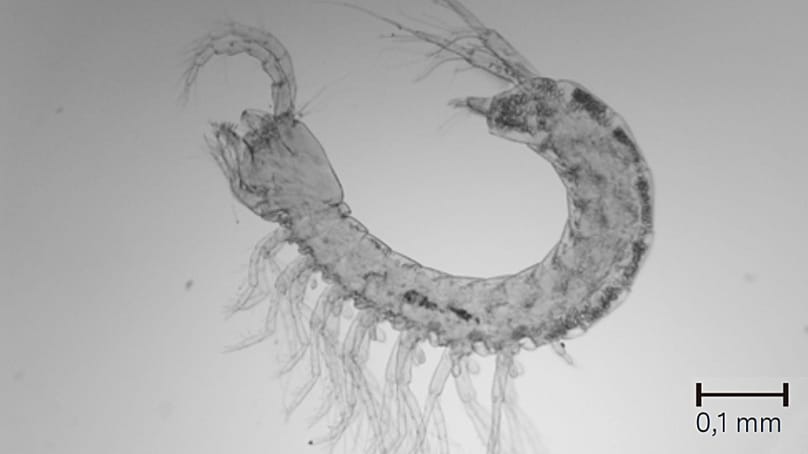
This groundwater crustacean is an ancient, primitive and somewhat bizarre-looking creature from a period more than 200 million years ago, as the Baden-Württemberg State Environment Agency explained in 2013. Its body structure is thought to have changed little for millions of years. The authority described the groundwater as a “living geological museum” and the animals as “living fossils”.