

















Also in this newsletter: Eurogroup President Kyriakos Pierrakakis tells Europe Today the EU economy is being "tested" amid the Middle East war, but is "better prepared" following the 2022 energy crisis.
Good morning from Brussels. I’m Mared Gwyn.
 ADVERTISEMENT
ADVERTISEMENT
ADVERTISEMENT
Europeans are today pushing for diplomacy and de-escalation amid signs that the conflict in the Middle East is spiralling further, with targets on both sides of the conflict widening to include civilian infrastructure – including key energy sites.
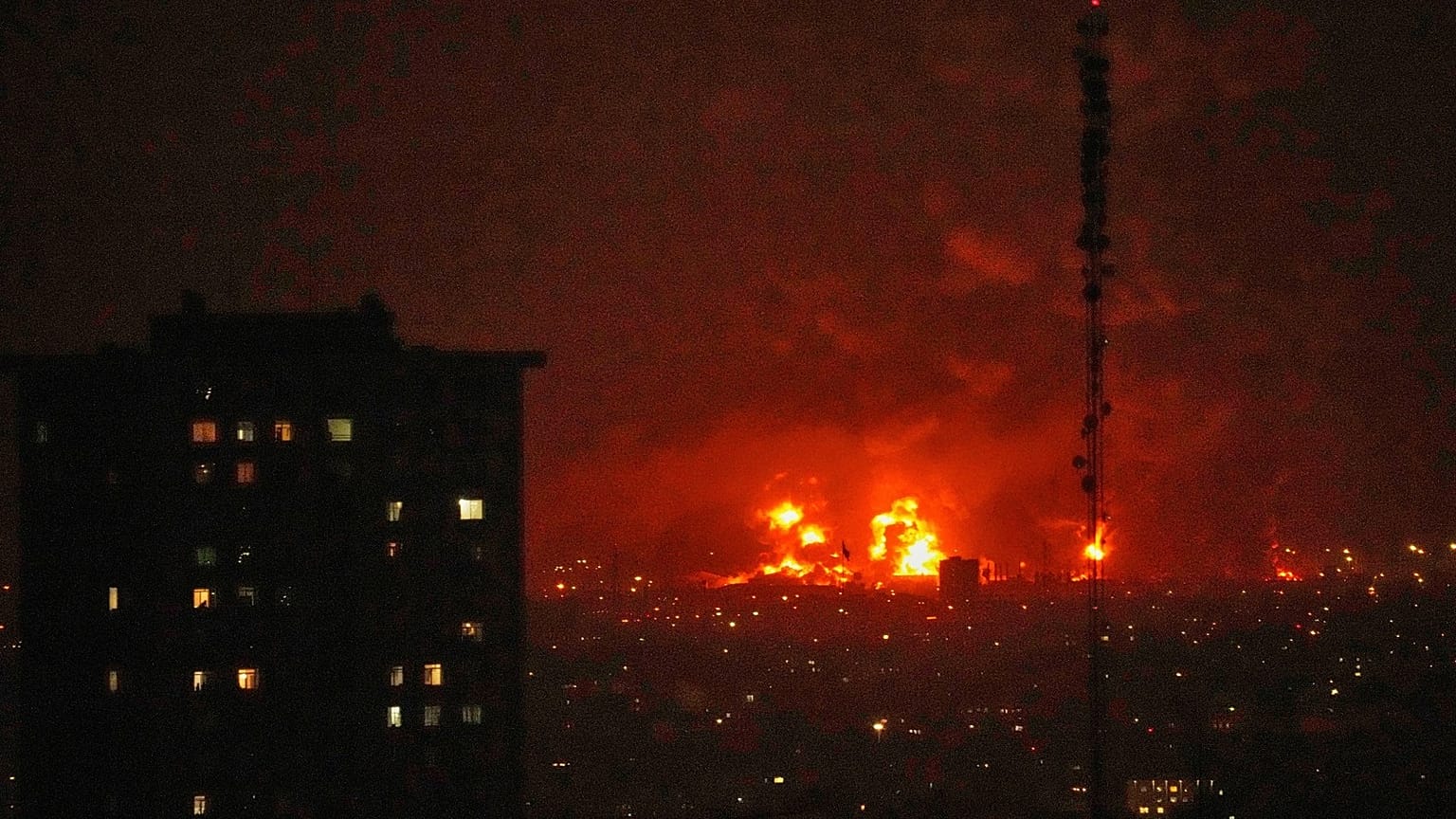
Bahrain’s state oil company Bapco has just declared force majeure after a suspected Iranian drone hit its refinery, while oil depots in the Tehran area were also hit over the weekend, engulfing the Iranian capital in black smoke.
Crude prices have now soared to over $100 (€87) per barrel for the first time since August 2022, threatening to further push up consumer prices.
In response, G7 finance ministers will later today mull jointly releasing oil from emergency stocks in coordination with the International Energy Agency (IEA), according to a Financial Times report, citing sources who claim that the idea is backed by the US.
Also meeting later today are the Eurozone's finance ministers, with talks expected to centre on the economic fallout of the war.
Speaking live on Europe Today earlier, Eurogroup President and the Greek economy and finance minister Kyriakos Pierrakakis said that the EU is being “tested” but that the extent of the war’s impact on its economy will depend on the conflict’s “duration” and the extent of “disruption” to global energy supplies and supply chains.
“We are being tested, this is obvious. We are very concerned about how things are evolving on the ground,” Pierrakakis said, adding that the economic “toolkit” developed in 2022 in response to the war in Ukraine means Europe is “better prepared.” Watch.
Economists are warning that a prolonged conflict could set back European growth forecasts and further squeeze households by pushing up prices beyond oil and energy. The International Monetary Fund (IMF) has also suggested the extent of economic damage will depend on the war’s duration, the damage inflicted on key infrastructure in the region and the knock-on effect on energy prices, indicating central banks should intervene if needed.
Meanwhile, on Sunday, Iran chose Mojtaba Khamenei to replace his father, Ali Khamenei, as Supreme Leader -- a hardliner Trump has already described as an “unacceptable” successor, igniting fears the war could further escalate.
Telephone diplomacy from European capitals is now intensifying, amid increasing signs the war is spiralling and threatening to severely disrupt the global economy.
The Presidents of the European Council and Commission, António Costa and Ursula von der Leyen, will hold a video conference with Middle Eastern leaders later today to assess the situation in the region and discuss “ways to bring the current conflict to an end,” according to Costa’s office.
Last night, in the first call between a Western leader and Tehran since the war in the Middle East broke out over a week ago, French President Emmanuel Macron urged Iranian President Masoud Pezeshkian to halt strikes on countries in the Gulf and restore free navigation in the Strait of Hormuz, while vowing to keep the diplomatic channel between Paris and Tehran open.
President Macron will also visit Cyprus later today in a show of “solidarity” with the EU island nation, which was last week caught in the crossfire of the war in the Middle East, stirring fears Europe could be further dragged into the conflict.
He is expected to hold talks with his Cypriot and Greek counterparts and detail moves to "strengthen security around Cyprus and in the eastern Mediterranean", the Élysée said on Sunday.
An Iranian-made Shahed drone struck the British Royal Air Force (RAF) base at Akrotiri in southern Cyprus on Sunday 1 March, suspected to have been launched by the Iranian-backed militia Hezbollah, prompting several EU nations to deploy defensive assets to the country. France has also deployed its nuclear-powered aircraft carrier Charles de Gaulle to the eastern Mediterranean in response.
The targeting of the British base in Cyprus has also triggered protests against the UK’s presence on the island, with hundreds taking to the streets in protest in the capital of Nicosia in recent days.
Despite the UK government sending a warship to bolster defenses around its base in Cyprus, Cypriot officials have voiced disappointment with the speed of the UK’s communications after the attack and the extent of the defensive assets it has provided.
In other news: Slovakia’s Prime Minister Robert Fico has said he will meet Commission President Ursula von der Leyen tomorrow, as the dispute with Ukraine over oil flows through the Soviet-era Druzhba pipeline drags on.
The pipeline was hit in a strike in Ukraine late January, disrupting Russian oil flows to Slovakia and Hungary. Hungarian premier Viktor Orbán and Ukrainian President Volodymyr Zelenskyy have since exchanged in a war of words that dramatically escalated on Friday, when Hungary detained, then released, seven Ukrainian bank workers transporting gold and cash via his landlocked country. We’ll have more on the planned talks between Fico and the Commission chief in tomorrow’s edition.
Senior UAE official outlines country’s defence strategy
As Iranian drones and missiles continue to rain on the Gulf, the United Arab Emirates (UAE) says it is defending its territory while working to prevent the conflict from spreading further across the region, our correspondent Jane Witherspoon reports.
Jane was one of a small group of journalists briefed by senior Emirati officials on the situation in Abu Dhabi over the weekend. They say the country had been preparing for instability long before the latest escalation.
“We’ve been getting ready. Not expecting war but getting ready for a sort of emergency, such as the one that we are facing today. The UAE is a country that prepares, and we have been preparing now for a long time because of our readout of the situation in the region. We’ve been preparing in terms of food stock, in terms of facilities, and so on,” one of the officials said.
The remarks offer rare insight into how the country anticipated the possibility of a broader regional crisis even as it pursued diplomatic engagement with Tehran.
“We’ve been acting in a very, let’s say, constructive way with Iran, along with other GCC countries,” the official said, but added that they had not expected Iran to attack and “risk its relations” with its neighbours.
Jane has the full report.
More from our newsrooms
Explainer: Who is Mojtaba Khamenei and how did he succeed his father? Iran’s Assembly of Experts has formally announced that Mojtaba Khamenei has become the successor to Ali Khamenei and the third Supreme Leader of the Islamic Republic. Alain Chandelier takes acloser lookat his background and rise to power.
Iceland plans August referendum on resuming EU membership negotiations. The Icelandic government is proposing to hold a referendum on 29 August on the resumption of negotiations for accession to the European Union. Grégoire Lory has more.
Hungary's opposition leader Péter Magyar calls on Russia to refrain from election interference. Magyar has called on Russia to stop interfering in Hungary's April parliamentary elections, following a report exposing an alleged Kremlin team operating from Budapest's Russian embassy to keep Viktor Orbán in power. Russia denied those allegations. Sandor Zsiros has the story.
We're also keeping an eye on
- European Commission President Ursula von der Leyen, European Parliament President Roberta Metsola, and the EU’s foreign policy chief Kaja Kallas deliver speeches at the 2026 EU Ambassadors’ Conference.
- Eurozone finance ministers gather in Brussels.
- European Parliament plenary session kicks off in Strasbourg.
That's it for today. Jane Witherspoon contributed to this newsletter. Remember to sign up to receive Europe Today in your inbox every weekday morning at 08.30.