


















Emirates, Etihad Airways and flydubai are continuing to operate a limited schedule, while Qatar Airways has extended its flight suspension until 6 March.
Virgin Atlantic became the latest airline to resume operations out of the UAE with its first flight to London Heathrow since Middle East airspace closures began due to the conflict between the US-Israel and Iran.
 ADVERTISEMENT
ADVERTISEMENT
ADVERTISEMENT
The British airline's scheduled 11:20 am flight took off from Dubai International Airport (DXB) at 11:50 am local time (8:50 am CET) on Wednesday. Virgin also resumed flights from Riyadh, with its first departure from King Khalid International Airport at 4:22 am local time (2:22 am CET).
Emirates, which also operates out of DXB, has said that its scheduled flights remain suspended until 11:59 pm local time (9:59 pm CET) on 7 March, while Etihad, which operates out of Abu Dhabi, has extended its suspension until 6 am local time (3 am CET) on 6 March.
Both airlines are operating a limited number of repatriation flights, with the priority being stranded passengers. Etihad and Emirates will be contacting passengers directly about these flights, and those who have not been notified should not travel to the airport.
Budget carrier flydubai has also resumed a limited number of flights.
The UAE's General Civil Aviation Authority said in a statement on Tuesday evening that 60 flights transporting 17,498 passengers have departed the country so far. The authority aims to increase the number of scheduled flights up to 80 per day, with a capacity of 27,000 passengers.
British Airways, which does not usually operate out of Oman, has organised a flight between Muscat and London that is set to depart at 2:30 am local time on 5 March. Seats are being assigned on a first-come, first-serve basis, and passengers who were booked on flights from Dubai, Doha, Abu Dhabi, Bahrain, Amman, and Tel Aviv can call the airline to book their seat.
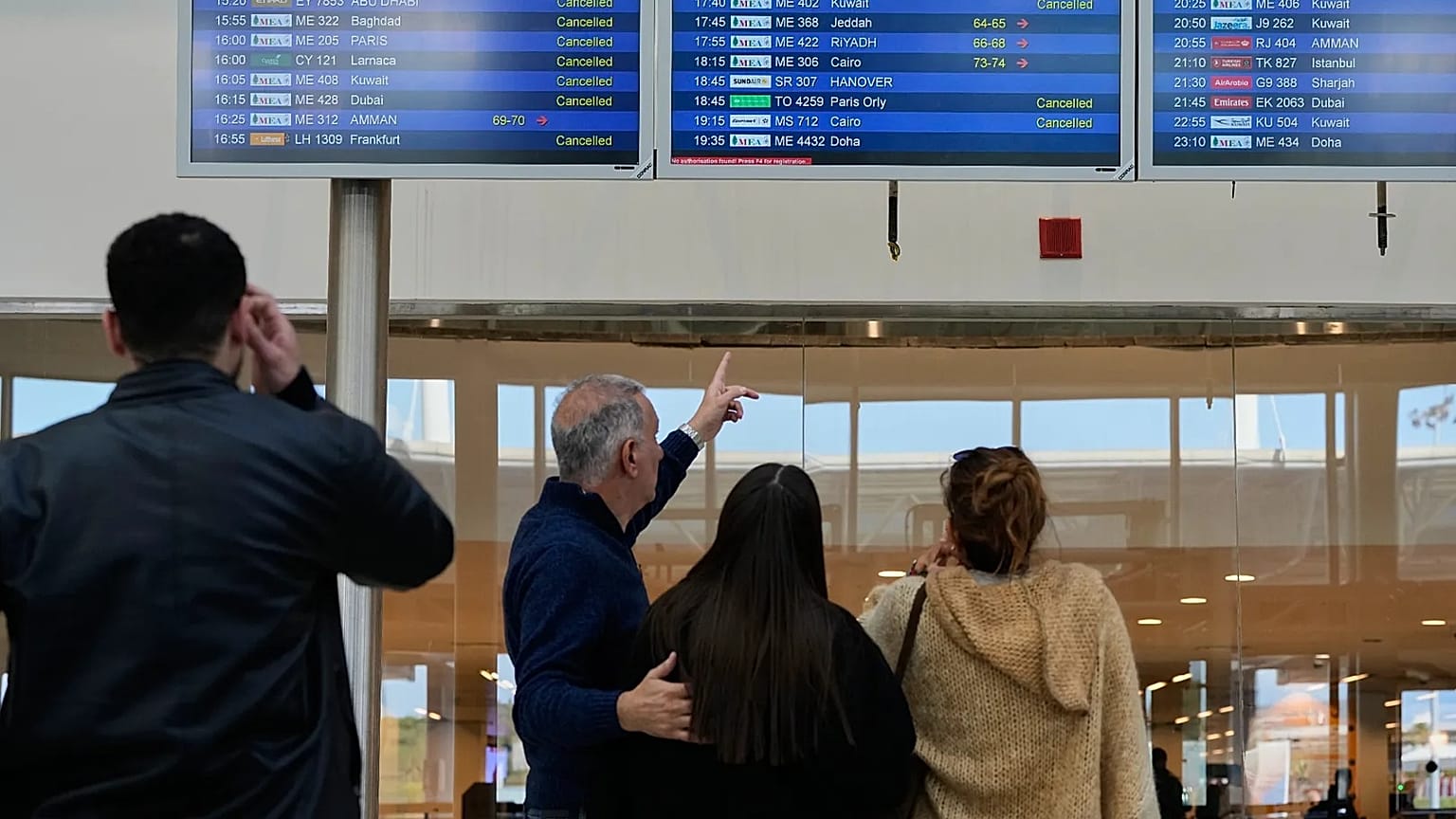
While the resumption of some flights has brought relief to stranded travellers, the vast majority remain cancelled. Posting on X on Tuesday, Flightradar24 said cancellations across seven major Middle East airports – Dubai International, Hamad International Airport in Doha, Zayed International Airport in Abu Dhabi, Sharjah International Airport, Kuwait International Airport, Bahrain International Airport, and Dubai World Central - Al Maktoum International – have now exceeded 12,300 flights from 28 February until 3 March.
Around 20,200 passengers have been affected by the cancelling or rescheduling of flights in the UAE, while a further 8,000 transit passengers are currently stuck in Doha.
With air travel severely limited throughout the Middle East, the conflict that started on Saturday stranded hundreds of thousands of travellers in multiple countries. Tourists, business travellers and religious pilgrims found themselves stuck unexpectedly in hotels, airports and on cruise ships.
Dubai International, Abu Dhabi's Zayed International Airport, and Hamad International Airport in Doha, Qatar, are important hubs for travel between Europe, Africa and Asia. The airports in Dubai and Abu Dhabi were both directly hit by Iranian strikes over the weekend. Along with people planning to head to or from the region, travellers who were passing through on multi-leg flights also found themselves stuck.
All aircraft movements at Hamad International Airport remain suspended due to the temporary closure of the Qatari airspace. The country’s flag carrier, Qatar Airways, will resume operations once the Qatar Civil Aviation Authority announces the safe reopening of Qatari airspace. The airline said a further update will be provided on Friday 6 March by 9 am local time (7 am CET).
Airspace closures also remain in place in Iran, Iraq, Bahrain, Kuwait, Syria and Israel.