












Iron fertilisation has long been touted as a glimmer of hope amid rising emissions – but a new study has seemingly debunked the theory.
A “long-standing silver lining” to the wrath of climate change has been put under scrutiny, as scientists find a huge flaw in the theory.
 ADVERTISEMENT
ADVERTISEMENT
ADVERTISEMENT
As heat-trapping emissions continue to bake the planet, glaciers in Antarctica are witnessing unprecedented melt. Despite being geographically isolated from civilisation, the demise of these vast bodies of ice has a significant impact on the entire world.
Thwaits Glacier, aka the Doomsday Glacier, is already responsible for four per cent of global annual sea level rise. If it were to collapse completely, sea levels could increase by a staggering 65cm.
To put this into context, scientists predict that for every centimetre of sea level rise, around six million people are exposed to coastal flooding.
But down in the elusive Southern Ocean, the theory of iron fertilisation offered a glimmer of hope.
What is iron fertilisation?
As temperatures rise and glaciers melt, ice-trapped iron is released into the ocean.
Scientists theorised that this iron goes on to feed huge blooms of microscopic algae, which can suck carbon dioxide from the atmosphere through photosynthesis.
When the algae dies, it sinks to the sea floor – potentially sequestering carbon forever.
While some researchers have promoted dumping large amounts of iron into the ocean as part of geoengineering drives to tackle rising emissions, others warn it could potentially cause “dead zones”.
This is where oxygen levels are so low – in this case, consumed by decomposing algae – that little to no life can exist beneath the surface water. It has already occurred in places like the Baltic Sea due to nutrient pollution from human activity.
Can melting glaciers help reduce carbon emissions?
However, marine scientists from Rutgers University-New Brunswick in the US have discovered that meltwater from the Antarctic ice shelf supplies far less iron to surrounding waters than previously thought.
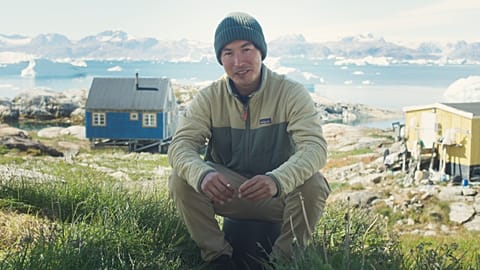
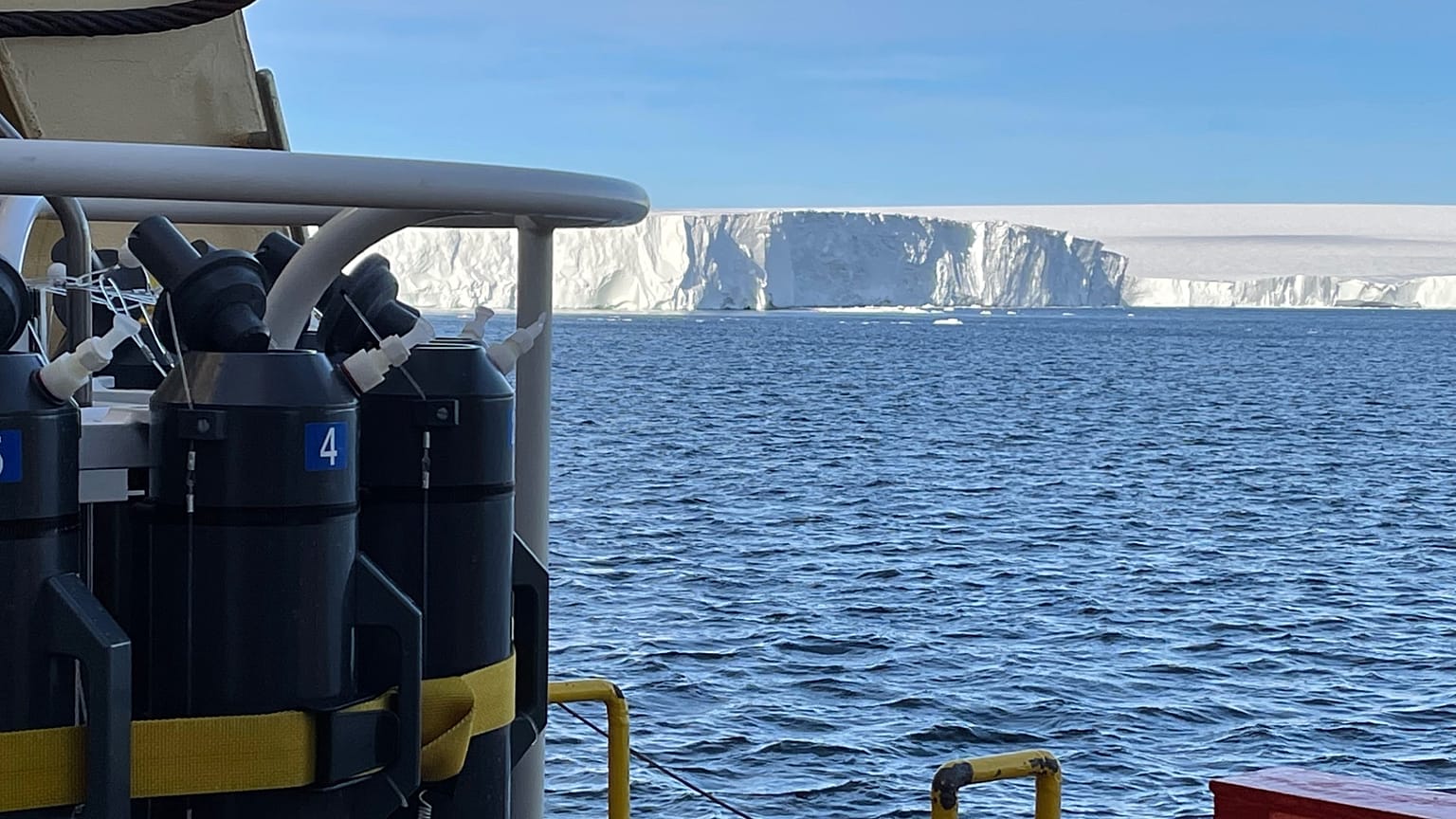
Working with several universities in the US and UK, Rob Sherrell, a professor in the Department of Marine and Coastal Sciences, and his team travelled to the Dotson Ice Shelf in the Amundsen Sea, West Antarctica, in 2022.
The Amundsen Sea accounts for most of the sea level rise driven by Antarctic melting. Here, glacial meltwater comes from beneath floating ice shelves, primarily driven by warm water flowing from the deep ocean into the cavities under the ice.
To measure how much iron this meltwater contributes to surrounding waters, researchers identified where seawater enters one such cavity and where it exits after meltwater is added. They collected water samples from both entry and exit points.
Back in the US, Sherrell’s colleague Venkatesh Chinni analysed the samples for iron content in both its dissolved state and in suspended particles to calculate how much more iron was coming out of the cavity than went in.
To their surprise, the scientists found that only around10 per cent of the outflowing dissolved iron came from the meltwater itself. The majority came from inflowing deep ocean water (62 per cent) and inputs from shelf sediments (28 per cent).
‘Meltwater carries very little iron’
“Roughly 90 per cent of the dissolved iron coming out of the ice shelf cavity comes from deep waters and sediments outside the cavity, not from meltwater,” Chinni says.
The study, published in the science journal Communications Earth and Environment, also found that beneath the glacier is a liquid meltwater layer that lacks dissolved oxygen. This could be a larger source of iron than ice shelf melting.
“Our claim in this paper is that the meltwater itself carries very little iron, and that most of the iron that it does carry comes from the grinding up and dissolving of bedrock into the liquid layer between the bedrock and the ice sheet, not from the ice that is driving sea level rise,” Sherrell says.
The team says that more research is now needed to understand Antarctica’s iron sources in a warming world. It means the “silver lining” many scientists hoped for may no longer hold water.