












Differences over when Ramadan begins are often justified on 'jurisprudential' grounds, yet they expose how politics can hijack moon-sighting and ritual.
Ramadan occupies an important place in Islamic history. It is regarded as the third pillar of Islam and is associated with a number of watershed events, most notably the revelation of the Quran to the Prophet Muhammad on the Night of Destiny, Laylat al-Qadr.
 ADVERTISEMENT
ADVERTISEMENT
ADVERTISEMENT
This event makes Ramadan a blessed month that stands out from the others for its rituals and the eagerness it inspires to do good.
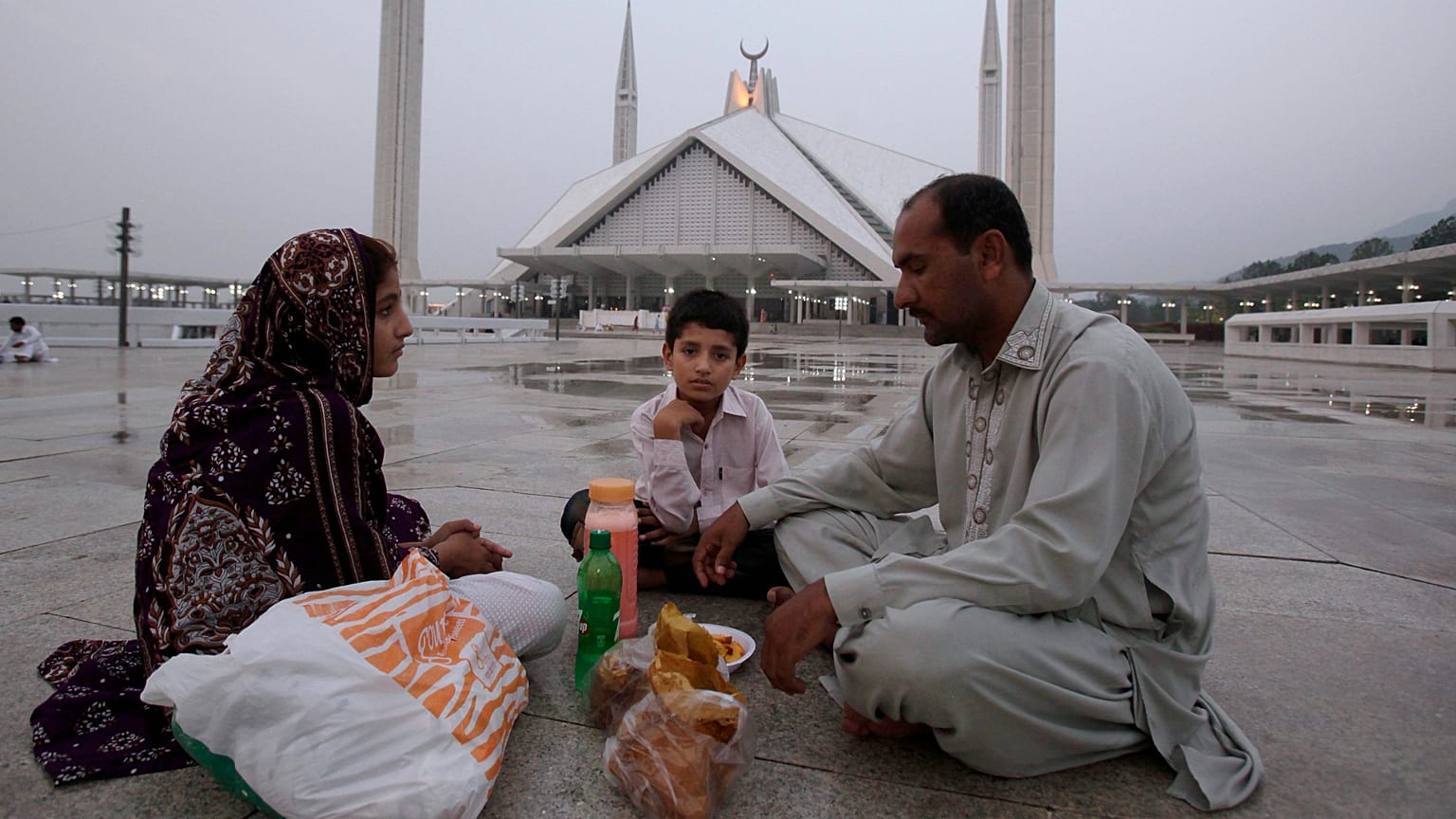
From an Islamic perspective, the month is not limited to abstaining from food, drink and sexual relations, but also involves controlling one’s behaviour and other rituals such as the Taraweeh night prayers and giving alms to the poor and needy, as well as gathering around iftar and suhoor tables laden with delicious dishes.
Muslims around the world follow the lunar calendar, which consists of 12 months, each lasting between 29 and 30 days, and the start of the month of Ramadan is determined on the basis of sighting the crescent moon.
At the same time, and in addition to moon sighting, Saudi Arabia also uses what is known as the Umm al-Qura calendar, which is based on precise astronomical calculations and makes it possible to fix the dates of religious occasions well in advance.
Although Ramadan is the ninth month in the Hijri calendar and one of the most important religious seasons for Muslims, the moment its start is declared turns every year into a point of disagreement between countries, revealing a complex web of jurisprudential, scientific, institutional and sometimes political factors that intersect when the beginning of the holy month is announced.
With the setting of the sun on the 29th day of the month of Shaaban, the Islamic world is faced with a familiar scene: anticipation followed by division and dispute.
While the minarets in one capital city announce the start of the fast, their neighbours in another capital wait for an extra day to complete Shaaban.
These differences are often explained on “jurisprudential” or “geographical” grounds. Yet the situation raises questions over how far politics intrudes into the details of religious practice, to the point that the moon sighting has at times become a casualty of power struggles and assertions of national sovereignty.
So why does the start of Ramadan differ when we are all looking at the same crescent? The answer goes beyond pure astronomical calculations and delves into the rules of the different schools of thought, religious reasoning and the labyrinth of politics.
Politics and doctrine draw the fasting map
Muslim-majority countries differ in how they interpret the sighting of the crescent, between direct religious observation and astronomical calculations.
Some scholars in the Islamic world believe that the new moon must be sighted with the naked eye, while others allow the use of precise astronomical calculations, especially when the crescent cannot be seen because of weather conditions or geographical location.
This jurisprudential disagreement can lead to the start of the fasting month differing by a day or two between countries, but in practice politics appears to play a greater role in determining when Ramadan begins.
This divergence has become a mirror reflecting political alliances and divisions in the Islamic world. The most prominent example is the dispute between Saudi Arabia and Iran. In most cases, the start of Ramadan in Tehran and Riyadh does not coincide, because of political tensions and doctrinal differences between Sunnis and Shias, and the desire of each state to run its religious affairs according to its own references.
In the other Arab Gulf states, all of which are members of the Gulf Cooperation Council, there is a clear convergence in the dates for the beginning of Ramadan, with most of these countries starting the fast on the same day.
This alignment is linked to political and doctrinal closeness between them, as well as the existence of shared or like-minded religious bodies that agree in their interpretation of moon sightings and astronomical calculations.
Lebanon
Sectarian diversity makes the picture in Lebanon even more complex and shows how politics and religion can become deeply intertwined in a country that covers less than 10,000 square kilometres.
This small country is home to 18 religious communities, the most prominent of which are Sunnis, Shias, Druze and Christians of various denominations.
When it comes to Ramadan, Sunni Muslims usually follow Saudi Arabia’s official announcement. However, part of the Shia community that does not subscribe to Iran’s doctrine of velayat-e faqih, follows the recommendations of the office of Sayyed Mohammad Hussein Fadlallah, which are based on astronomical calculations.
Another part, made up of Hezbollah’s support base, follows the calendar of the Islamic Republic in Tehran. This sometimes leads to different starting and ending dates for the fast within the same city, village or even household.
This divergence in such a small country offers further evidence of how politics can overlap with religion.
Religious decisions in Lebanon often intersect with political divisions, since each sect represents specific interests and has its own parties and religious authorities. As a result, determining the start of Ramadan becomes an issue that goes beyond simply sighting the crescent and instead reflects the political balances within the state.
The Maghreb region
In North Africa, there is a clear variation in the start of Ramadan between neighbouring countries, particularly Tunisia, Algeria and Morocco.
For example, Tunisia and Algeria tend to announce the beginning of the month at the same time and fast on the same day. This is attributed to their geographical and cultural proximity, similar jurisprudential decisions, and to political understandings and stable diplomatic relations between them. By contrast, and despite sharing the same geographical area and the Maliki school of jurisprudence with its two neighbours, Morocco has long made a habit of announcing the start of the fasting month at a different time.
This is due to several interlocking factors, starting with the historical and political disputes between Morocco and Algeria, particularly over the issue of the Western Sahara and the land border that has been closed between the two countries for decades.
Historically, the region has not been free of exceptional cases that added another political dimension. The late Libyan leader Muammar Gaddafi, who was toppled by a popular uprising in 2011, used to declare the start of the holy month a full day earlier than most Arab countries.