




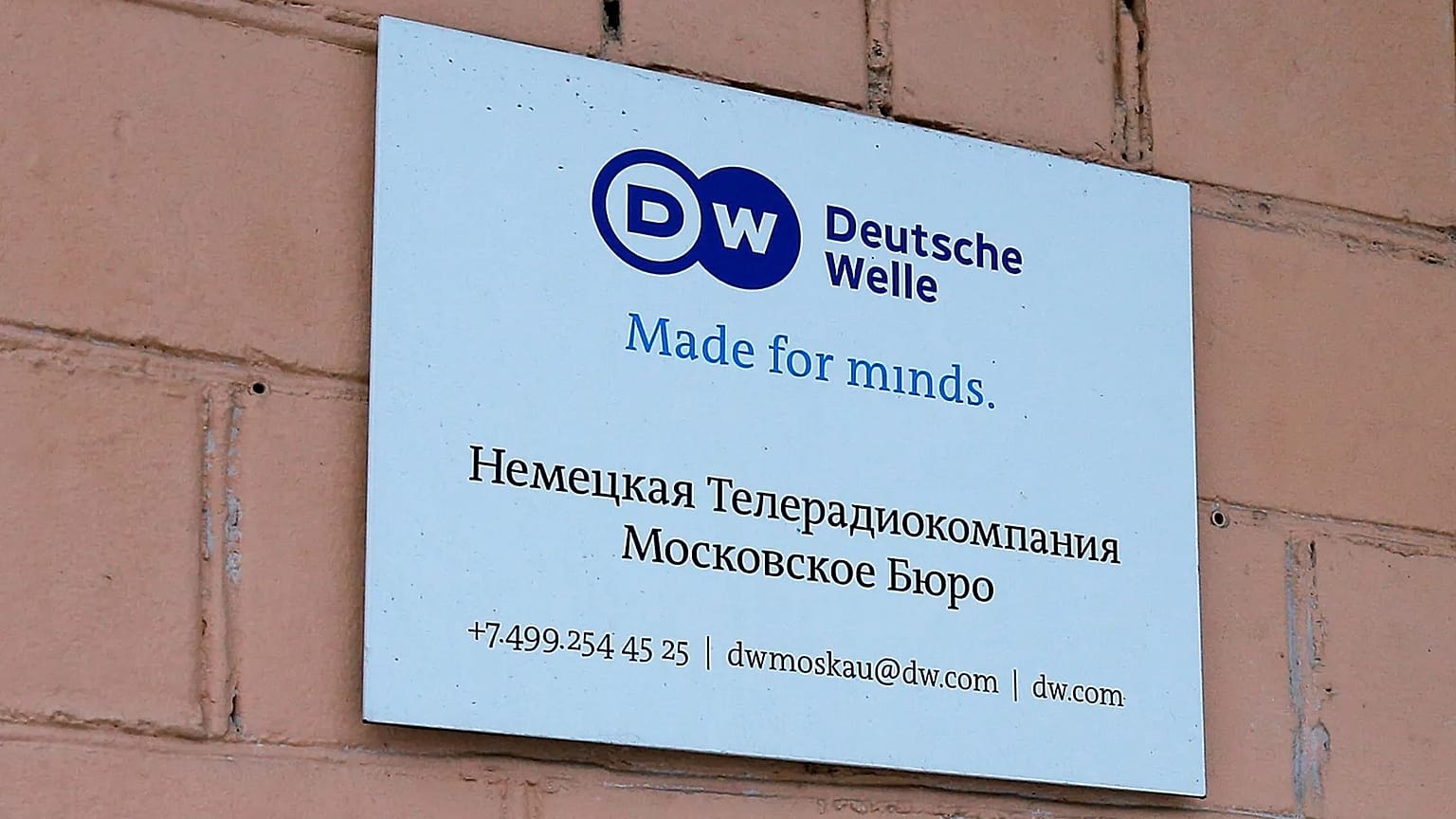













Deutsche Welle's director general said the move by Moscow was another sign that the Kremlin "wants to quash any freedom of opinion in the country."
Russia has labelled Deutsche Welle (DW) an "undesirable organisation", a move criticised by the German broadcaster and Berlin as an effort to stifle independent journalism.
 ADVERTISEMENT
ADVERTISEMENT
ADVERTISEMENT
Under a 2015 law, members of "undesirable organisations" that threaten Russia's constitutional order or national security can be fined or jailed for up to six years.
Cooperation with such organisations, and even sharing content from them — including on social media — is considered illegal.
DW was added to the Russian justice ministry’s list of undesirable organisations following an announcement on Saturday by lawmaker Vasily Piskaryov, who leads a parliamentary commission on foreign interference in Russian affairs.
DW Director General Barbara Massing said it was another sign that the Kremlin "wants to quash any freedom of opinion in the country".

"Russia may label us an undesirable organisation, but that won't deter us," she said in a statement.
"This latest attempt to silence free media highlights the Russian regime's blatant disregard for press freedom and exposes its fear of its own citizens."
DW had already been declared a "foreign agent" in Russia in 2022, and faced a broadcast ban in the country before then.
Its Moscow studio was forced to relocate, and its website was blocked across all languages throughout Russia, according to the broadcaster.
"Despite censorship and blocking of our services by the Russian government, DW's Russian-language service now reaches more people than ever before," Massing said.
DW Russian reached around 10 million weekly users in 2025, mostly through video content, the broadcaster said.
"We will continue to report independently — on the war of aggression against Ukraine and other topics about which little information is available in Russia. So that people can form their own opinions," Massing added.
Berlin criticises Moscow
German government spokesman Stefan Kornelius said the move shows that "the Russian authorities fear independent information, particularly regarding the war of aggression against Ukraine."
Germany's foreign office also criticised the decision, and said that the "freedom of the press is no longer guaranteed" in Russia.
A spokesperson said the German embassy in Moscow was in close contact with journalists and media professionals working for DW and is providing support.
Asked by Euronews whether the foreign office would summon the Russian ambassador in Berlin or take further measures, the spokesperson declined to comment.

DW is Germany's international public broadcaster. It is funded by taxpayer money but is editorially independent.
Russia's crackdown on Kremlin critics, journalists and activists has intensified to unprecedented levels since the full-scale invasion of Ukraine in February 2022.
Its list of undesirable organisations currently covers more than 275 entities, including prominent independent news outlets like Radio Free Europe/Radio Liberty, think tanks like Chatham House, anti-corruption group Transparency International and environmental advocacy organization WWF.