

















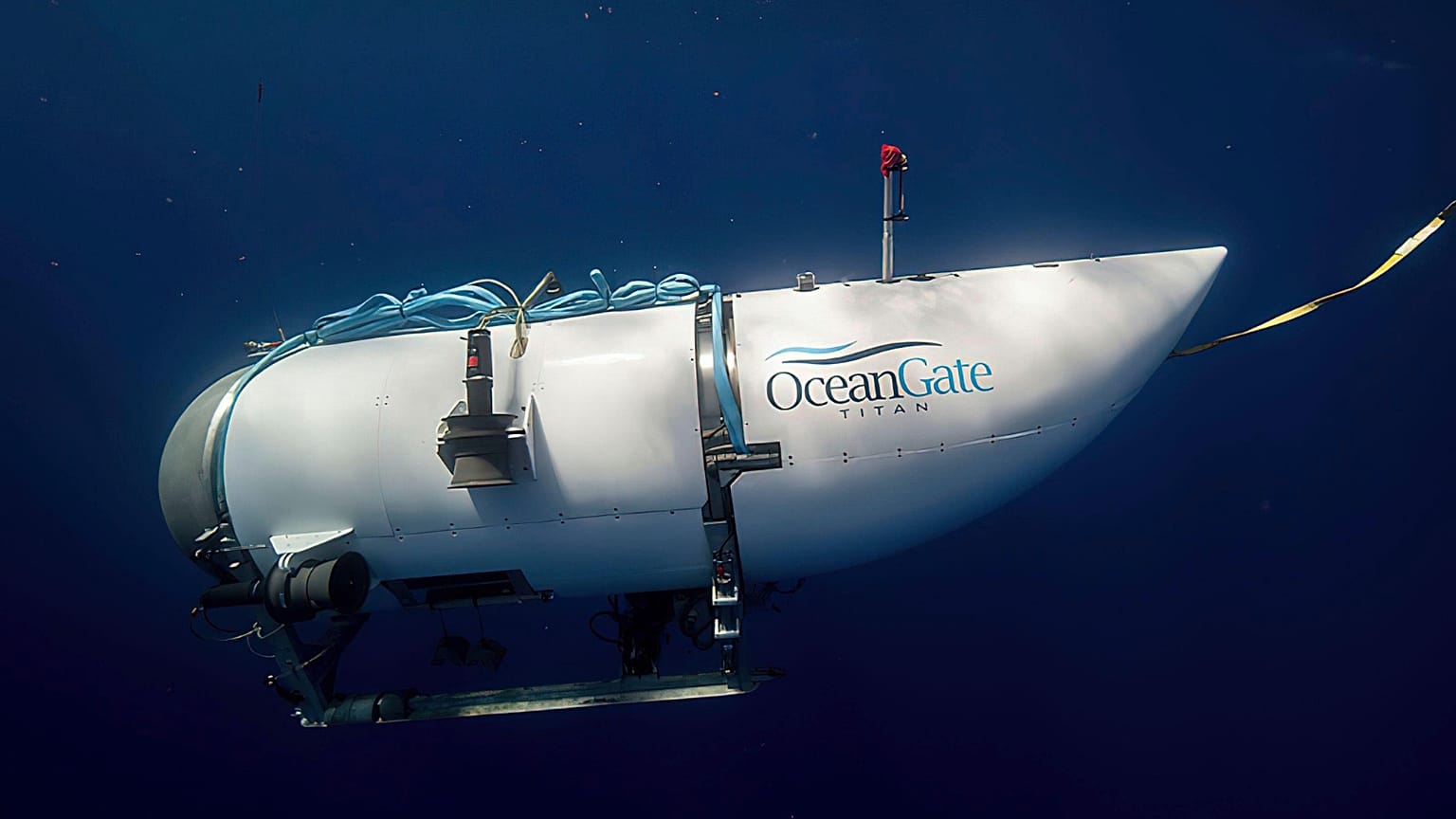














“The debris is consistent with the catastrophic loss of the pressure chamber,” Rear Admiral John Mauger said on Thursday.
The Titan submersible likely imploded in the North Atlantic and none of the five people on board survived, the US Coast Guard said on Thursday.
 ADVERTISEMENT
ADVERTISEMENT
ADVERTISEMENT
The implosion could have occurred near the Titanic shipwreck, where the submersible was headed.
The Titan was reported missing Sunday, eight hours after it initially lost contact with its surface ship. Its 96-hour oxygen supply would have run out Thursday morning.
It’s not clear whether the implosion occurred Sunday or in the days following, amid an international search effort to find the missing sub.
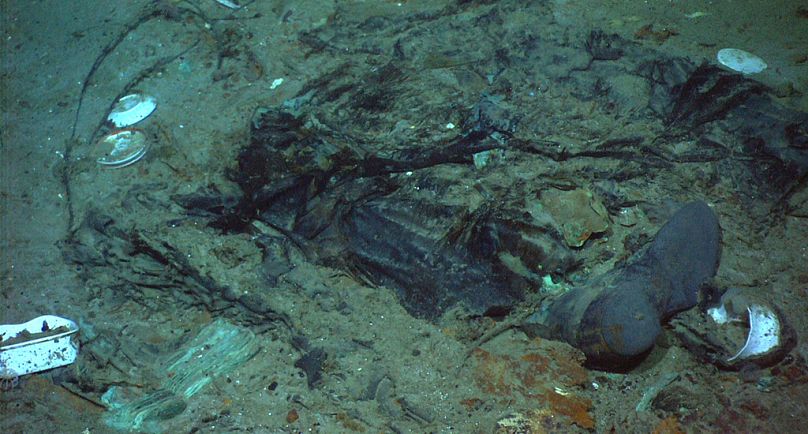
Coast Guard officials say debris was discovered roughly 488m from the Titanic.
“The debris is consistent with the catastrophic loss of the pressure chamber,” Rear Admiral John Mauger, the First Coast Guard District, said. “Our most heartfelt condolences go out to the loved ones of the crew.”
OceanGate, the company behind the touristic expedition, issued a statement on Thursday saying it believes all five passengers on board are dead.
“Our hearts are with these five souls and every member of their families during this tragic time. We grieve the loss of life and joy they brought to everyone they knew,” the statement continued.
“This is an extremely sad time for our dedicated employees who are exhausted and grieving deeply over this loss. The entire OceanGate family is deeply grateful for the countless men and women from multiple organisations of the international community who expedited wide-ranging resources and have worked so very hard on this mission."
Efforts to recover the submersible and the remains of the five men who died in a catastrophic implosion aboard the vessel remain ongoing.
The US Coast Guard says it will continue searching the sea floor near the Titanic shipwreck for more clues about what happened to the submersible. Much of the search is being done by remotely operated underwater vehicles known as ROVs that can scan the sea floor.
“This is an incredibly unforgiving environment down there on the seafloor,” Rear Adm. John Mauger of the First Coast Guard District said Thursday.
Earlier in the day, the US Coast Guard said that an underwater vessel has located a debris field near the Titanic in the search for a missing submersible.
The Coast Guard's post on Twitter gave no details, such as whether officials believe the debris is connected to the Titan, which was on an expedition to view the wreckage of the Titanic. The search passed the critical 96-hour mark Thursday when breathable air could have run out.
The Titan was estimated to have about a four-day supply of breathable air when it launched Sunday morning in the North Atlantic — but experts have emphasized that was an imprecise approximation to begin with and could be extended if passengers have taken measures to conserve breathable air. And it’s not known if they survived since the sub’s disappearance.
Rescuers have rushed ships, planes and other equipment to the site of the disappearance. On Thursday, the US Coast Guard said an undersea robot sent by a Canadian ship had reached the sea floor, while a French research institute said a deep-diving robot with cameras, lights and arms also joined the operation.
Authorities are hoping underwater sounds might help narrow their search, whose coverage area has been expanded to thousands of miles — twice the size of Connecticut and in waters 4km deep. Coast Guard officials said underwater noises were detected in the search area Tuesday and Wednesday.
Jamie Pringle, an expert in Forensic Geosciences at Keele University, in England, said even if the noises came from the submersible, "The lack of oxygen is key now; even if they find it, they still need to get to the surface and unbolt it."
The Titan was reported overdue Sunday afternoon about 700km south of St. John’s, Newfoundland, as it was on its way to where the iconic ocean liner sank more than a century ago. OceanGate Expeditions, which is leading the trip, has been chronicling the Titanic’s decay and the underwater ecosystem around it via yearly voyages since 2021.
By Thursday morning, hope is fading for five people on board a submersible that vanished on Sunday, as oxygen supplies are predicted to have run out.
Ships from around Europe have joined efforts to find the Titan, which disappeared near the Titanic's wreck in the Atlantic Ocean, with rescuers desperately searching for the vessel.
Aircraft, boats and remotely operated vehicles expanded their search for the five crew members on board, after "banging" noises were heard underwater on Wednesday.
They are combing an area of 26,000 sq km.
"We have to remain optimistic and hopeful when you're in a search and rescue case, said Captain Jamie Frederick, coordinator of the coast guard's response.
"We're right in the middle of the search and rescue case. I don't want to get into a discussion about when that would end."
A Norweigan boat, equipped with autonomous underwater robots, and another vessel from France are scouring the Titan's last known location, some 700 km off the coast of Newfoundland, Canada.
Even if the sub is located, it could be nearly impossible to reach as it may be stuck roughly 3,800 m below on the seafloor.
The US Coast Guard, which is leading the complex operation, relocated its rescue efforts as a result of detecting the sounds, but so far has "yielded negative results".
Experts estimate the vessel will run out of oxygen Thursday morning.
Canadian authorities reported the carbon-fibre vessel missing late on Sunday night, sparking an international rescue effort.
Aboard were a pilot, a renowned British adventurer, two members of a Pakistani business family and a Titanic expert.
They were on a tourist visit to the wreck of the ill-fated ship.
Titan had a 96-hour oxygen supply when it set off at roughly 6 a.m. on Sunday, according to David Concannon, an adviser to OceanGate Expeditions, which oversaw the mission.
Journalist David Pogue, who went on an expedition to the Titanic aboard the Titan last year, said the vessel uses two communication systems: text messages that go back and forth to a surface ship and safety pings that are emitted every 15 minutes to indicate that the sub is still working.
Both of those systems stopped about an hour and 45 minutes after the vessel was submerged.
"There are only two things that could mean. Either they lost all power or the ship developed a hull breach and it imploded instantly. Both of those are devastatingly hopeless,” Pogue said on Tuesday.
Experts said the rescuers face steep challenges.
Alistair Greig, a professor of marine engineering at University College London, said submersibles typically have a drop weight, which is “a mass they can release in the case of an emergency to bring them up to the surface using buoyancy.”
“If there was a power failure and/or communication failure, this might have happened, and the submersible would then be bobbing about on the surface waiting to be found,” he said.
Another scenario is a leak in the pressure hull, in which case the prognosis is not good, he said.
“If it has gone down to the seabed and can’t get back up under its own power, options are very limited,” Greig said. “While the submersible might still be intact if it is beyond the continental shelf, there are very few vessels that can get that deep, and certainly not divers.”
Even if they could go that deep, he doubts rescuers could attach to the submersible.
The Canadian research icebreaker Polar Prince, which was supporting the Titan, was to continue conducting surface searches with help from a Canadian Boeing P-8 Poseidon reconnaissance aircraft, the Coast Guard said on Twitter.
Two US Lockheed C-130 Hercules aircraft also conducted overflights.
The Canadian military has dropped sonar buoys to listen for any possible sounds from the Titan.
OceanGate’s expeditions to the Titanic wreck site include archaeologists and marine biologists. The company also brings people who pay €230,000 to come along, known as “mission specialists.”
They take turns operating sonar equipment and performing other tasks in the submersible.
The Coast Guard said Monday that the Titan carried a pilot and four “mission specialists." However, OceanGate's website suggests that the fifth person may be a so-called “content expert” who guides the paying customers.
The Titanic wreck lies 3,800 metres down at the bottom of the Atlantic, 400 nautical miles off the coast of Canada.
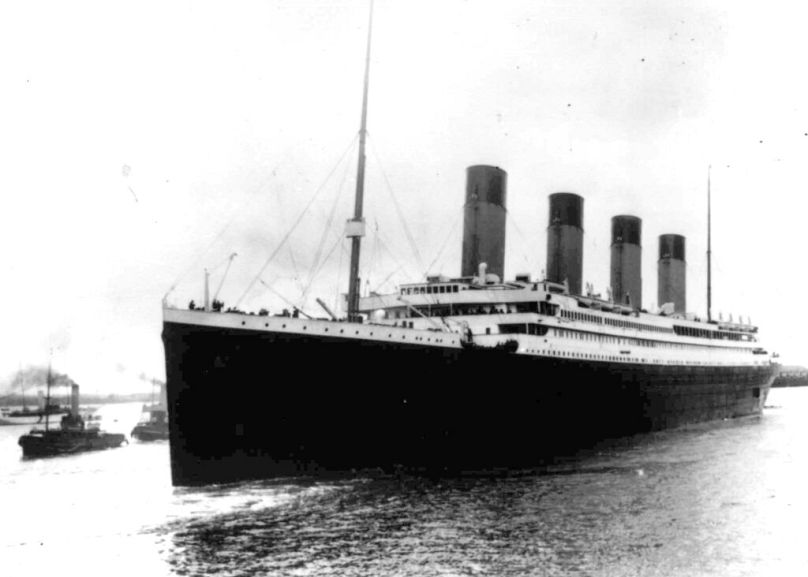
It sunk in April 1912 after striking an iceberg on its maiden voyage. Of the 2,200 people onboard, just 706 survived.
The wreck was discovered in 1985. A large amount of debris surrounds the destroyed ship.
In recent years, small submersibles have started taking tourists to visit.
OceanGate's first dive happened in 2021, says the company on its website.
Each of its expeditions is supposed to have a scientific objective, with each dive taking eight hours from top to bottom.