

















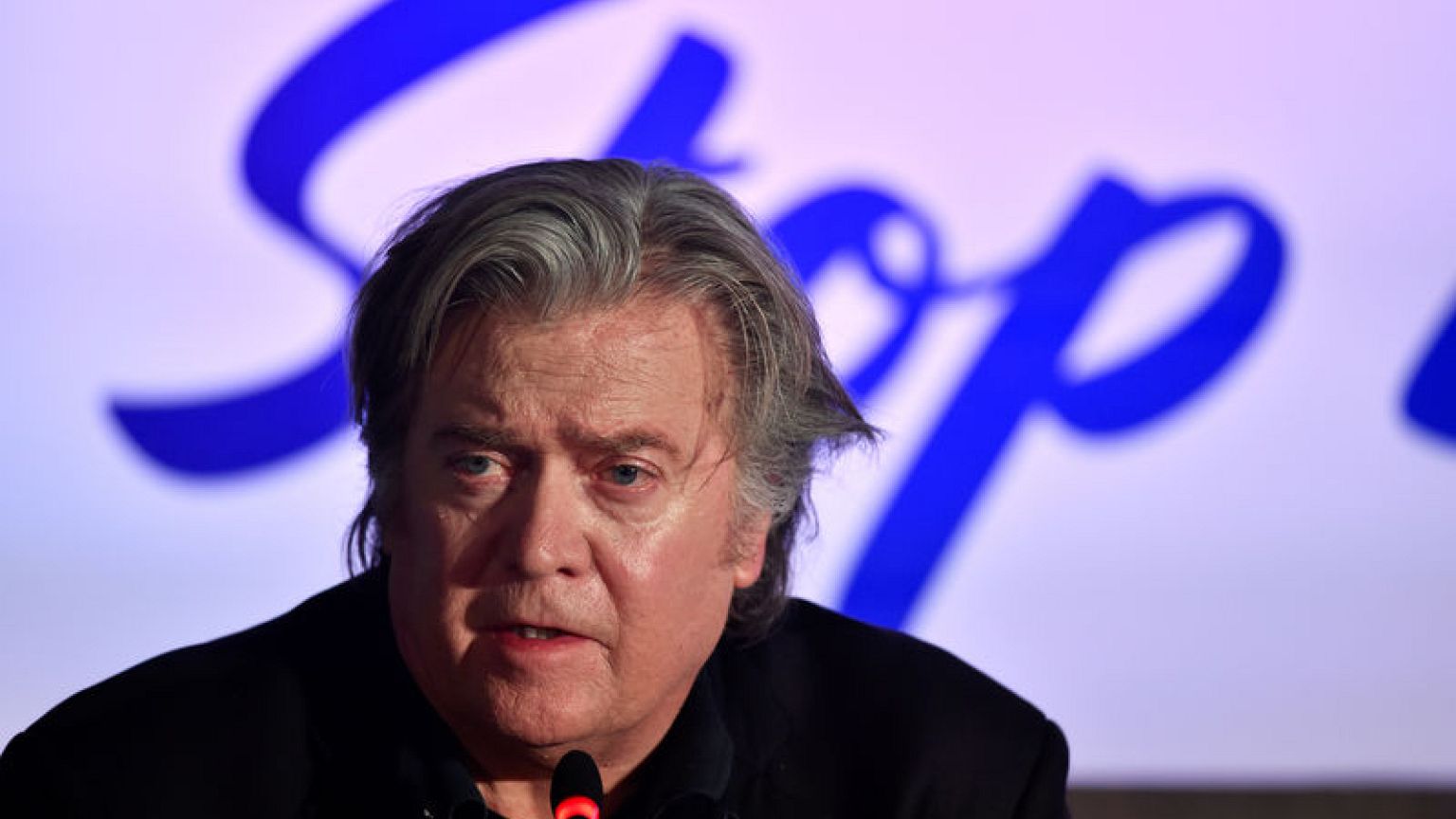













BERLIN (Reuters) - Germany's far-right Alternative for Germany (AfD) has invited U.S. President Donald Trump's former strategist Steve Bannon to a media conference in Berlin for right-wing journalists and bloggers just two weeks before European elections.
 ADVERTISEMENT
ADVERTISEMENT
ADVERTISEMENT
The office of AfD lawmaker Petr Bystron confirmed a report in Der Spiegel magazine that the invitation to the May 11 event entitled "1. Conference of the Free Media" would discuss how to better and more efficiently shape information in future.
"We are now discussing the details," Bystron was quoted by Spiegel as saying and the magazine said Bannon had been invited to the Bundestag lower house of parliament.
Bannon, a former chairman of the right-wing Breitbart.com website, has met several of Europe's populist groups with the aim of advising them before May's European elections but his efforts to act as a power broker have so far fallen flat.
Last year, he met France's far-right leader Marine Le Pen and he has said he plans to work with right-wing Hungarian Prime Minister Viktor Orban.
Eurosceptic, nationalist parties, including the AfD, are expected to make big gains in the elections to the European Parliament on May 26.
One poll last month published in German daily Bild said far-right parties could double the number of their seats.
The AfD, set up as a eurosceptic party in 2013 in the midst of the euro zone debt crisis, changed direction with new leaders and in 2015 tapped into anti-immigrant sentiment in response to Chancellor Angela Merkel's open-door migrant policy.
It was the third biggest party in Germany's 2017 federal election and is the official opposition, currently polling at around 13 percent in opinion polls.
(Reporting by Madeline Chambers; Editing by Catherine Evans)