




























After several rounds of talks failed, the Spanish Railroad Engineers and Trainmen’s Union has called for a three-day national strike over safety concerns.
A three-day national train strike is taking place across Spain starting from Monday.
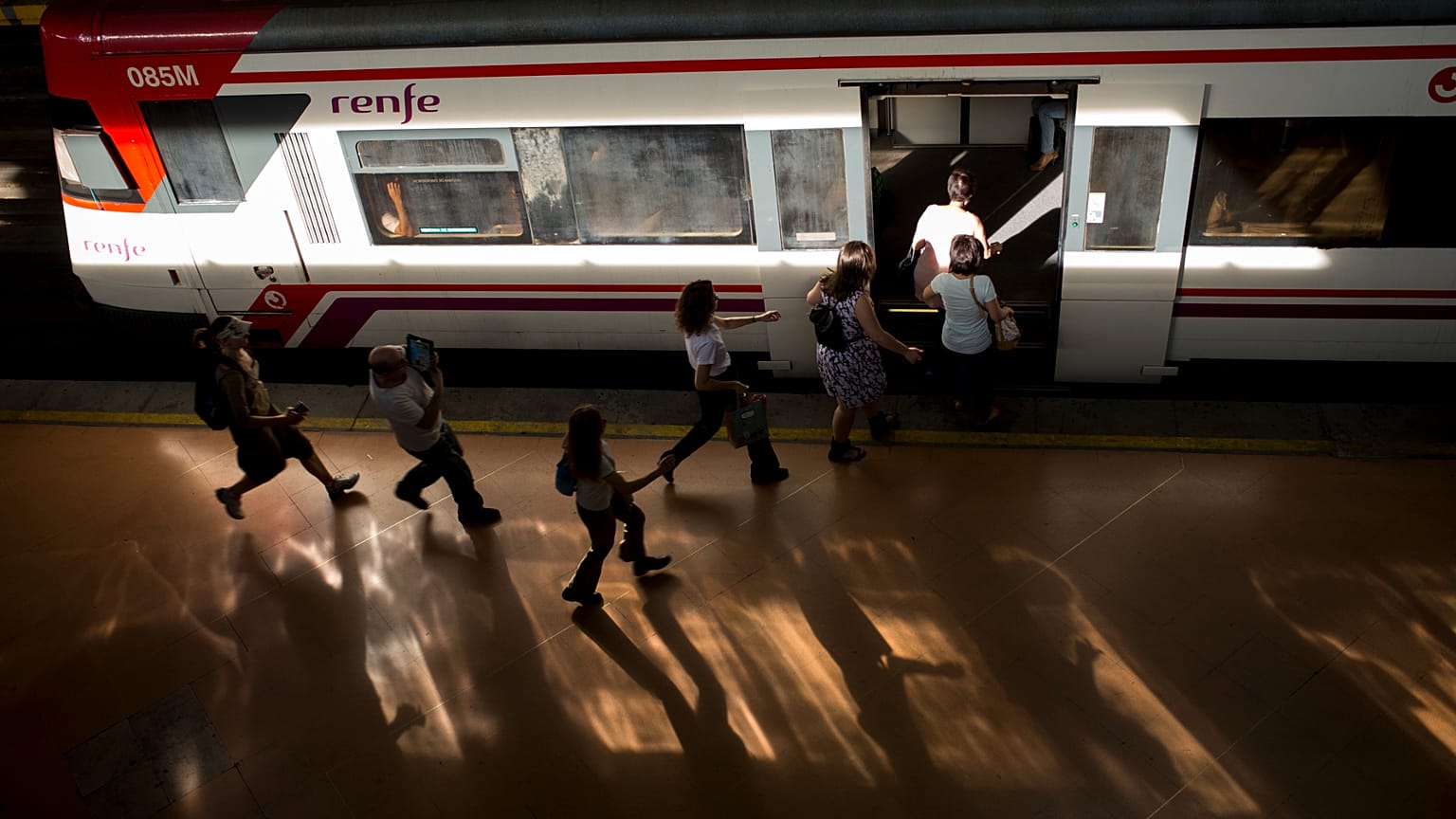
Between 9 and 11 February, there will be reduced services across three operators: Renfe, the state-owned rail transport company, Iryo, a high-speed rail operator, and Ouigo, a low-cost brand that also operates in France and Belgium.
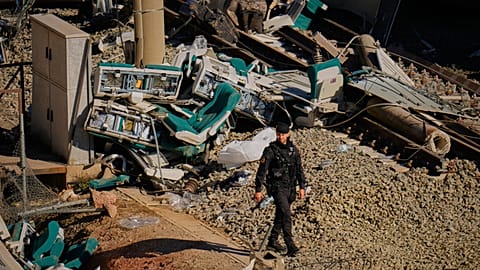
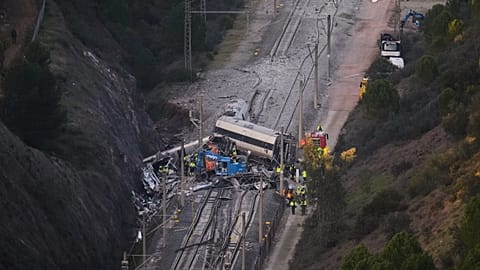
The Spanish Railroad Engineers and Trainmen’s Union (SEMAF) called for the strike in January following a deadly high-speed rail crash in southern Spain that killed 45 and injured more than 150 people. The union is calling for improved safety standards across the network.
Strikes are going ahead after three rounds of talks between SEMAF and the Ministry of Transportation.
More than 330 high-speed and medium-distance trains have been cancelled, with operators running minimum services. Commuter services are also impacted.
Which routes have been affected by the strike?
Under Spanish law, essential public services must guarantee a minimum service even during strike action. This includes railway companies.
Renfe will operate 75 per cent of its commuter train services during peak hours, and 50 per cent during off peak. For medium distance trains, 65 per cent of the usual services will run, while 73 per cent of high-speed and long-distance trains will also operate as normal.
Ouigo will also operate 73 per cent of its scheduled services, meaning 80 out of 110 scheduled trains will run as normal.
Both Ouigo and Iryo have a list of cancelled services on their respective websites, while Renfe has contacted affected travellers via email.
These percentages are set by the central government in accordance with current railway legislation, although there are territorial exceptions. In Catalonia, the Generalitat is responsible for determining the minimum services for suburban and regional trains operating entirely within the region, whereas in the Basque Country this falls to the autonomous government for Iberian and metric gauge suburban trains.
What are my refund rights?
If your train has been cancelled due to strike action, you are entitled to a full refund within 30 days under EU law.
Alternatively, you can change your train at no additional cost.
Renfe says affected passengers can cancel or modify their tickets at no additional cost, regardless of the sales channel used. This applies both to passengers whose trains have been cancelled and to those who decide not to travel during the strike.
Details around how to claim a refund, or change your train, can be found on the railway operator’s website.
Passengers are advised to check the status of services before going to stations, as train schedules may vary throughout the day.
How long will Spain's train strike last?
The strike will continue until Wednesday 11 February. It comes after unions failed to reach an agreement with the Ministry of Transport and the companies in the sector.
The trade union organisations defend the stoppages as a measure to demand labour and safety improvements.
The beginning of the year was marked by several railway accidents in Spain, including the deadliest in decades, which has intensified the debate on safety on the network, working conditions and the need to reinforce operational protocols. This has increased pressure on both companies and the administration in the midst of negotiations with the unions.
Spain has fallen behind in rail network inspection
Several specialised train drivers who were hired for network supervision by state-owned railway network manager Adif have said that they were left without assigned tasks for extended periods, despite having contracts to carry out this work, according to Spanish newspaper El Mundo.
This complaint from train drivers is part of a wider criticism of the management of rail infrastructure maintenance, which some workers see as uncoordinated and ineffective.
The fleet designed to inspect the tracks has in many cases been inoperative or in prolonged approval phases, which, in the complainants' view, has hampered the ability to continuously monitor the network.
This situation was the subject of an injunction from the Labour and Social Security Inspectorate, which pointed out the absence of work calendars and annual timetables for these drivers, a basic element to ensure that they could carry out their duties normally.