





























Will the EU ever become real power? Is the EU really facing an existential threat? What did EU leaders discuss in a medieval castle in Belgium’s Limburg province last week?
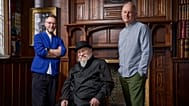
To answer these questions, Euronews’ weekly podcastBrussels, My Love?sat down with MLex managing editor for Europe, Kait Bolongaro, president of Eurochambres, Vladimír Dlouhý and President of the Foundation for European Progressive Studies and former EU Commissioner, Nicolas Schmit.
 ADVERTISEMENT
ADVERTISEMENT
ADVERTISEMENT
The panel reflected on the leaders retreat last week that took place in a Medieval castle. Former President of the European Central Bank Mario Draghi and author of the report “The future of European competitiveness”, also known as the Draghi report, was invited as a special guest.



How can the EU become more competitive?
According to the president of Eurochambres, some clear steps must be taken to boost the EU's economy, productivity, and competitiveness.
“We must remove the obstacles which we ourselves implemented on us, be it unnecessary targets of ESG [Environmental, Social and Governance] policy, be it much regulation,” he said.
In Dlouhý’s opinion, the EU’s Green Deal can hinder the continent's competitiveness, allowing countries like China and the United States (US) to invest in modern and green technology more than Brussels.
“They will do more for climate change than we do in Europe if we continue with this very stupid policy,” the president of Eurochambres said.
Meanwhile, Schmit stated that he supports the Green Deal but also recognised that more work should have been done to consult with the industry before conceiving the climate policy regulation.
According to the former commissioner, Draghi's report is not only about deregulation and simplification. “It’s very much about investment, but it’s also about how Europe should organise,” say Schmit.
Draghi has, in fact, on multiple occasions urged EU leaders to enact a “pragmatic federalism” to work as a true union and face global risks.
Schmit explained that "pragmatic federalism" does not mean creating a federal state, but rather transferring to Brussels some national competences when that is necessary.
The Munich Security Conference
This week was also marked by the Munich Security Conference, a forum to debate international security policy.
On this occasion, the EU’s chief diplomat Kaja Kallas, rejected claims that Europe is facing a civilisation decline in response to the US’s criticism over the continent's path.
According to Bolongaro, Kallas’s speech demonstrates a change in the EU-US relations.
“Europe is not going to necessarily back down as easily as we saw initially with Trump,” the Canadian journalist explained.
To hear more about the EU summit on Competitiveness and the Munich Security Conference, listen to the podcast episode.
Get in touch with us by writing to Brusselsmylove@euronews.com.