













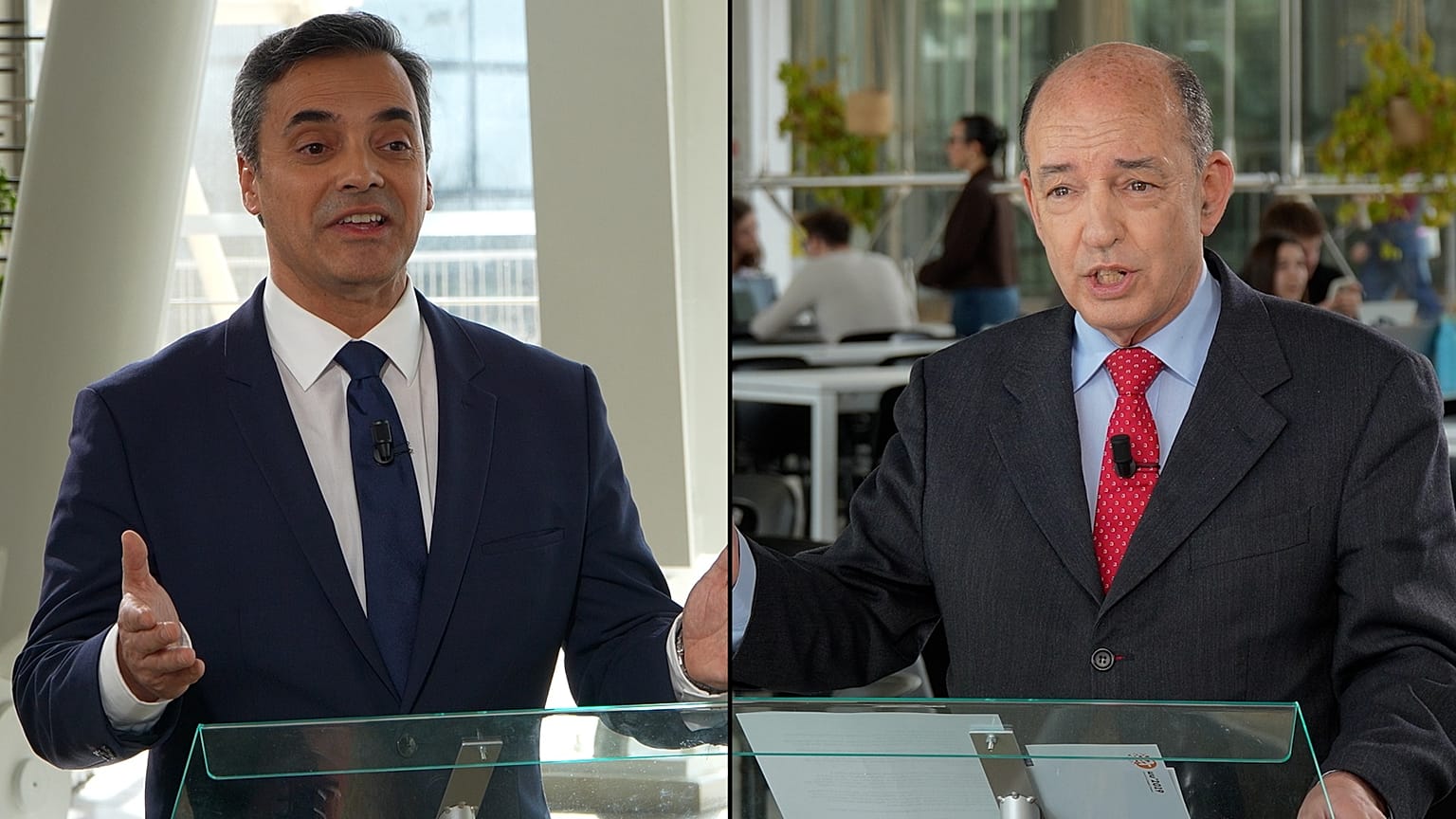














In this episode of The Ring, recorded at the Nova School of Business and Economics in Lisbon, we examine the outcome of Portugal’s presidential election and its implications for both the country and Europe.
Mariana Corrêa welcomes two guests with direct experience in European institutions: Carlos Coelho, former Member of the European Parliament from the European People’s Party, and André Franqueira Rodrigues, current MEP from the Socialists & Democrats Group.
 ADVERTISEMENT
ADVERTISEMENT
ADVERTISEMENT
Ten days after the runoff, Portugal is still assessing the meaning of a historic victory. On 8 February, António José Seguro defeated André Ventura with around two-thirds of the vote, halting the rise of the far right to the Presidency and securing one of the largest margins in Portugal’s democratic history.
The victory was unequivocal, but the political landscape it leaves behind is more complex. The result reflected a broad mobilisation — from the centre-left to sectors of the centre-right — aimed at preventing a populist breakthrough. For many voters, supporting Seguro was less an ideological endorsement and more a stand in defence of democratic norms amid growing polarisation.
However, Ventura’s strong support reveals persistent tensions within Portuguese society: concerns over immigration, economic pressure and distrust in institutions. The far right was defeated, but it continues to consolidate itself as a significant political force, signalling a structural shift in the country’s traditional party system.
In an increasingly fragmented political environment, Seguro takes on a largely moderating role, yet one with real influence over government stability. Could he become a reformist President? Will he be able to broker agreements in critical areas such as healthcare, housing or labour reform? And can stability be ensured in an increasingly tripartite system?
The impact goes beyond Portugal’s borders. At a time when socialist parties face electoral challenges across Europe, this victory may be interpreted as a sign of renewed momentum for the social-democratic camp. With socialist leadership in countries such as Spain, Denmark and Estonia, does this strengthen a progressive European axis — or is it simply a specific national context shaped by a vote to contain the far right?
At the European level, the election was welcomed by several leaders. António Costa, President of the European Council, highlighted the “Portuguese people’s appreciation for democracy.” But has democracy truly been under threat? And what role should Portugal play in a European context shaped by war, increased defence spending demands and mounting budgetary challenges?
This episode of The Ring is presented by Mariana Corrêa, produced by Luis Albertos and Amaia Echevarria. TV director and editor: Vassilis Glynos.
Watch The Ring on Euronews TV or in the player above, and share your thoughts by writing to thering@euronews.com.