





























Scientists have analysed almost 30 years of data to discover how whales in the North Atlantic Ocean are learning to co-exist in a warming world.
Rising temperatures and increased human activity in the North Atlantic Ocean have triggered “abrupt changes” in marine ecosystems, particularly for whales.
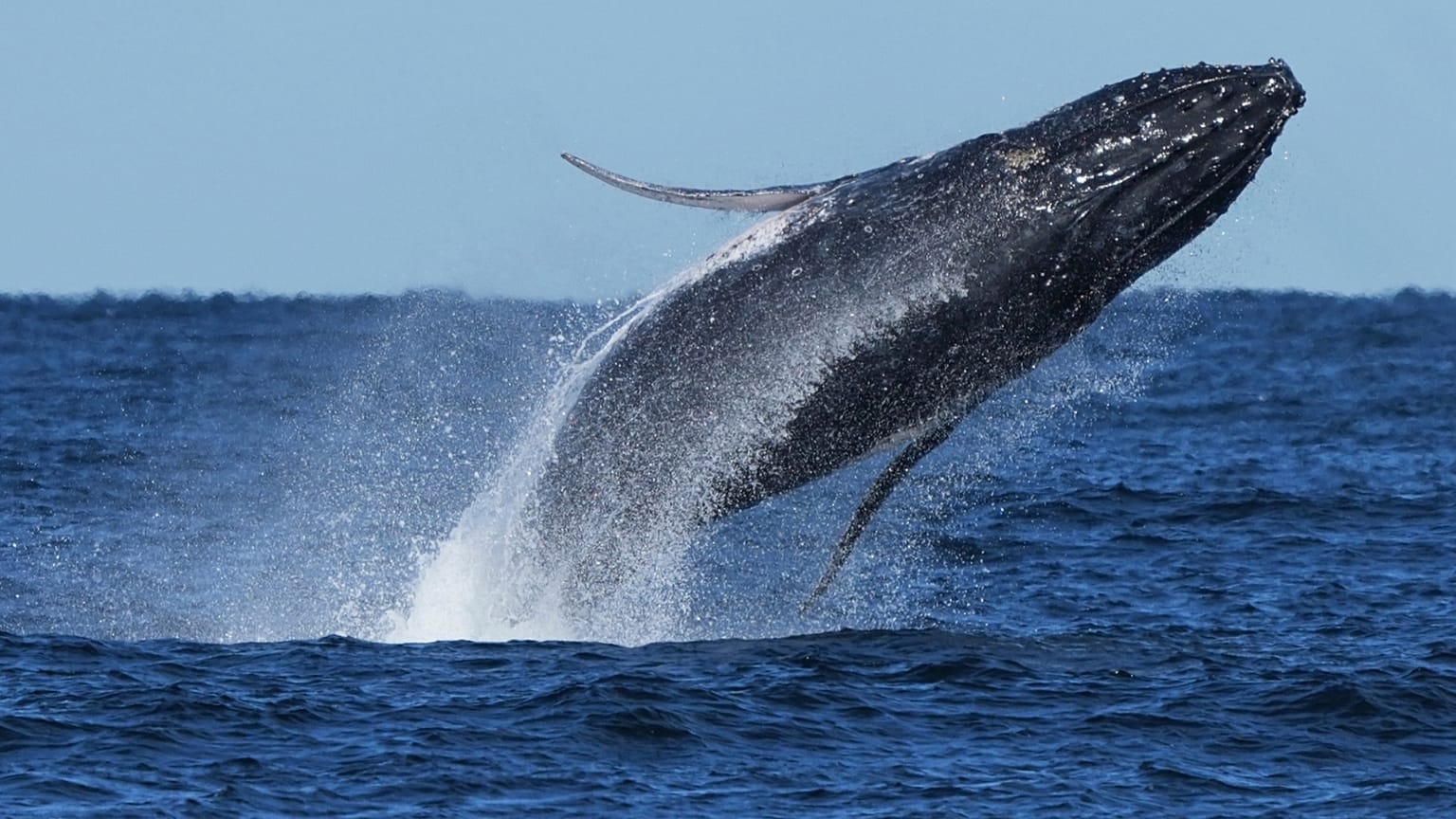
A new study published in Frontiers in Marine Science has examined how climate change is impacting the diet of three rorqual whale species living in the Gulf of St Lawrence (GSL) – a seasonally important feeding area for many whales.
Analysing 28 years of data, researchers found increases in resource partitioning among fin, humpback and minke whales. This is an ecological strategy where species divide resources such as food and habitat space to minimise competition, allowing them to co-exist. In layman’s terms, whales are becoming pretty good at sharing.
How climate change is impacting whales’ diets
Scientists collected more than 1,000 skin samples for the three types of whales to figure out what they were eating and which position they occupy in the food web. These samples were taken over three periods ( 1992-200, 2001-2010, and 2011-2019) corresponding to “shifts in environmental conditions” such as warmer temperatures and ice melt.
The results show that whales’ food in the GSL may be running low, but that whales can and might have already adjusted their diet to what prey is available.
“Highly mobile species like baleen whales can use several strategies to reduce competition, for example by shifting their feeding time or area, or selecting different prey within a feeding area,” says first author Charlotte Tessier-Larivière.
Over time, all species included in the study moved towards more fish-based diets. FIn whales primarily fed on krill during the 1990s, but started eating capelin, herring and mackerel in the 2000s, before shifting to sand lance and Northern krill in the 2010s.
Minke whales primarily fed on pelagic fish species but also consumed krill more frequently later into the study, while humpback whales largely relied on a few fish species, such as capelin, herring, or mackerel throughout the study period.
Researchers say this shift to new food resources may reflect a decrease in Arctic krill abundance.
The bubble trick helping whale populations recover
Changing their diets and resource sharing aren’t the only thing that whales have perfected to adapt to the modern world.
New research from the University of St Andrews found that “bubble-net feeding” has been crucial for humpback whales to recover in the northeastern Pacific, where populations had plummeted due to hunting.
This is when a group of whales works together to blow clouds of bubbles that trap small fish schools into higher densities so they can be engulfed together.
"Bubble-net feeding isn't just a foraging trick, it's a form of shared knowledge that strengthens the resilience of the entire population," says lead author Dr Éadin O’Mahony.
Researchers say the study highlights the growing need to integrate animal culture into marine management, particularly as human impacts on ocean ecosystems “intensify”.