




























Iranian authorities arrested 139 foreign nationals in Yazd during anti-government protests. As many as 30,000 people are feared to have been killed during weeks-long demonstrations.
Iranian authorities arrested 139 foreign nationals in the central city of Yazd during recent anti-government protests, state-run media reported on Tuesday, as the death toll from the unrest remains heavily disputed.
The police chief in Yazd said those detained were involved "in organising, inciting and directing riotous actions, and in some cases were in contact with networks outside the country", according to Iran's Tasnim news agency. The nationalities of those arrested were not disclosed.
"During the review of cases related to the recent rioters, it was determined that 139 of those arrested in these disturbances were foreign nationals," Ahmad Negahban said.
Protests against the rising cost of living erupted in Iran on 28 December before spreading into nationwide anti-government demonstrations that have drawn international condemnation over the violent crackdown.
The Tehran regime acknowledged in January that more than 3,000 deaths occurred during the unrest, but continues to claim most were members of security forces and innocent bystanders, attributing the violence to "terrorist acts".
However, the Human Rights Activists News Agency, a US-based organisation, says it has confirmed 6,854 deaths, mostly protesters killed by security forces.
Other human rights groups warn the actual toll is likely far higher, with insiders in Iran estimating as many as 30,000 people are feared to have been killed.
Iranian authorities maintain the rallies began as peaceful demonstrations before turning into "riots" involving killings and vandalism that were inflamed by the United States and Israel, which Tehran considers arch-enemies.
The protests represent the most significant challenge to Iran's regime since the 1979 Islamic Revolution, with demonstrators calling for an end to clerical rule and demanding fundamental political change.
Talks on the table
International pressure has mounted on Tehran over its response to the demonstrations, with several countries imposing sanctions on Iranian officials accused of ordering the violent suppression of protesters.
Washington threatened to intervene with military action over the killing of peaceful demonstrators and mass executions.
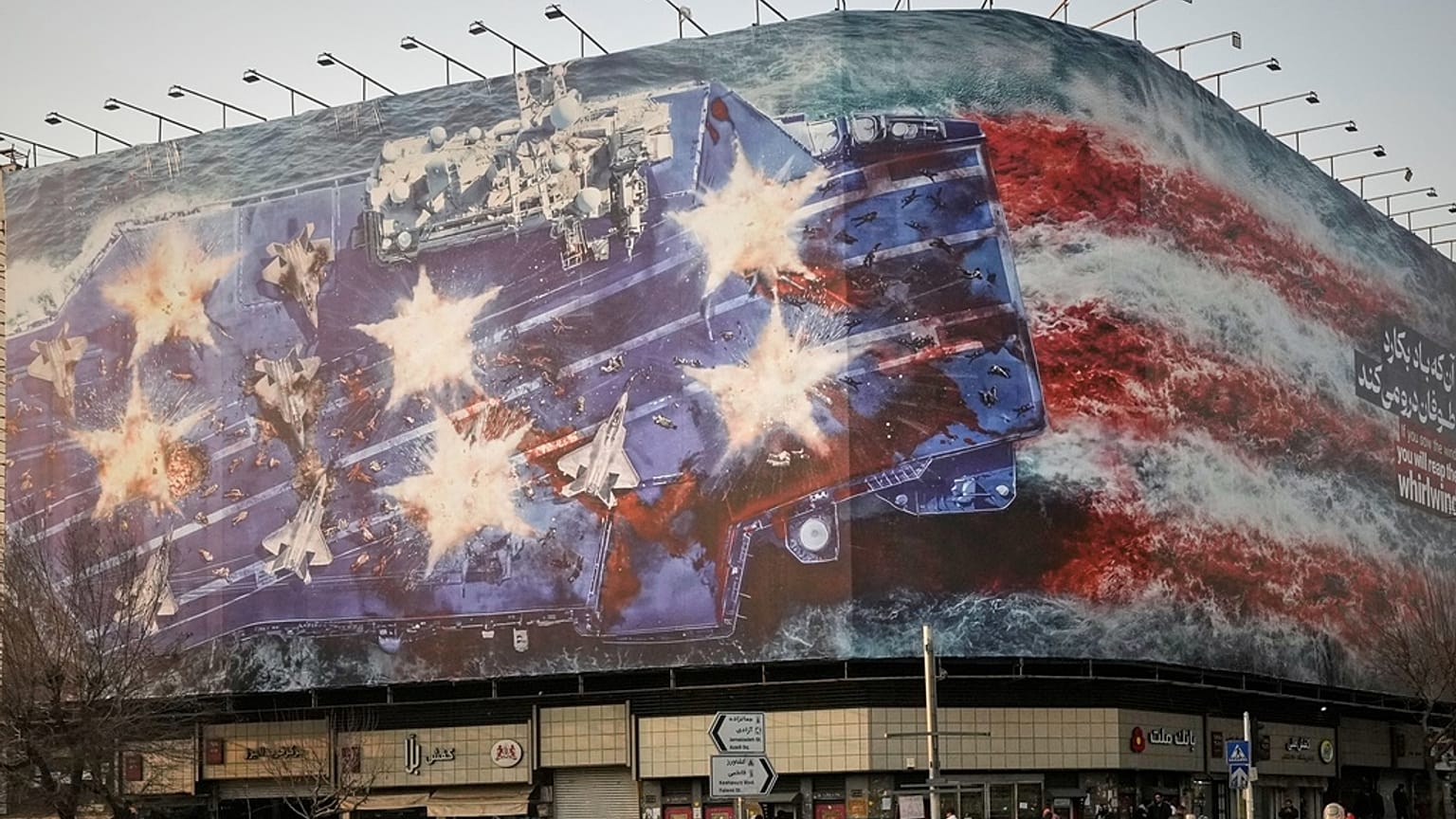
Last week, the Pentagon moved the carrier USS Abraham Lincoln and several guided-missile destroyers to the region, although it remains unclear whether President Donald Trump will decide to use force.
Tehran has dismissed fears of an intervention over the weekend, saying it is currently involved in negotiations with Washington.
However, Ayatollah Ali Khamenei warned Washington that any conflict would spill over into the entire region.
"America should know that if it starts a war, this time it will be a regional war," Khamenei said.
"These threats are nothing new. In the past as well, American officials repeatedly talked about war and said that all options were on the table including war," he added.
The US president has since dismissed Khamenei's sabre-rattling, stating that a deal is still on the table.
"We have the biggest, most powerful ships in the world over there, very close, a couple of days," Trump told reporters on Sunday.
"Hopefully, we'll make a deal. If we don't make a deal, we'll find out whether or not he was right."
Trump's words were followed by an announcement that Iran’s Foreign Minister Abbas Araghchi is expected to meet US Special Representative Steve Witkoff and Jared Kushner in Istanbul on Friday, according to President Masoud Pezeshkian.
“I have instructed my minister of foreign affairs, provided that a suitable environment exists — one free from threats and unreasonable expectations — to pursue fair and equitable negotiations, guided by the principles of dignity, prudence, and expediency,” Pezeshkian wrote on X on Tuesday.