





























Croatia's parliament passed a law enabling construction of a radioactive waste facility near the Bosnian border. The site will store waste from the Krško Nuclear Power Plant and Croatian medical facilities, despite years of opposition from communities in Bosnia who warn it threatens 250,000 people.
Croatia's parliament approved a radioactive waste disposal facility on Monday at a site less than a kilometre from Bosnia and Herzegovina, defying years of protests from neighbours who say the project threatens a quarter of a million people.
 ADVERTISEMENT
ADVERTISEMENT
ADVERTISEMENT
The law provides the regulatory basis for building a facility at Čerkezovac on Trgovska Gora to store waste from the Krško Nuclear Power Plant, which Croatia co-owns with Slovenia, as well as radioactive waste from Croatian hospitals and industry.
Under a bilateral agreement with Slovenia, Croatia must take responsibility for disposing of half the low and intermediate-level radioactive waste generated by Krško, operating since the early 1980s when both countries were part of socialist Yugoslavia.
The facility at the former army barracks site near the border with Bosnia is intended to store this waste temporarily for 40 years before permanent disposal.
The law establishes spatial planning requirements and conditions for implementing the project, Croatia's parliament, Sabor, said. Croatia must now conduct an environmental impact assessment before construction can begin.
Fallout over radioactive waste
Bosnia has opposed the project for years, arguing the site right across the border poses risks to roughly 250,000 people living in the Una River basin.
"When you consider that Čerkezovac barracks is less than 1 kilometre by air from the wells that supply Novi Grad with water, less than 2 kilometres from our high schools and less than 3 kilometres from the city centre, then it's clear what danger we're in," municipal head of the Bosnian town of Novi Grad Miroslav Drljača told the local press in 2018.
Drljača has repeatedly stated that his municipality was mulling a lawsuit over the matter.
Local communities in Bosnia sent a letter to Croatian lawmakers last week warning the law would allow Croatia to bypass international environmental obligations.
Bosnian authorities claim the legislation contravenes the Espoo Convention and other international agreements requiring that affected neighbouring countries be consulted.
Meanwhile, Croatian authorities have defended their choice of the radioactive waste deposit as safe and the only viable alternative.
"If someone stood 365 days, 24 hours in front of the wall of that facility, they would not receive any radiation. It would be significantly less than any radiation during a flight from Europe to the US," Croatian Prime Minister Andrej Plenković said in June 2023.
The Čerkezovac location has been designated as a potential radioactive waste site in Croatian spatial plans since 1999. Croatian authorities say the 60-hectare former military complex, located in an uninhabited area 5 kilometres from the nearest town, offers existing infrastructure suitable for the facility.
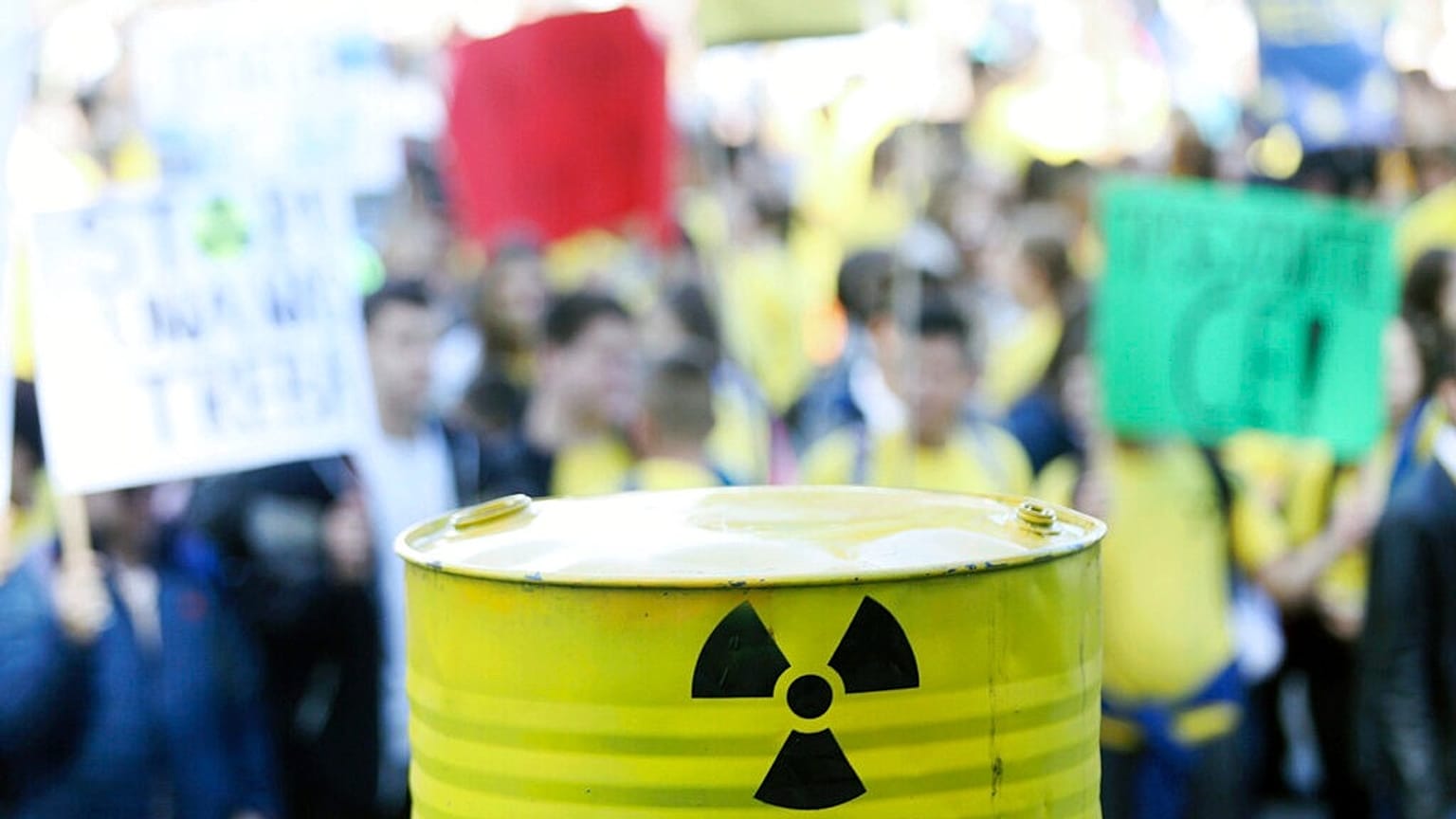
Environmental groups in both countries have protested the plans, with activists warning that the site's proximity to the Una River and seismic activity in the region create environmental risks.
Residents of Novi Grad and neighbouring municipalities have previously raised concerns that Croatia was already using the facility to store nuclear waste, claiming a spike in malign illnesses as proof. Authorities have dismissed these claims as anecdotal.
The river, which flows mostly through Bosnia into the Danube, is part of the country's largest national park and is widely considered one of the cleanest and most picturesque rivers in the wider Balkans.
Croatia plans to begin receiving waste from Slovenia in early 2028, according to officials. The country currently stores small amounts of institutional radioactive waste from medical, industrial and research activities at scattered locations.
Parliament also passed a new energy efficiency law on Monday requiring cities and regions to reduce public sector energy consumption by 1.9% annually. The law also aims to renovate all public lighting in Croatia by 2035.