






























Basel has spent decades making the Rhine safe for swimmers, while German cities are imposing bans. Could a growing European push to reclaim urban waterways change that?
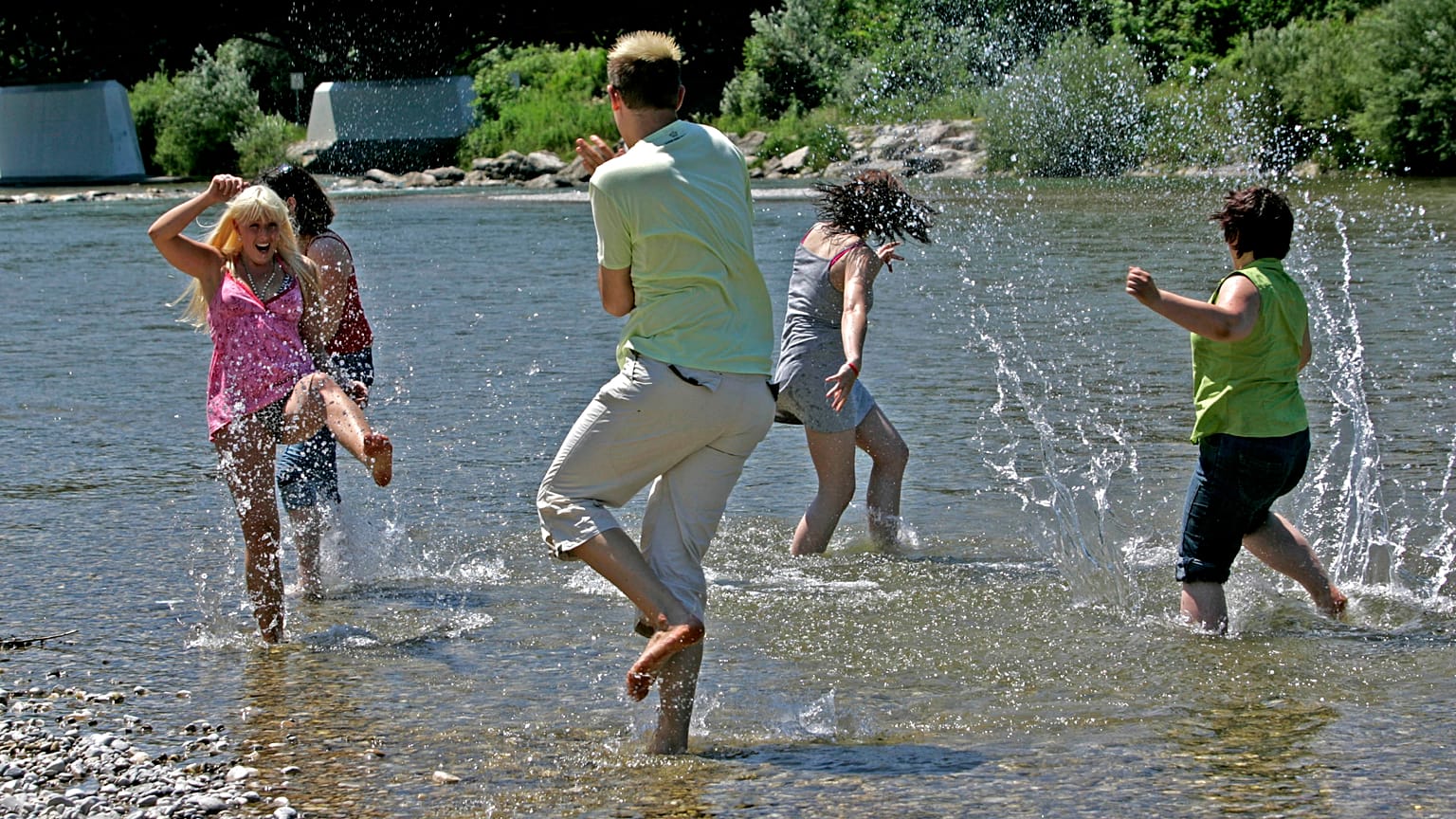
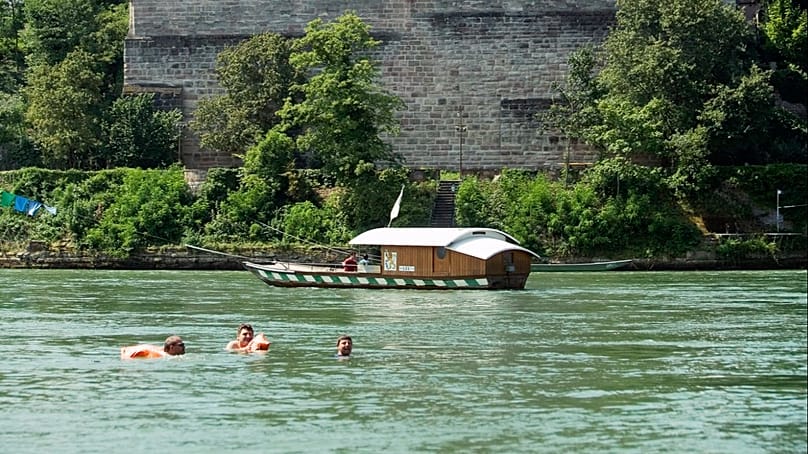
It is 32C in Basel. On the bridges, people are eating ice cream while below them swimmers drift downstream in the Rhine, sharing the river with freight vessels and pleasure boats.
 ADVERTISEMENT
ADVERTISEMENT
ADVERTISEMENT
"For many people who live and work here, the Rhine is an important part of their everyday lives," Conradin Cramer, president of the Basel cantonal government, told Swiss broadcaster SRF.
But travel a few hundred kilometres north along the same river to the German cities of Cologne and Düsseldorf and the situation is very different: swimming in the Rhine is banned, with anyone entering the water facing fines of up to €1,000.
Making a river safe for swimming
Tim Edler, co-founder of the Flussbad Berlin association, which campaigns to make Berlin's Spree safe for swimming, believes Basel shows what can be achieved when cities actively manage rivers for public use.
He recently visited the Swiss city for the Swimmable Cities European Forum, a network seeking to make urban waterways accessible and clean enough for bathing.
In mid-August, about 4,500 people took part in Basel's annual Rhine swim, following a roughly two-kilometre course downstream from Kleinbasel to the Johanniter Bridge.
But clean water alone does not make a river safe for swimmers.
"Showers, steps, entry points, rescue plans and clear rules are just as important," Christoph Bosshardt, head of Basel's location marketing, told SRF.
Infrastructure along the Rhine has been systematically developed over many years, while the city and the Swiss Life Saving Society provide maps showing where it is safe to swim.
Swimmers are advised to enter the water only when it is at least 18C, stay within designated areas and never swim alone.
Basel's relationship with the Rhine has also changed dramatically over recent decades.
A major fire at a chemical warehouse in 1986 sent chemicals and tonnes of contaminated firefighting water into the river, causing an ecological disaster.
The catastrophe prompted a rethink of how the Rhine was managed and helped drive decades of work to improve it.
"This is something you can achieve through persistent, focused change," Edler said.
Why is river swimming banned in Germany?
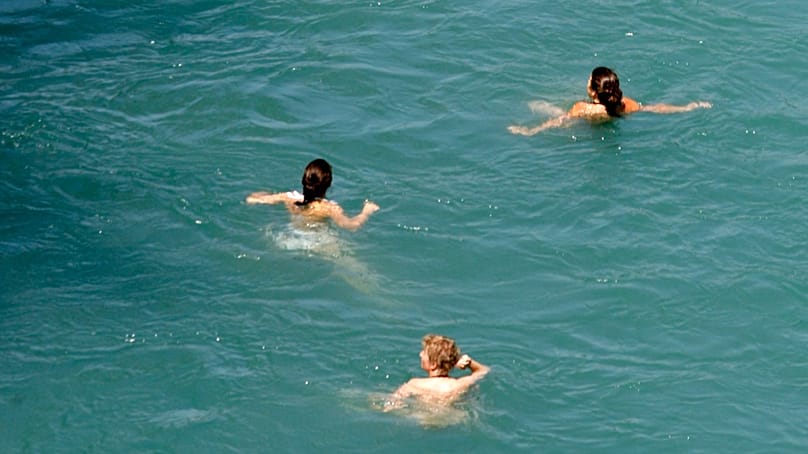
Basel lies close to the borders of Switzerland, France and Germany, highlighting the starkly different approaches to the same river.
"If you were to swim a few hundred metres further from Basel, then you swim into France, where it is banned, and across the river in Germany it is banned as well," Edler said.
In Cologne and Düsseldorf, swimming in the Rhine has been prohibited across the cities since late summer 2025.
Cologne points to a series of fatal accidents and warns that ships can create dangerous whirlpools and suction currents that may not be visible from the surface.
Edler does not dispute the danger and believes bans are currently justified in some areas.
But he argues that those dangers are partly the result of decades of managing the Rhine primarily for shipping.
The riverbed has been modified and groynes — stone structures extending from the riverbank — have been built to control the flow of water. These can create powerful currents capable of pulling swimmers towards the main shipping channel.
"If people fall into the water from one of these groynes that stick out into the river, they are automatically in an area of deadly whirlpools," Edler said.
"It is really extremely dangerous."
But he argues the answer should not simply be to ban swimming indefinitely.
'Shipping has priority'
Edler believes German authorities have historically treated rivers primarily as transport infrastructure rather than public spaces.
"First and foremost we have an administration that develops the river in inner-city areas solely according to the principles of optimising it for shipping," he said.
For Edler, the problem is not the immediate introduction of swimming bans but the lack of any requirement to make dangerous stretches of river safer in future.
"It is scandalous that these bans are not linked to a requirement to improve the situation," he said.
He argues that authorities responsible for managing the Rhine should be given a deadline to redesign dangerous riverbanks so swimming could eventually return.
There is historical precedent. Cologne once had several designated bathing areas along the Rhine.
According to the city, a municipal report from 1913 recorded six public riverbank bathing facilities, five river bathing establishments and a beach pool. Swimming areas were fenced off and secured.
Authorities are now assessing whether locations could again be found where exceptions to the swimming ban might be possible.
Could Berlin's Spree become swimmable?
The same debate is playing out in Berlin, where Edler's Flussbad Berlin association wants parts of the Spree opened to swimmers.
The Spree remains a federal waterway and swimming is generally prohibited, although traditional freight traffic plays a relatively minor role in the centre of Berlin, where passenger and leisure vessels dominate.
Edler argues that the river is therefore still being managed according to priorities that no longer reflect how it is actually used.
"The blanket ban in force in Berlin blocks any projects, any initiatives, any positive development of the waterway," he said.
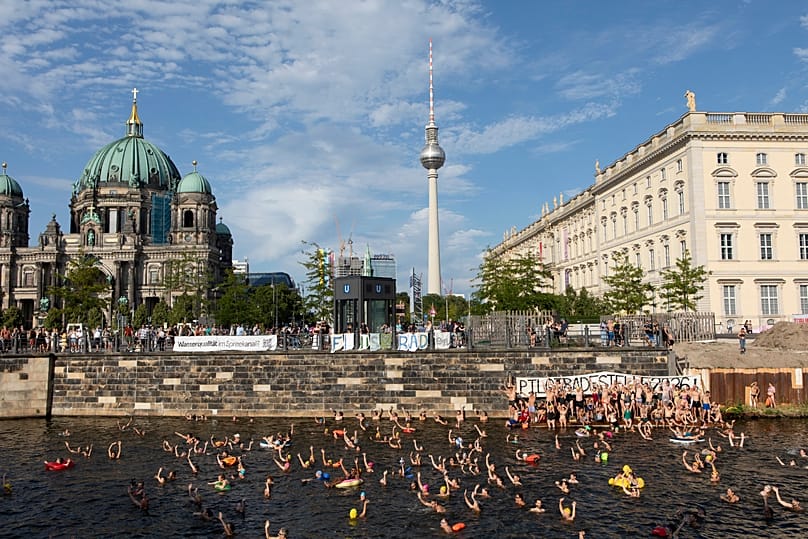
His association says funding of up to €1 million is available for a pilot bathing area in the Spree Canal, where there is no longer shipping, but the project cannot proceed while swimming remains prohibited.
"If, as a society, we fail to develop the idea that water in the city is public space that belongs to people, it is almost impossible to push through projects in this direction," Edler said.
Edler is frustrated by the standstill. "If, as a society, we fail to develop the idea that water in the city is public space that belongs to people, it is almost impossible to push through projects in this direction." Yet he is sure that river swimming will sooner or later take hold in many German cities too.
It is already on the agenda in all affluent, developed regions, especially in European cities. For instance, an event organised by Swimmable Cities (source in German), which also hosted the forum in Basel, has already taken place in Rotterdam. There have also been discussions in the context of the Olympic Games in Paris, as well as in London and Amsterdam.
River swimming spreads across Europe
The debate comes as more European cities experiment with opening urban waterways to swimmers.
Paris has allowed swimming in the Canal Saint-Martin on Sunday afternoons this summer, with designated bathing areas and lifeguards.
Janett Koch, a member of Flussbad Berlin who swam there, said the experience showed how relatively simple infrastructure could make urban swimming possible.
"The water was very pleasant and smelled fine. I had plenty of space to swim," she said.
"It was a real blessing to be able to cool off on a hot day with temperatures above 30C."
Other cities, including Rotterdam, London and Amsterdam, have also explored ways of giving people greater access to their waterways.
Edler believes the trend will continue.
"All the other prerequisites — hygiene standards, shipping and so on — are solvable problems," he said.
"It is no longer acceptable for the river running through the middle of these cities to be essentially a toxic sewer; instead people want to experience and use the river as public space."