
















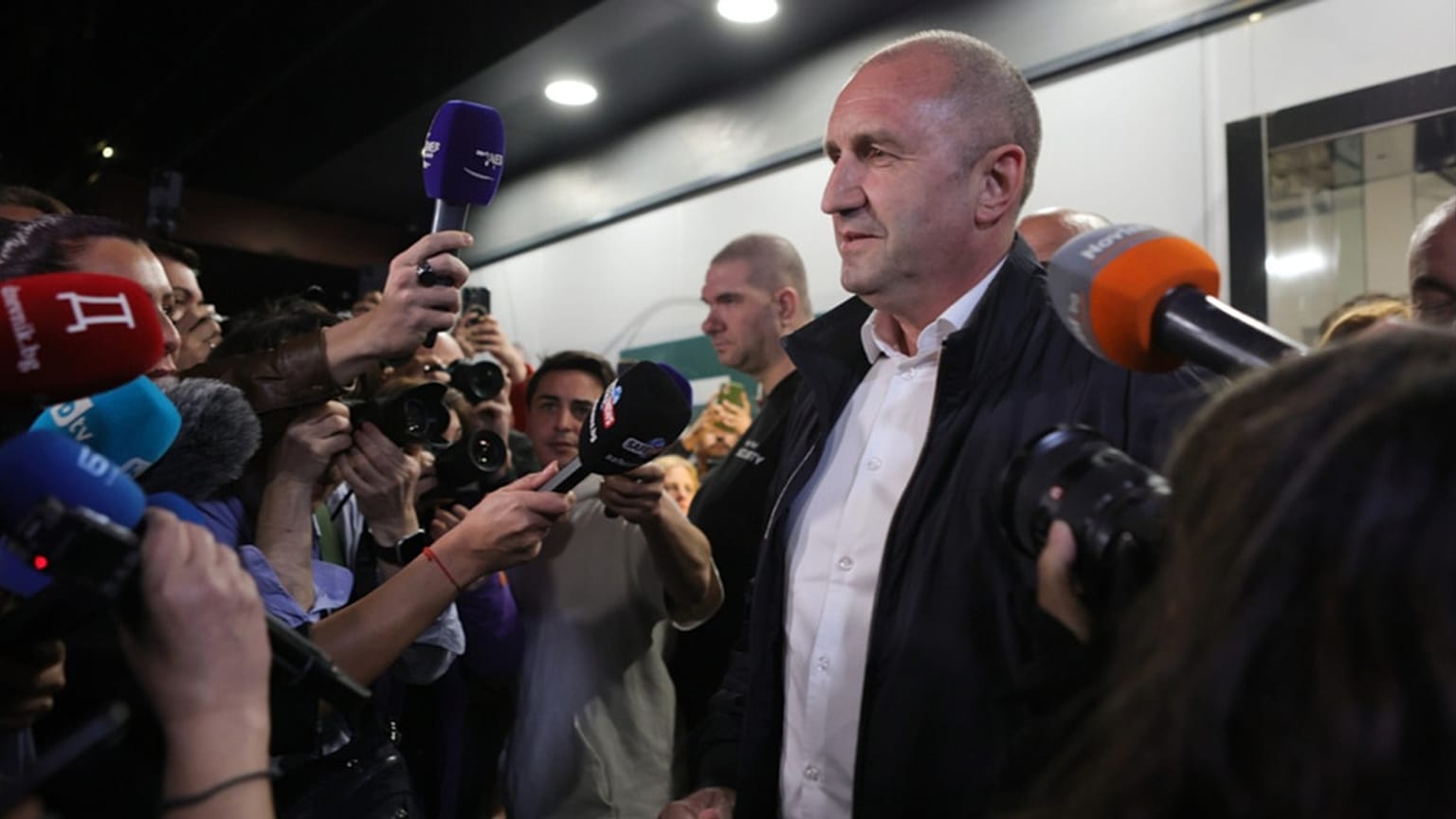













Radev won last month’s election, seen by many as one of the most consequential in the Balkan nation’s recent history, by a landslide, securing an outright majority for the first time since 1997. He was given the presidential mandate to govern on Thursday.
Bulgaria’s parliament on Friday formally approved Rumen Radev as the new prime minister in a bid to end political instability and spur economic development in the EU member country.
 ADVERTISEMENT
ADVERTISEMENT
ADVERTISEMENT
“We have no illusions about the crises and trials facing the government, which will soon be seeking your support – galloping prices, budget, missing reforms, a severe global energy crisis and escalating conflicts,” Radev told lawmakers.
The chamber voted 124-70 with 36 abstentions to elect Radev, a 62-year-old former fighter jet pilot, as prime minister.
Radev resigned from the mostly ceremonial role of president in January, a few months before the end of his second term, to launch a bid to lead the government in the more powerful role as prime minister.
Sofia’s previous conservative government collapsed in December after nationwide anti-corruption protests drew hundreds of thousands of mainly young people to the streets.
Radev’s popularity surged as he cast himself as an opponent of the entrenched mafia and their ties to high-ranking politicians. At campaign rallies he vowed to “remove the corrupt, oligarchic model of governance from political power.”
His Progressive Bulgaria party scored a landslide victory in the 19 April parliamentary election, giving it an outright majority – the first in Bulgaria since 1997 – with 131 seats in the 240-seat legislature.
Radev earned a Master of Strategic Studies degree from the US Air War College in Alabama in 2003, before being appointed Bulgarian air force commander.
His supporters are divided between those hoping he will put an end to the country’s oligarchic corruption and those lining up behind his Eurosceptic and Russia-friendly views.
Although Radev’s pro-Russian stance has raised concerns about Bulgaria’s position in European policymaking, with some political analysts expect his future approach to remain moderate, unlike that of former Hungarian Prime Minister Viktor Orbán.
This is largely due to Bulgaria, a poor nation of 6.5 million people, remaining heavily reliant on European funds. Radev’s government is expected to undertake a series of reforms to unlock nearly €400 million in European Union funds.