The UK and Ireland are celebrating World Book Day. Held on the first Thursday of March, the event is the British Isles’ localised version of the global UNESCO-organized celebration.
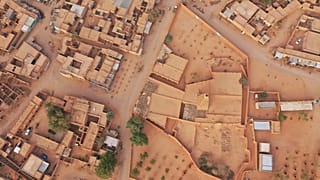
HeritageWatch.AI, a new collaboration launched in Paris, combines satellite imagery, 3D modelling, and AI to provide real-time data that will help protect cultural heritage sites from disasters and conflict.
Henna, a symbol of joy and tradition across the Arab world, has been recognised by UNESCO as an Intangible Cultural Heritage, with Morocco at the heart of its rich history.
The family home next to Auschwitz – immortalized on screen in last year’s Oscar-winning film ‘The Zone of Interest’ - is opening its doors to the public for the first time. This coincides with an alarming international survey examining Holocaust knowledge and awareness.
The Portuguese School of Equestrian Art in Lisbon, now recognised by UNESCO as Intangible Cultural Heritage, showcases the elegance of 18th-century dressage with Lusitano horses.
The role of goodwill ambassador for the Paris-based UN cultural agency involves promoting its initiatives that include protecting Indigenous cultures and advancing education.
Alongside Japanese sake and Brazilian cheese, Europe made a strong showing on the UNESCO list. Ukrainian 'pysanky' and Parisian roof restorers were just two of the continent’s treasures to be added.
Offshoring drilling threatened to submerge parts of the delta, which is already bracing against a barrage of problematic, climate change-induced conditions.
Vienna’s iconic Würstelstand, a humble sausage stand that brings together people from all walks of life, has been officially recognised as part of Austria’s cultural heritage.