




























Researchers at ICMM-CSIC have developed magnetic iron oxide nanoflowers that capture PET nanoplastics and transform them into materials that remove other water pollutants, paving the way for a circular economy and advanced water treatment.
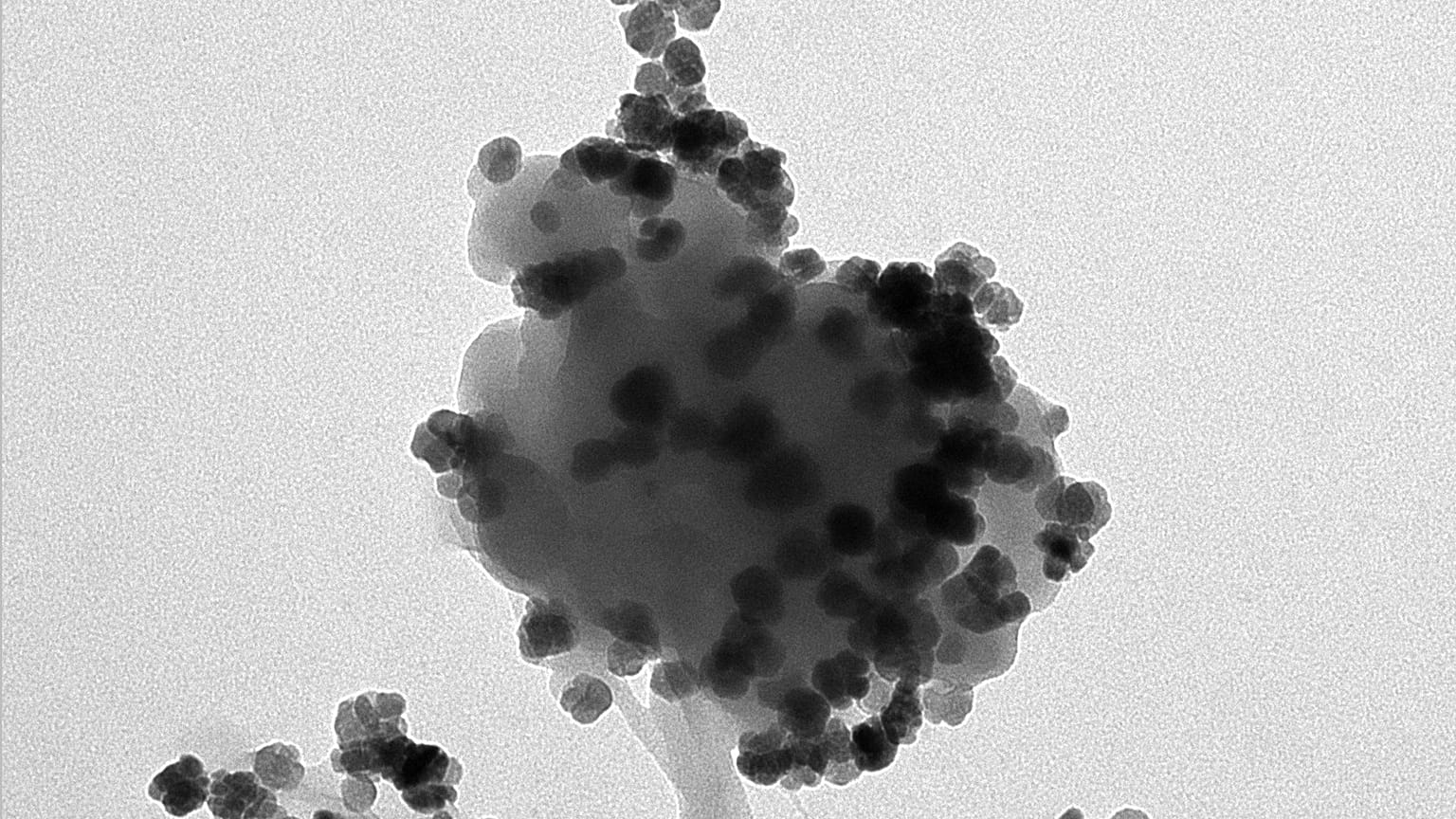
From plastic that pollutes water to a tool that helps clean it up. Researchers at the Institute of Materials Science of Madrid (ICMM), part of the CSIC, have developed flower-shaped iron oxide nanoparticles capable of capturing nanoplastics, fragments a thousand times smaller than a microplastic, originating from PET, one of the most common materials in bottles, packaging and polyester clothing. The study has been published in the Chemical Engineering Journal.
 ADVERTISEMENT
ADVERTISEMENT
ADVERTISEMENT
The secret lies in the shape. "Iron oxide is a magnetic material that makes it possible to trap many pollutants at once. On top of that, its nanoflower structure means that the particles have several nuclei that work together to enhance their magnetic properties", explains Álvaro Gallo-Córdova, a researcher at the ICMM-CSIC and one of the main authors of the study, alongside Rafael Herrera-Aquino and María del Puerto Morales.
From microplastics in make-up to nanoplastics from PET
This is not the first time these particles have proved their worth: in 2024 they had already managed to extract and break down microplastics, between 0.001 and 5 millimetres in size, originating from cosmetics. The leap now is one of scale. Nanoplastics measure about a billionth of a metre, a thousand times smaller than those microplastics.
"When they reach the end of their useful life, a large share of PET plastics ends up in the environment, where sunlight and physical wear act like sandpaper, grinding them down into nanoplastics, a kind of ultra-fine dust that contaminates our soils and water sources", adds Gallo-Córdova.
Just one gram of these magnetic nanoflowers can capture up to 10,000 milligrams of nanoplastics, a figure the team itself describes as unprecedented to date.
The pollutant that helps clean up other pollutants
The job does not end with capture. Once the nanoplastic has been trapped, the team turns it into a magnetic material capable of extracting heavy metals or organic dyes from water, and can even involve it in catalytic degradation processes.
"After capturing the nanoplastics with our magnetic nanoparticles, we turn them into functional materials, transforming a polluting waste into a new raw material within a circular-economy approach", the researcher sums up. Put another way, they use the waste itself to remove other pollution, giving a second life to something that would normally end up in the bin.
The process uses barely any energy, because magnetic heating acts locally, right on the surface of the nanoparticles, without the need to heat all the water.
And it stands up to use: after five cycles, the nanoflowers retained 88% of their decontamination capacity and released into the water less than 0.82% of the iron they contained at the start, confirming that they are stable, reusable and safe. The ICMM-CSIC team is now turning its attention to advanced water treatment as the next field in which to apply this technology.