
















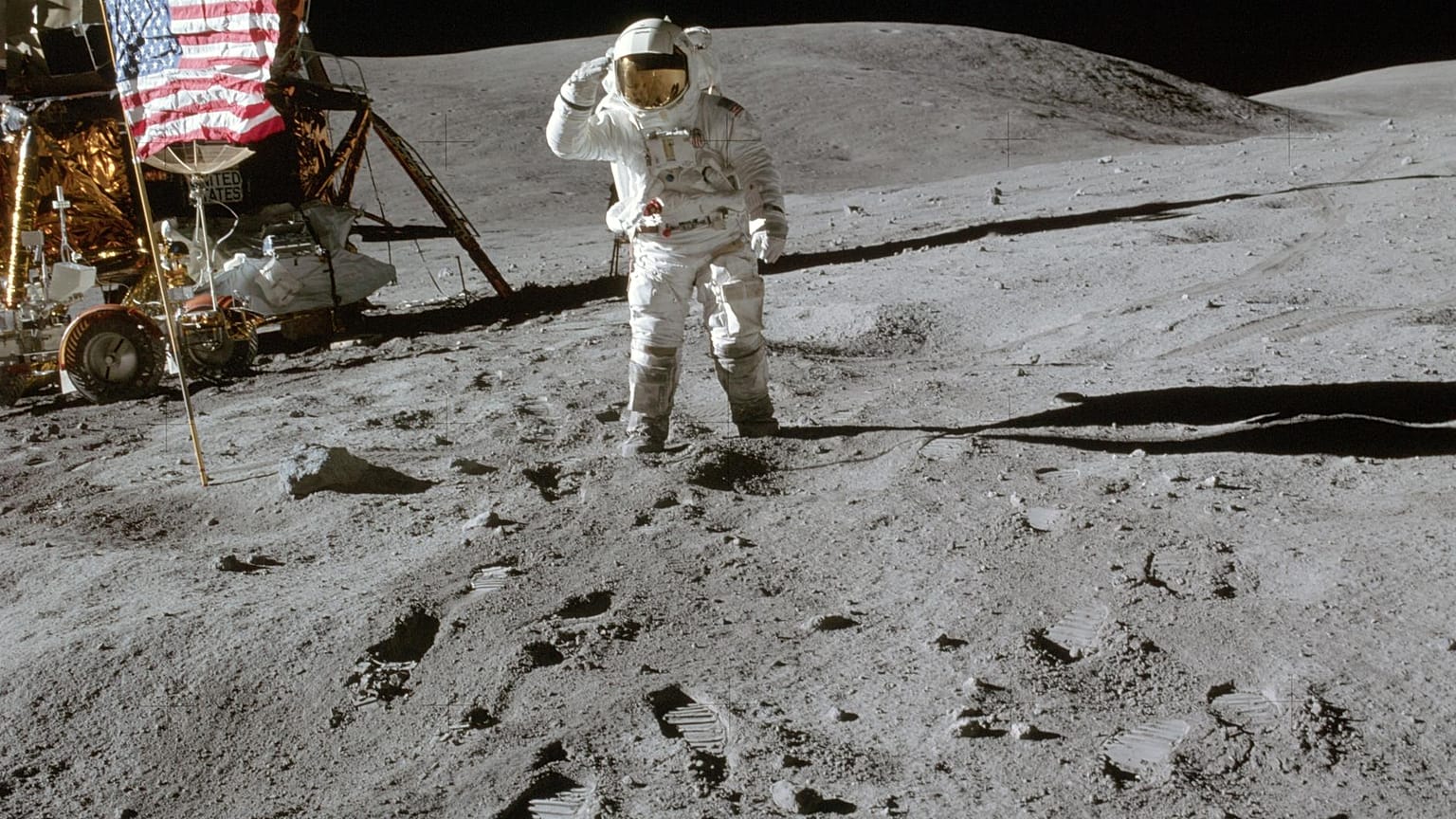














Charlie Duke was the youngest person ever to walk on the Moon at the age of 36. Now 90 years old, the prospect of another human return to the Moon excites him.
Excitement is building as NASA’s new Moon mission approaches, with the Artemis II mission scheduled to launch on Wednesday, April 1.
 ADVERTISEMENT
ADVERTISEMENT
ADVERTISEMENT
If successful, the mission will mark humans’ return to the natural satellite in more than half a century.
NASA sent 24 astronauts to the Moon, and twelve of them walked on the surface between 1968 and 1972.
Ahead of the Artemis II mission, Charlie Duke, who was the lunar module pilot for Apollo 16 is cheering on NASA’s new lunar exploration programme.
Now 90 years old, Duke was the youngest person ever to walk on the Moon at the age of 36,
“I'm excited about that, finally getting going on Artemis. I think it's gonna be a great programme,” said Duke.
“Half the world's population weren't even born when we were Apollo… I think a very outstanding motivational tool for the young people to challenge them, say, 'well, let's go do that, that's what I want to do,’” he added.
The Artemis II mission won’t land on the Moon this time, but will instead take the crew thousands of kilometres deeper into space than the Apollo astronauts went for the original Moon landings, roughly 393,000 kilometres, from Earth before looping around the Moon and returning home.
"I'm all for it and I'm all behind them and cheering them on. So it's going to be an exciting flight… they'll be able to see the whole backside of the Moon."
The Space Launch System rocket currently sits ready for the milestone launch at Launch Complex 39B at the Kennedy Space Center.
NASA’s Orion spacecraft, which will be launched on the Space Launch System rocket, stands 98 meters tall and produces more thrust at liftoff than the Saturn V rockets used during Apollo, despite being slightly shorter.
The Artemis II crew was supposed to have blasted off on a lunar flyaround earlier this year, but fuel leaks and other problems with the Space Launch System rocket interfered.
Although NASA managed to plug the hydrogen fuel leaks at the pad in February, a helium-flow issue forced the space agency to return the rocket to the Vehicle Assembly Building for repairs, bumping the mission to April.
NASA’s longer-term goal is to establish a sustained human presence on the Moon, including habitats, rovers and infrastructure, as a stepping stone for missions to Mars. NASA aims for a two-person landing in 2028, as part of the new Artemis programme.