




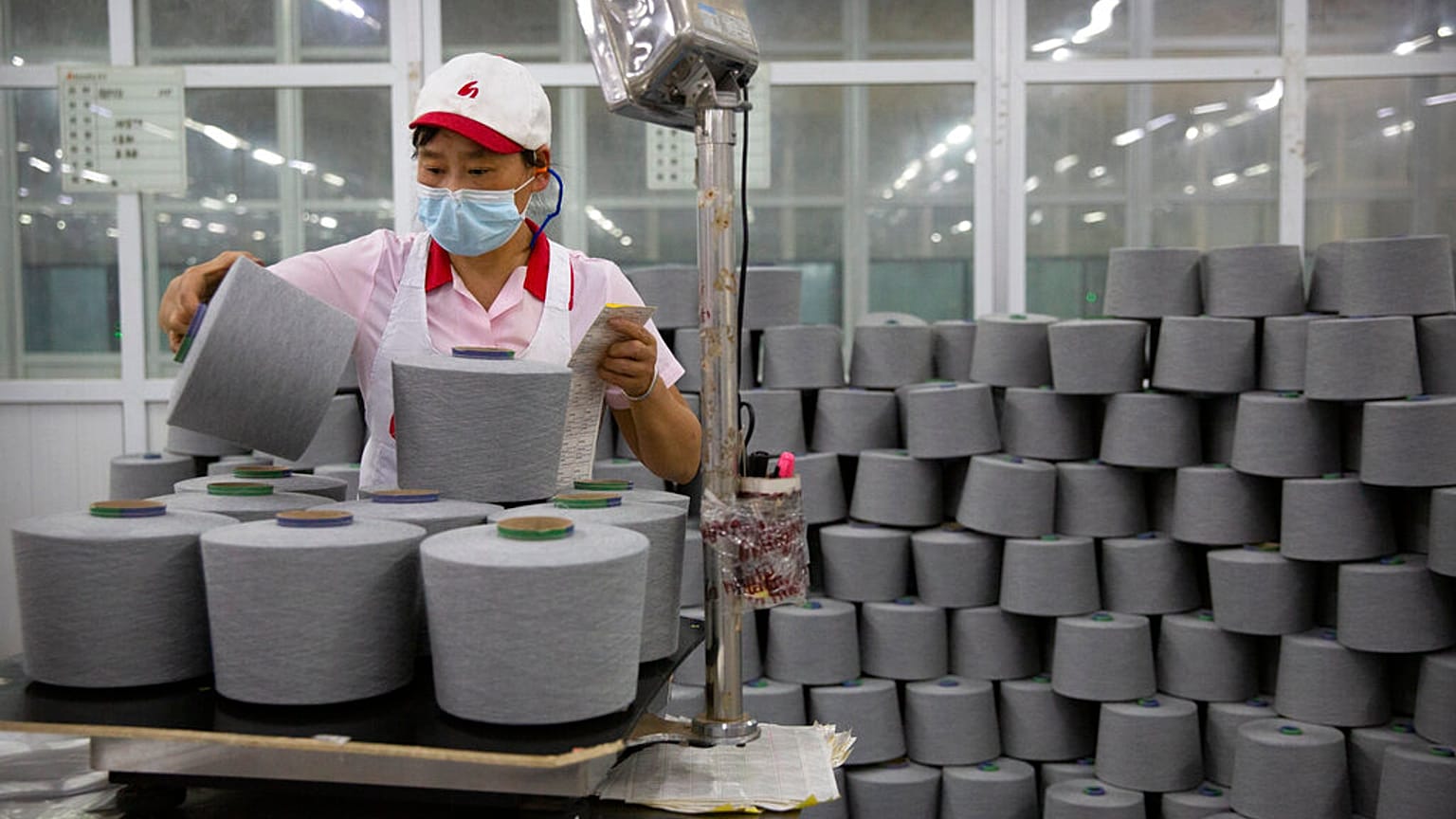














China has been dogged by allegations of using forced labour against Uyghur Muslims in its western Xinjiang province.
The European Commission is set to unveil its proposal for an EU-wide ban on all products made using forced labour.
 ADVERTISEMENT
ADVERTISEMENT
ADVERTISEMENT
The plans, due to be announced on Wednesday, have been in preparation for one year now, with data from the United Nations (UN) demonstrating how alarming the problem is becoming worldwide.
According to a report released this week by two UN agencies, forced labour affects 27.6% million people, with children making up 3.3 million of this total.
Despite the EU's insistence that it is not directly targeting China, which faces allegations of forced labour against Uyghur Muslims in the country's western-Xinjiang province, Brussels' latest proposals will inevitably hit Beijing.
On Monday, at the European Parliament in Strasbourg, the Greens–European Free Alliance invited Uyghur activist and President of the European Uyghur Institute, Dilnur Reyhan, to speak to the press, where she highlighted the areas where China uses forced labour.
"We know what the industrial sectors are - the textile sector, high-tech sector and telecommunications, especially," Reyhan said.
The European Parliament is asking for an instrument similar to the ones used in Canada and the USA.
When there is considerable suspicion of forced labour in a certain location, companies must prove that they do not use it in their production and supply chains.
However, Yannick Jadot MEP told Euronews that this approach is too cautious to be effective.
"The proposal from the European Commission is that the countries' authorities should investigate after they are alerted by the associations, experts or certain companies. So, there is the risk of having a not very efficient system," he said.
Once the Commission publishes its plans, the European Parliament and EU countries will then have to give their approval before the rules can come into effect.