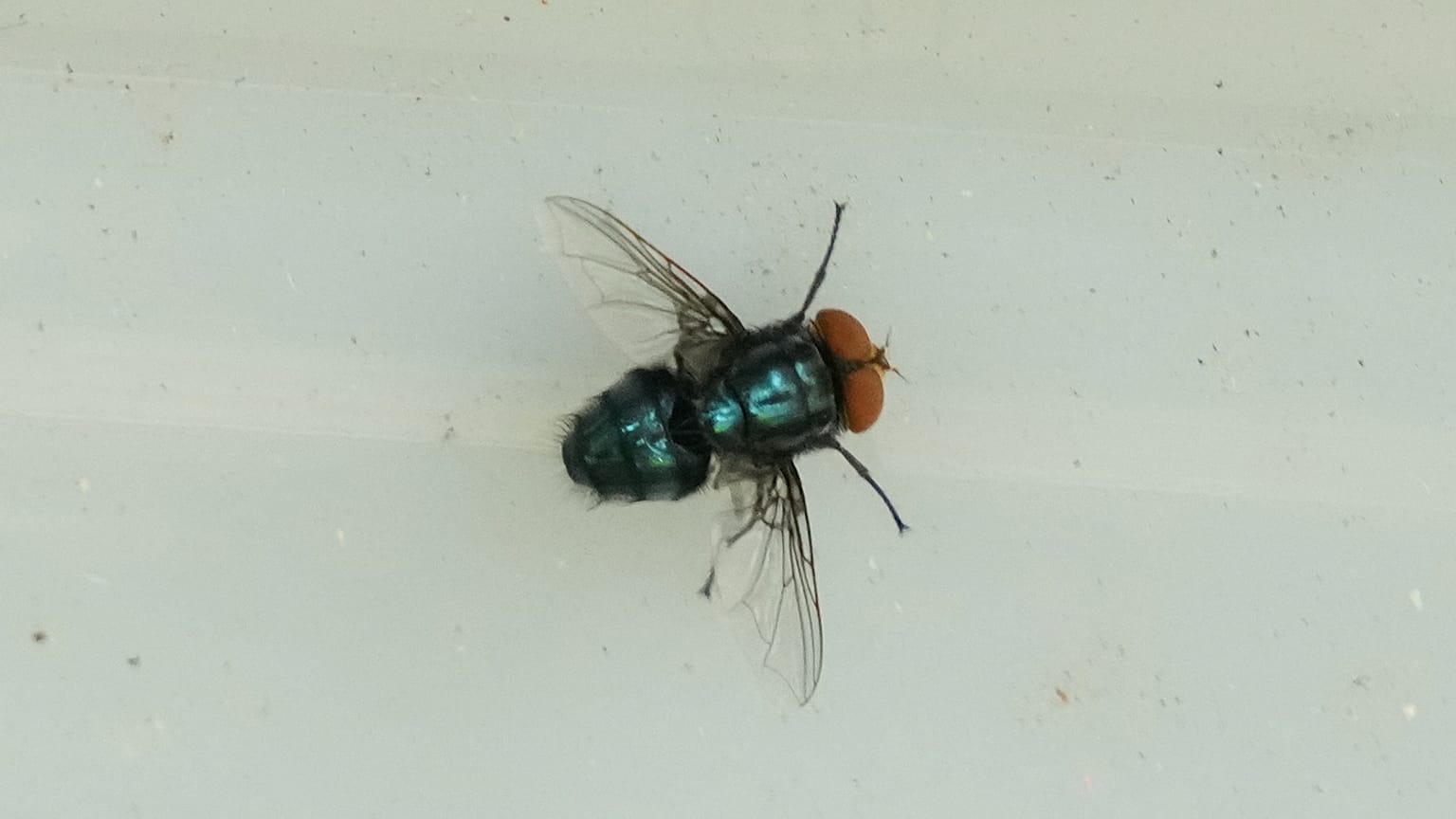













A parasitic fly whose larvae feasts on living flesh has been confirmed in cattle in south Texas, years after it was deemed eradicated in the country.
The New World screwworm (NWS) fly has been detected in south Texas, the US's largest cattle-producing state, the country's Department of Agriculture confirmed on Wednesday.
 ADVERTISEMENT
ADVERTISEMENT
ADVERTISEMENT
The screwworm is a species of parasitic fly that completes part of its lifecycle by feeding on the tissue and flesh of warm-blooded animals and humans.
The female fly lays eggs in open wounds or mucous membranes, where they then hatch into larvae that eat the flesh around them.
The case was detected in a three-week-old calf in LaPryor, Texas, approximately 80 kilometres from the US border with Mexico, Agriculture Secretary Brooke Rollins confirmed. It is the first case in the region since 1966.
Rollins said there have been no other reported discoveries of the fly in the country, and officials stressed that, while the fly’s larvae pose a threat to livestock, they do not infest food. With proper treatment, even the infested calf should recover.
“There is no reason to believe this incursion will result in [the] establishment of the pest in our country," Rollins said.
Texas State Veterinarian Bud Dinges established a 20-kilometre quarantine zone, prohibiting the movement of any warm-blooded animal — including pets — outside that zone without an inspection.
Have there been other cases of New World Screwworm?
The pest was a recurring problem for the American cattle industry for decades, with Florida and Texas known as hotspots, until the US largely eradicated it in the 1960s and 1970s.
While infestations are uncommon in the US, cases have been reported in travellers returning from affected areas.
In August 2025, US health officials confirmed a case in a Maryland resident who had travelled to El Salvador. The patient recovered, and officials found no evidence of further parasite transmission.
Before that, the last outbreak occurred in the Florida Keys, a tropical archipelago stretching south of Miami between the Atlantic Ocean and the Gulf of Mexico, in September 2016, largely among wild deer. It was contained early the next year without spreading further.
How can the fly be contained?
The screwworm was successfully eradicated from North and Central America for many years, but it is currently endemic in South America and parts of the Caribbean, according to the Food and Agriculture Organization of the United Nations (FAO).
Over the past five years, the parasite has re-established itself across Central America and Mexico, reclaiming much of its original range.
The main eradication tool is the sterile insect technique (SIT), which uses radiation to produce sterile male flies without the use of pesticides.
The FAO notes that SIT must be combined with wound management, close monitoring and robust surveillance to be effective. The US has recently used this method in an attempt to keep the fly out of the country.
Female flies mate only once in their months-long lives, and if they do so with a sterile fly, their eggs would not hatch, and the population would decline over time.
This technique is also being used to stop other disease-carrying insects, such as the Asian tiger and Egyptian mosquitoes, the main carriers of diseases such as Zika, dengue and yellow fever.
Rollins said the United States Department of Agriculture is confident enough in its preparations and believes “there is no threat of mass infestation.”
What are the risks and symptoms for people?
The larvae do not spread from person to person, and they pose a very low overall risk to the public.
According to US health authorities, people can be at risk if they travel to areas where the flies are present and spend extended time outdoors during the day, especially if sleeping.
Those who live, work or spend prolonged periods near livestock or other warm-blooded animals in affected areas are also at a higher risk.
Infection symptoms can include unexplained, painful wounds or sores that do not heal, a foul-smelling odour or bleeding from the site of the infestation, and seeing maggots or feeling movement in open wounds or sores or in the nose, mouth, eyes, ears or genitals.
Is the New World Screwworm established in Europe?
The fly is not established in Europe, and no outbreaks have been reported.
However, warming temperatures are increasingly expanding insect habitats, and sporadic cases linked to international travel cannot be ruled out.