




























The government says the main trade unions back the reform, despite months of protests by professionals across the political spectrum. The draft law still needs Congress approval.
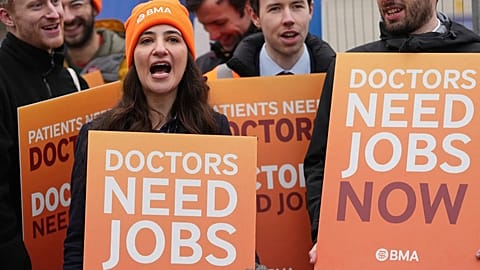
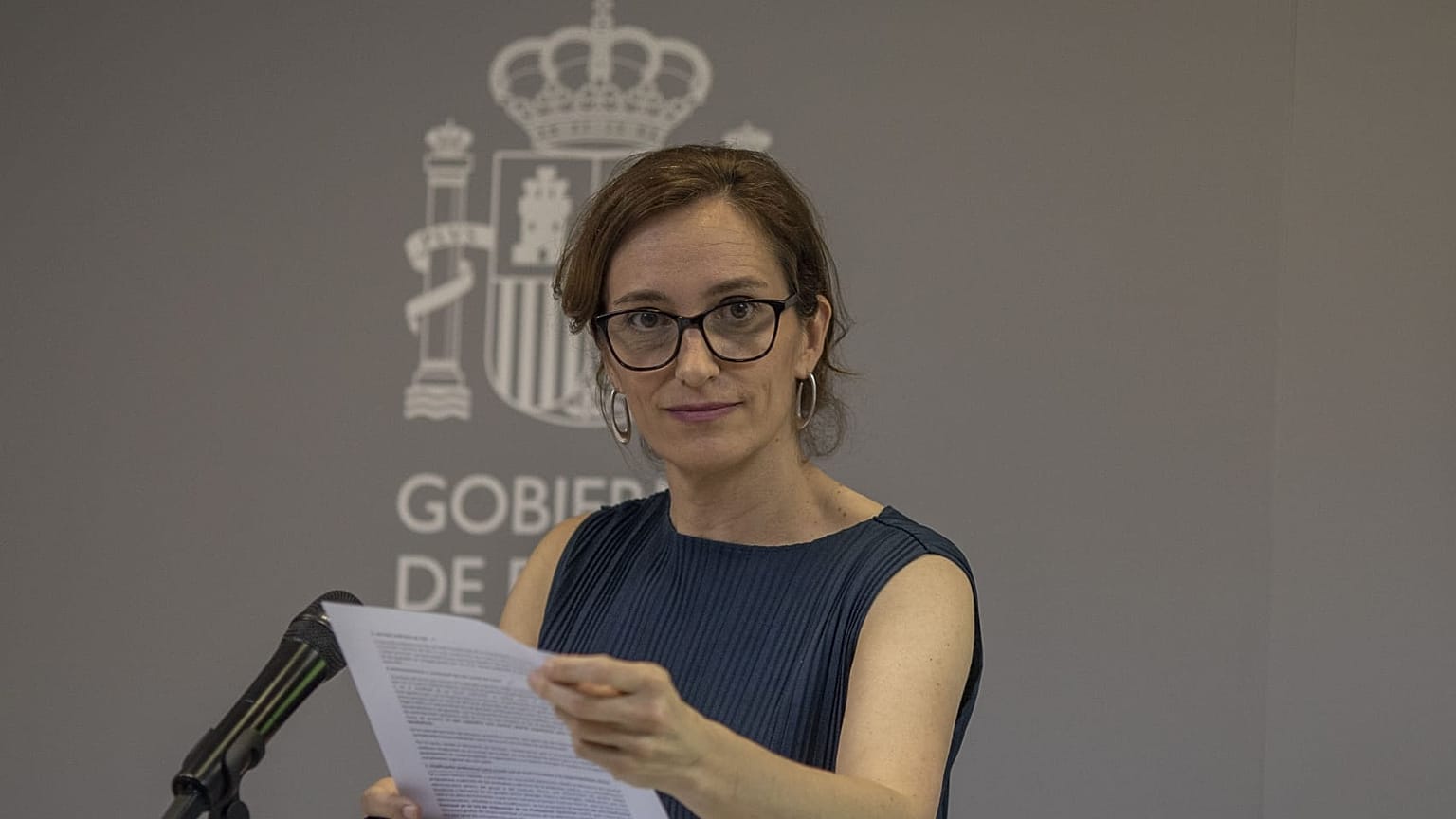
Spain's health minister, Mónica García, chose not to appear at the press conference after the cabinet meeting at which her new Framework Statute for healthcare staff was presented — a measure that has sparked months of demonstrations drawing doctors and healthcare workers from across the political spectrum.
 ADVERTISEMENT
ADVERTISEMENT
ADVERTISEMENT
It was government spokesperson Elma Saíz, a Socialist minister, who defended the openly unpopular reform, saying it has the backing of the "majority trade unions" — SATSE-FSES, CC.OO., UGT and CSIF — as opposed to the groups that joined forces to protest against the text approved on Tuesday, which still has to pass through parliament.
Professionals are calling for a series of measures they say are absent from García's reform. The health minister, an anesthesiologist and member of the government's minority partner Sumar, represents Más Madrid.
Among their demands: on-call shifts should count towards Social Security contributions, and staff should receive either a night-work allowance or rest days after working consecutive shifts — as is the case for national police officers and prison staff.
Professionals are also calling for the creation of a specific A1 professional category for doctors, a maximum 35-hour working week and for any extra work to be voluntary and paid. They are likewise demanding a voluntary early-retirement scheme, whether full or partial, and a ban on compulsory redeployment.
The law, which updates the framework for social and healthcare staff after two decades, reduces the maximum weekly working time to 45 hours, below the European average for the sector.
Labour minister Yolanda Díaz had sought a general cap of 37.5 hours a week for the entire workforce, down from the current 40, but the bill was voted down by right-wing parties last September.
For on-call duties, the maximum limit is now set at 17 hours of effective work — apparently cutting the current 24-hour cap.
There is a catch, however: article 97 of the draft bill states that if adequate continuity of care cannot be guaranteed, and "wherever there are organisational or care-related reasons that justify it, the maximum duration" of the working day may be exceeded. The text also provides for the creation of statutory research staff and work-life balance measures.
Far from accepting the draft, representatives of critical unions — CESM, SMA, Metges de Catalunya, AMYTS, SME and O'MEGA — have called a new nationwide demonstration for 15 June at 12:00 outside the Health Ministry in Madrid.
They accuse the ministry of pursuing a strategy of "delay, inaction and a total absence of proposals". Saíz argued that many of the outstanding demands no longer fall under the ministry's remit.
"It is the autonomous communities that have powers over pay, staffing levels, the organisation of services and much of the working conditions of professionals," said the minister, who also holds the inclusion, social security and migration portfolio.