



























EU countries tighten cross-border health coordination after hantavirus outbreak on a cruise ship infected multiple European passengers, as experts reassure the public that the virus is not the same as COVID-19.
With the shadow of the COVID-19 pandemic looming, and besides health experts warning that the hantavirus outbreak has little to do with coronavirus, the European Union member states seek to strengthen coordination and prevention.
 ADVERTISEMENT
ADVERTISEMENT
ADVERTISEMENT
EU ambassadors are in Brussels discussing coordinated response protocols and information sharing.
The meeting’s main objective is to ensure that member states share their information and put in place comparable protocols within Schengen.
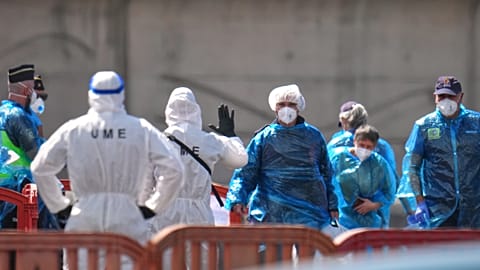
All passengers have now been transferred to their home countries, where they will be subject to their own national protocols.
The World Health Organization's (WHO) recommendations include strict supervision at home or in a quarantine facility for 42 days, starting from 10 May.
However, the WHO’S director general, Tedros Adhanom Ghebreyesus, said that each country has the sovereignty to adapt these recommendations to its national context.
The current protocols vary between countries. While Spanish passengers are quarantined in the military hospital Gomez Ulla in Madrid, those in the Netherlands and Belgium will be self-isolating at home.
“We need to remember they have been on a boat for a month, not visited, and not seeing their loved ones, this needs to be taken into consideration as well,” said Gianfranco Spiteri, head of section global epidemic intelligence and health security at the European Centre for Disease Prevention and Control, in a press conference on Wednesday.
“But of course, the key priority is that it should be safe for the passengers and for their loved ones.”
Spiteri added that countries may decide on where and how to isolate passengers, taking into account the availability of medical facilities, if a passenger has adequate conditions at home to quarantine there, and the accessibility to treatment if needed.
There are two passengers, one in France and one in Spain, who have shown symptoms during the quarantine period and are being treated in the hospital.
The ECDC has also confirmed that all European passengers who were on the ship have been located and are now following the necessary medical and quarantine protocols.
Need for EU coordination
The hantavirus outbreak has activated the emergency coordination and response mechanisms of the European Union.
The outbreak has “reminded us all of our vulnerability when it comes to health,” said European Commissioner for International Partnerships Joseph Sikela in a press conference on Wednesday, during the presentation of the Global Resilience Initiative.
“We all remember the impact of COVID-19 on our lives. The reality is that the frequency and intensity of disease outbreaks are increasing,” he added.
The initiative is the EU’s latest effort to respond to global health challenges through better prevention and timely response to future health threats.
After the outbreak was declared on board the MV Hondius cruise ship and it was decided that the vessel would dock in Spain, the country activated the EU's Civil Protection Mechanism, which helps mobilise assistance among member states to deal with emergencies.
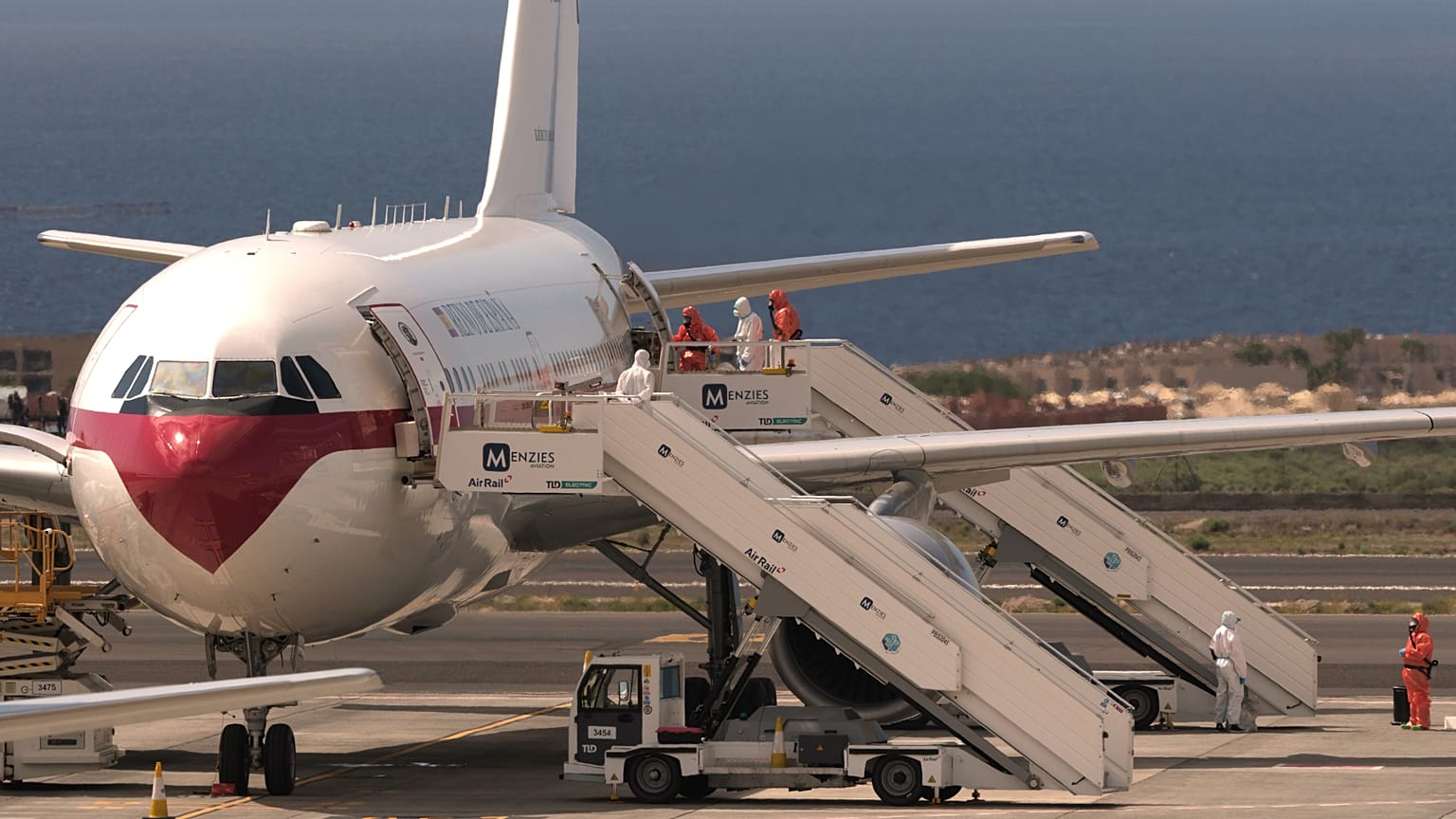
Through this mechanism, several EU countries have contributed to evacuation flights and transport solutions in a coordinated effort.
Evacuation operations coordinated and co-funded by the EU have been conducted by France, the Netherlands, Greece, and Ireland, with Tenerife South Airport designated as the operational hub, according to the European Commission.
“Health threats can easily cross borders, and that is why coordination is key,” said the European Commissioner for Preparedness and Crisis Management, Hadja Lahbib.
Hantavirus is not like COVID-19
Despite often being put in the same sentence, health experts remind that hantavirus is not like COVID-19.
“It is not like COVID at all, it is a different virus, a different disease course,” Luke O’Neill, professor of biochemistry at Trinity College Dublin, told Euronews’ flagship morning show Europe Today.
His advice to people is “don’t worry”.
O’Neill explained that despite the initial fear that the virus had mutated, it has now been proven that it is the already known Andes strain.
“It is all over the media, European citizens are concerned, of course, anything we can do to reassure people is the most important,” O’ Neill added.
The WHO infectious disease epidemiologist Maria Van Kerkhove reassured during a press conference that: "This is not SARS-CoV-2. This is not the start of a COVID pandemic. This is an outbreak that we see on a ship."
Van Kerkhove explained that hantavirus does not spread in the same way as coronaviruses, but rather through "close, intimate contact".
What are the next steps?
The ECDC will now focus its investigations on understanding how the passengers were infected and learning more about the virus itself.
“Our hypothesis currently is that the first case was likely infected while traveling in Argentina in the weeks before boarding the ship, and most likely this passenger transmitted the virus to the other passengers who acquired it on board, and it seems that the incubation periods fit with this process,” said Spiteri.
The agency has confirmed that there is no reason to suspect that it is a new virus or a new strain.
“We hope to learn much more about this event and these virus outbreaks in the future, and this will help us respond and prevent illness”, he added.