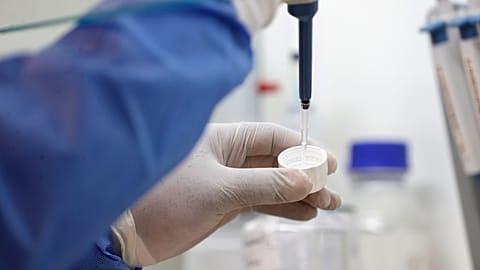






























Menopause is known to mark a major transition in women’s bodies, but its effects on the reproductive system as a whole is less understood. Using artificial intelligence, scientists have now developed an atlas that maps how individual organs change, revealing some unexpected patterns.
Putting on weight, hot flashes at any time of day, waking up with night sweats or living through emotional rollercoasters. These are the most visible and better-known changes to a female body during menopause.
 ADVERTISEMENT
ADVERTISEMENT
ADVERTISEMENT
Women in menopausal and postmenopausal stages of their lives have an increased risk of cardiovascular, metabolic, neurodegenerative, and bone diseases.
An increasing amount of research has studied what exactly happens in the phase that follows the fertility phase. But so far, what this change initiated by hormones does to the reproductive system as a whole has not been discovered.
To better understand how this process impacts health, researchers from the Barcelona Supercomputing Center (Centro Nacional de Supercomputación, BSC-CNS) have developed the first large-scale atlas of female reproductive system ageing, using artificial intelligence.
Ageing looks different from organ to organ
The researchers combined 1,112 tissue images from 659 samples, covering 304 women aged 20 to 70, with gene expression data from thousands of genes. This allowed them to reconstruct how seven key reproductive organs - uterus, ovary, vagina, cervix, breast, and Fallopian tubes - age over time.
The study relied on the supercomputing power of MareNostrum 5 with advanced image-recognition methods to process the data. Using deep learning techniques, they were able to detect visible changes in tissues as well as the underlying molecular processes linked to ageing in each organ.
The result is a detailed, organ-by-organ map of the reproductive system’s ageing process.
What the researchers found was surprising: not all organs age in the same way or at the same speed. The ovaries and the vagina show a more gradual ageing process that begins even before menopause officially starts.
One organ seems to age “abruptly”
In contrast, the uterus seems to undergo more sudden changes around the time of menopause. Another surprise was that even within a single organ, different tissues can age at different rates. In the uterus, for example, the mucosa and the muscular layer do not change in sync. These tissues also appear to be particularly sensitive to the hormonal and biological shifts associated with menopause.
The results show that menopause is not simply the end of the ovary’s reproductive function, said Marta Melé, leader of the transcriptomics and functional genomics group at BSC and director of the study. “Our results show that it acts as a turning point that profoundly reorganises other organs and tissues of the reproductive system, and allows us to identify the genes and molecular processes that could be behind these changes.”
Building on the findings that organs age according to different dynamics, co-first author Laura Ventura added that the research “paves the way for personalised medicine where treatments are tailored to a woman’s specific molecular profile and the specific tissues showing the most age-related distress,” she told Euronews Health.
A simple, non-invasive way to track women’s health
The study also identified molecular signals linked to reproductive ageing that can be detected in blood samples from more than 21,441 women. These biomarkers could allow doctors to monitor the condition of reproductive organs in a non-invasive way. This could help anticipate menopause-related risks, such as pelvic floor complications, without the need for biopsies.
According to the researchers, this opens the door to simpler and more accessible clinical tools for tracking women’s health over time.