















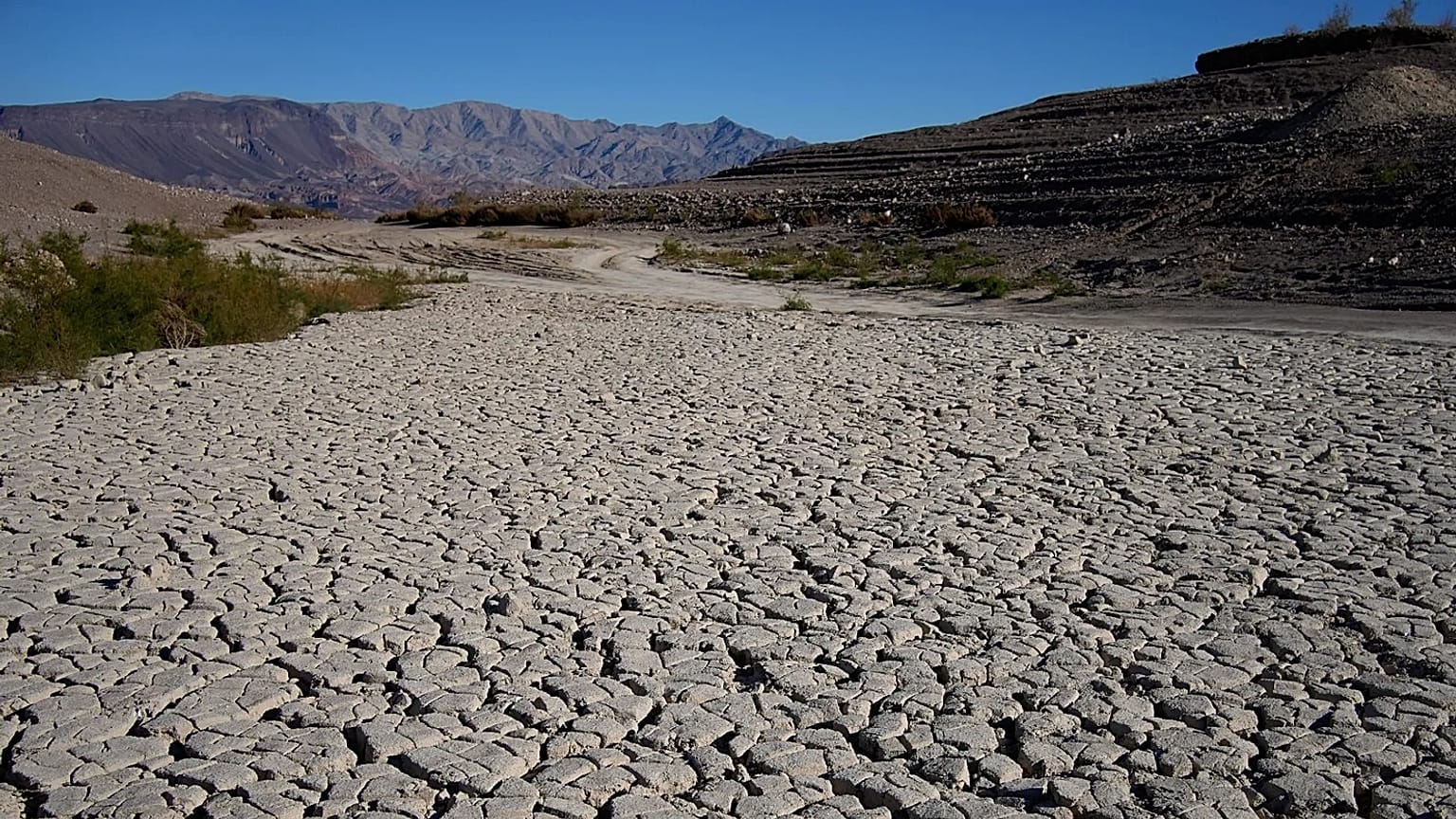













Drought concentrates antibiotic-resistant microorganisms in soil, raising concerns about the impact of climate change on public health, according to a new study.
Drought increases the concentration of antibiotic-resistant microorganisms in the soil, which can significantly impact public health, according to a new study.
 ADVERTISEMENT
ADVERTISEMENT
ADVERTISEMENT
The researchers at the California Institute of Technology (Caltech) in the United States wanted to answer one question: could changes to the natural environments where antibiotics originate be promoting resistance?
Their answer: regional aridity is strongly correlated with the prevalence of antibiotic resistance in clinical settings across more than 100 countries.
Antimicrobial resistance (AMR) is a growing threat responsible for more than 35,000 deaths every year in the European Union alone.
It occurs when bacteria, viruses, fungi, and parasites no longer respond to antimicrobial medicines. While it is a natural process that happens over time through genetic changes in pathogens, it is rapidly accelerating due to human activity, mainly the misuse and overuse of antimicrobials.
"Droughts are creating the same effects as overuse of antibiotics in the clinic: They both drive selection for antibiotic resistance," said Dianne Newman, professor of biology and geobiology at Caltech.
She added that the “striking correlation” discovered in the research motivates the development of better, faster diagnostics in clinical settings, as well as the development of novel therapeutic approaches.
Antibiotics were first discovered in experiments involving soil microorganisms as early as the 1940s, where natural products made by one soil organism were found to inhibit the growth of another, the authors noted.
While many of these natural products have since been modified and developed into the drugs that are prescribed today, soil remains one of the largest sources of new antibiotic producers — an environment so microbially rich that an estimated 99 percent of its microbial inhabitants cannot yet be cultured in a laboratory setting.
According to the researchers, although many antibiotics originate from soil microorganisms, how environmental changes to soil ecosystems might promote resistance is poorly understood.
Xiaoyu Shan, a postdoctoral scholar at Caltech and lead of the study, built a computational program to examine public datasets of microbial sequences in soil samples, looking for the genes that enable the production of diverse antibiotics.
Using clinical surveillance data from 116 countries and land datasets spanning the US, China, and Europe, and encompassing diverse land-use types – including cropland, grassland, forest, and wetland– the researchers found that the average frequency of hospital antibiotic resistance is strongly correlated with the local aridity index.
How does drought cause antibiotic resistance?
The study found that a key driving mechanism for resistance under drought is the concentrating effect: as soil dries out, the natural antibiotics present in it become more potent in the remaining moisture.
But drought also affects antibiotics in subtler ways. Research has shown that the physical stress placed on bacteria by dry conditions can alter how well antibiotics work against them.
Prolonged dry spells may also alter the degradation rates of certain antibiotics in soil, depending on the specific antibiotic; lower moisture levels can either slow down or speed up this process.
"We're interacting with soil all the time, whether it's recreational or simply by inhaling dust," Shan said.
"Importantly, bacteria are able to transfer genes to each other, and antibiotic-resistance genes are known to have a high rate of transfer. With trillions of bacteria in the environment, this is a substantial occurrence."
Why are these findings concerning?
Estimates are not optimistic regarding antimicrobial resistance and aridity worldwide.
“The strong correlation between aridity and clinical antibiotic resistance is concerning, given anticipated climatic changes,” the authors wrote.
Between 2025 and 2050, 39 million deaths are projected to be directly attributable to AMR, according to a 2024 study published in The Lancet.
At the same time, aridity projections suggest that as many as 5 billion people could inhabit drylands by the end of the century.
According to the researchers, the findings linking drought and AMR underline the importance of the One Health approach – the principle that guides health actions based on the interconnectivity of the health of humans, animals, plants, and the environment.
“As climate instability intensifies, such integrative approaches will be critical for anticipating and mitigating the global trajectory of antibiotic resistance,” the researchers noted.