












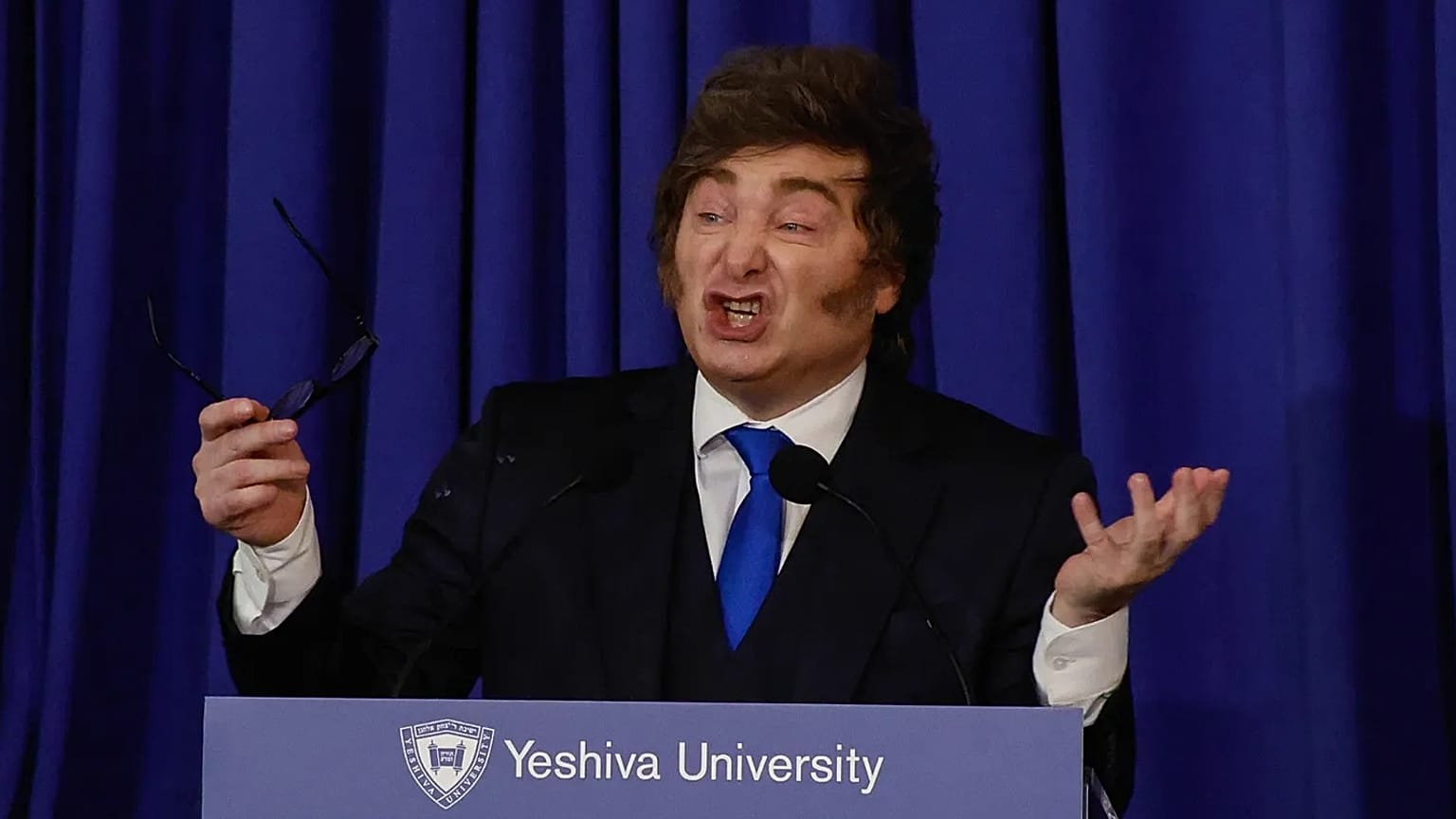














Javier Milei's government finalises Argentina's withdrawal from the WHO, citing health sovereignty. Despite this, it assures that international cooperation in health will continue through bilateral and regional agreements.
Argentina has formally withdrawn from the World Health Organization, one year after formally announcing its decision, as confirmed by Foreign Minister Pablo Quirno at X.
 ADVERTISEMENT
ADVERTISEMENT
ADVERTISEMENT
"Today Argentina's withdrawal from the World Health Organisation (WHO) is effective, one year after the formal notification made by our country," Quirno said, recalling that the notification was made on 17 March 2025 to the UN secretary general. "In accordance with the provisions of the Vienna Convention on the Law of Treaties, the withdrawal takes place one year later," he added.
Despite the withdrawal, the government assured that "it will continue to promote international cooperation in health through bilateral agreements and at regional levels, fully safeguarding its sovereignty and its capacity to decide on health policies."
The decision was justified at the time by President Javier Milei and his team as a response to "profound differences" with the WHO during the COVID-19 pandemic. The President called the agency "nefarious and the enforcement arm of what was the greatest experiment in social control in history".
The announcement provoked criticism from local experts, who considered the measure an "aberration" from a health point of view, while the government defended that it would grant "more flexibility" and "sovereignty" in the implementation of health policies.
Milei's dispute with the WHO follows US President Donald Trump's criticisms of the international body, with the US administration criticising the organisation's mishandling of the COVID-19 pandemic and other global health crises.
The US exited the WHO in January.