













Regions known as blue zones are genuine areas where people live longer and are far more likely to reach 100, according to a new study.
Why do people tend to live longer in some places? It’s a question researchers have been studying for decades.
 ADVERTISEMENT
ADVERTISEMENT
ADVERTISEMENT
So-called “blue zones” are regions where people have unusually long lives, and where there is a disproportionately high concentration of nonagenarians and centenarians.
The term was coined almost 20 years ago, but in recent years the validity of these claims has been challenged, with critics questioning how accurate self-reported ages really are. The exceptionally old ages of “blue zone” residents, they argue, are the result of poor record-keeping or clerical errors.
Now, new research has re-examined the data and confirmed that some of the regions known as “blue zones” are the real deal.
The study, published in The Gerontologist, noted that these areas were not only characterised by unusually large numbers of elderly people, but also by the exceptional health and vigour many of them retain into advanced age.
“Extraordinary claims about longevity demand extraordinary evidence,” said Steven N. Austad, co-author of the study and scientific director at the American Federation for Aging Research.
According to the study’s authors, to be designated as a blue zone, a place must be geographically defined, with an exceptionally high concentration of people living to at least 90 years old over the past 150 years, and records that can validate birth and death certificates.
Prolonged good health is also an important observation, they added, particularly at a time when later life morbidity seems to be expanding in many parts of the world.
While genetics may play a role, research increasingly points toward lifestyle, diet, physical activity, and social connection as central contributors to long life with low rates of chronic disease.
“Validation of the blue zones, we believe, is important because there are valuable lessons to be learned, and inspiration to be gathered, from lifestyles that facilitate long, healthy lives,” the researchers wrote. “Documenting the disappearance of blue zones can be equally informative about lifestyle factors associated with worse later life health.”
This new analysis confirms two geographic areas where age verification supports their denomination as blue zones. It also revisits two other sites that once met the criteria, but can no longer be classified as such.
Which 'blue zones' are confirmed by science?
Sardinia, Italy
The Sardinian blue zone is located across six villages in the east-central part of the island, a region called Ogliastra.
Here, the percentage of centenarians among people born between 1880 and 1900 was approximately five times higher than in the rest of Europe, and three times higher than in Sardinia as a whole. That proportion has only increased since the original analysis.
While globally more women than men reach the age of 100, in this part of the Sardinian island, the proportion is roughly equal.
In the island’s blue zone, the researchers validated the ages of every person over 90 by cross-checking civil and ecclesiastical archives, as well as reconstructing family genealogies to rule out errors or identity switches.
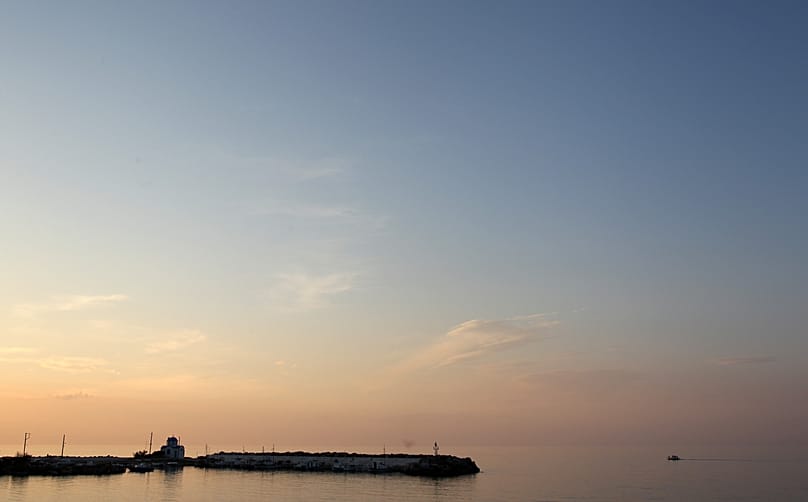
Ikaria, Greece
Ikaria is a small Greek island in the Aegean sea, with a population of about 8,000 people.
When it was first identified as a blue zone in 2009, the percentage of residents aged 90 or older was around three times the national average, and surveys confirmed an unusually high number of nonagenarians and centenarians on the island.
Blue zones that no longer are
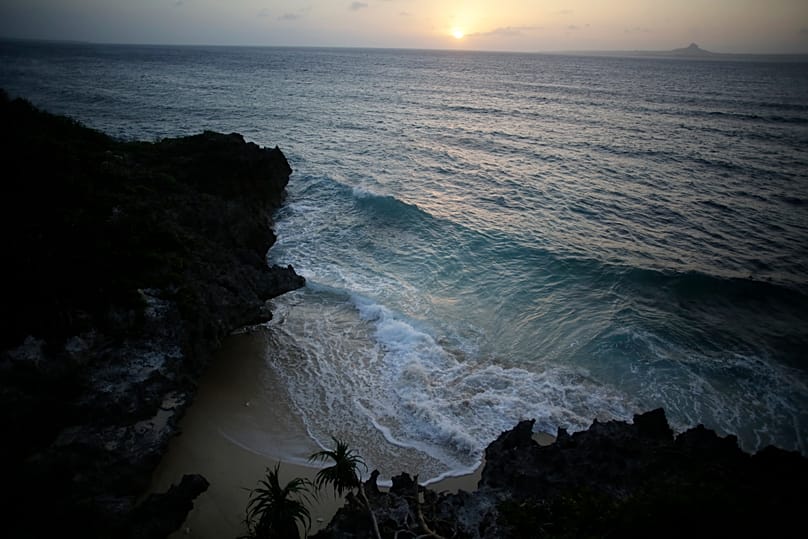
Okinawa, Japan
In 1976, the Japanese island was first reported to have a percentage of centenarians seven times higher than the rest of the country.
But the population of Okinawa, which in 1999 was confirmed to include the world’s longest-living people, no longer meets blue zone requirements, researchers found.
Only cohorts born before 1940 fulfilled the criteria; by 2006, the centenarian rate had fallen to only about twice that of the rest of Japan.
Since it was first designated as a blue zone, wars and massively increasing westernisation, much of it linked to the long-standing United States military presence on the island, appear to have eroded islanders' health, the study reported.
Nicoya, Costa Rica
Nicoya is another blue zone that appears to be shrinking. It was defined by men born before 1930, many of whom lived to reach the age of 100. But those born after are less likely to become centenarians, for reasons that are yet unclear, according to the study.
The Nicoya blue zone spans five neighbouring cantons – Santa Cruz, Carrillo, Nicoya, Nandayure, and Hojancha – in the northern part of the Nicoya Peninsula in Costa Rica.
By 2010, new analyses found the original Nicoya blue zone had shrunk to about one-quarter of its original size, while a new area of exceptional longevity had emerged in three provinces in northern Costa Rica, near the Nicaraguan border.
Common features and new blue zones
A common theme of the four classic blue zones is isolation, the study showed. Sardinia, Ikaria, and Okinawa occupy entire islands, or large sections of islands, while Nicoya lies on a peninsula that until recent times was difficult to access.
According to the researchers, this relative isolation has allowed in each case for the area to develop its own language or dialect, as well as possible cultural and genetic uniqueness.
The researchers not only found how some of these areas shrink, they also highlighted new blue zones emerging.
Candidate regions in the Netherlands, China, and the Caribbean Island of Martinique are currently undergoing validation before they can be widely accepted as new, modern blue zones.