



























The Catalan director condemns artificial intelligence and global ecocide in a letter read at her tribute, donating 'anachronistic' items to the Caja de las Letras, to be reopened in fifty years.
A cassette with 18 songs in which Camarón, Lucho Gatica and, very significantly, the Catalan rumba of "La lista de la compra" by La Cabra Mecánica and María Jiménez all rub shoulders. A personal collage, with a distinctly Lynchian feel, intentionally devoid of any explicit meaning. And a letter written with a Bic biro, with which Isabel Coixet underlines the handmade nature of her gesture and, in passing, pays tribute to torrijas, clay water jugs and open-air summer cinemas.
 ADVERTISEMENT
ADVERTISEMENT
ADVERTISEMENT
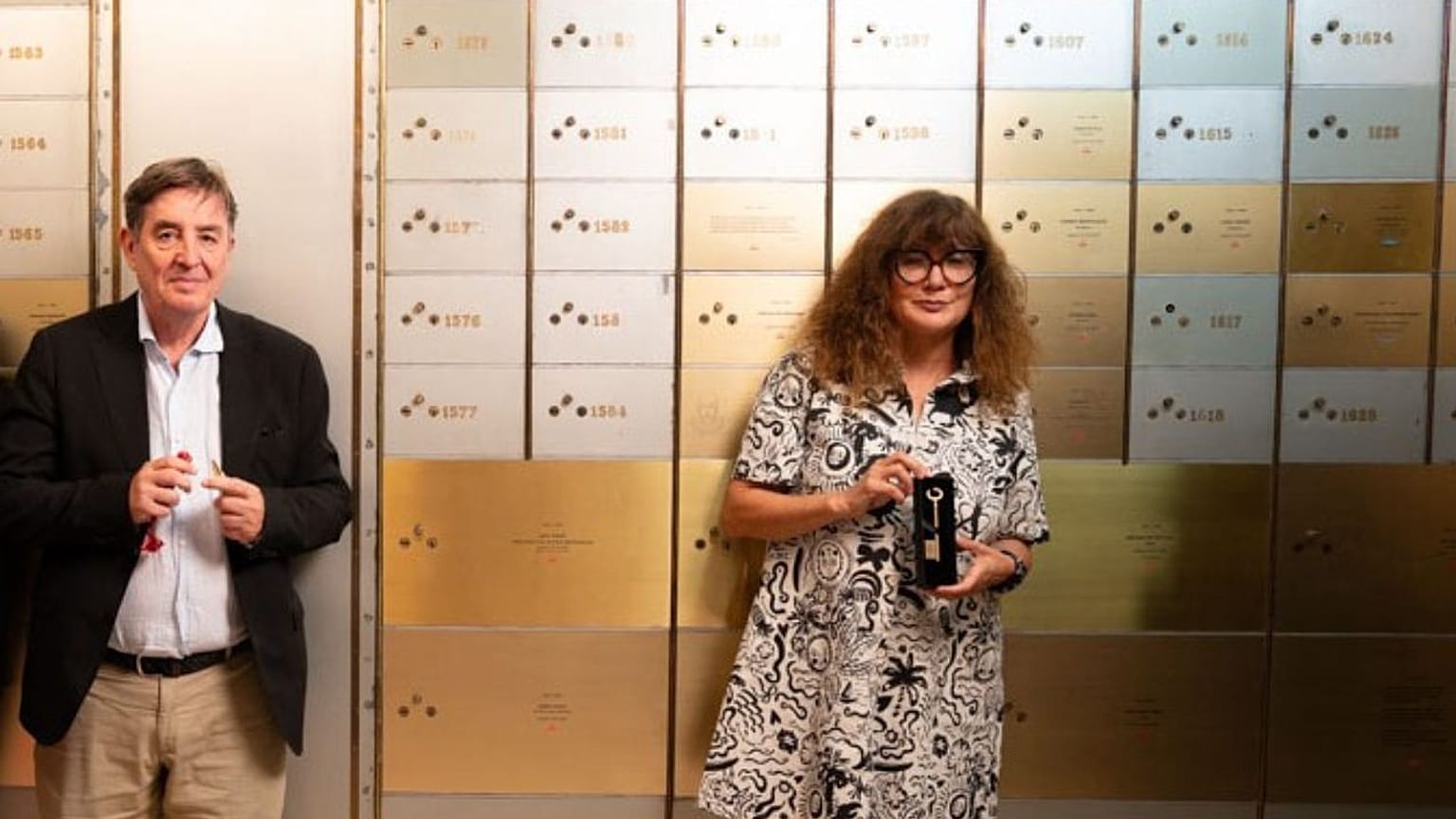
The filmmaker (Sant Adrià del Besós, 1960) nostalgically champions, in short, a present that is on the verge of extinction, which may have vanished altogether by 2076. That is the year when box 1586 at the Instituto Cervantes will be opened, where the honouree has deposited these objects as part of her legacy to the public institution devoted to promoting the Spanish language.
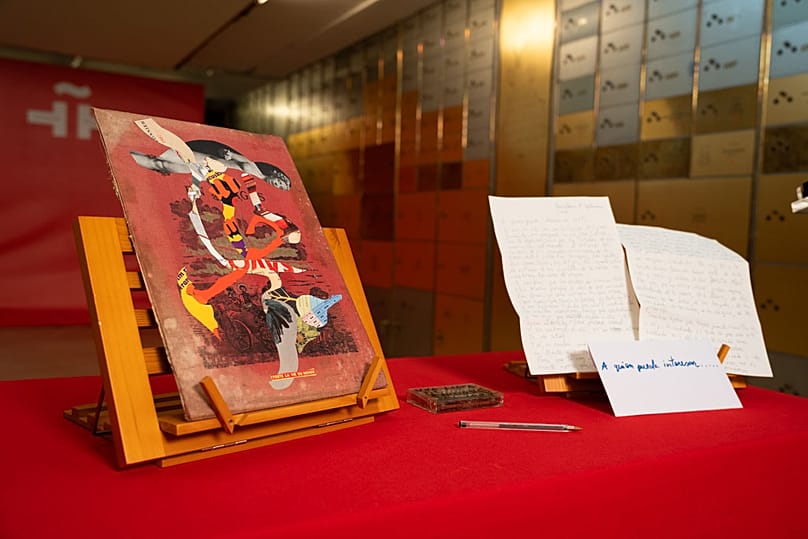
"Understanding makes the mind lazy," says Florence Green in "The Bookshop". Coixet (historian, publicist, screenwriter and standard-bearer of the third wave of Spanish women directors) quoted her in her speech to explain why she chose not to assign any meaning to the collage in her Cervantes legacy, created on the cover of an abandoned 1913 book.
"I am writing this with a Bic biro, my favourite. I wonder if they still exist. You, whoever you are, do not be taken in by treatises on the wonders of the world. The Bic biro is one of humanity's great inventions," she writes in her letter, which was read out during the ceremony at the Institute. Not everything is a rallying cry: Coixet also takes the opportunity to rail against speciality coffee chains. "I hope," she wishes her anonymous reader, "that you never have the misfortune of coming across them."
Perhaps for that reason, among the selection of songs Coixet is sending into the future, she has chosen to highlight "La lista de la compra". "It seems to me that in 50 years' time all the things that song talks about - the kitchen table covered in crumbs, those unbearable mixed plates, sweat, scrubbing, scouring - may well be a thing of the past."
The Catalan director, who is to receive the Antonio de Sancha Award 2026 from the Madrid Publishers' Association ("for her outstanding work in bringing literature closer to the general public and for her defence of bookshops as spaces of cultural resistance"), has immersed herself in the world of film adaptations in her penultimate creative phase. In the already mentioned "The Bookshop", in a kind of metafiction, the protagonist defends her new business in rural England as both an exercise and a weapon of liberation.
The event continued with a conversation between Coixet and the former president of the Association of Women Filmmakers and Audiovisual Media, Cristina Andreu, in which the two looked back over their prolific careers. Earlier, the director of the Cervantes, Luis García Montero, had also dedicated a brief speech to her: "Her films have travelled far and wide, but it would be a mistake to confuse that international trajectory with simple geography, because she has turned freedom and travel into a way of working her way towards the heart of things."
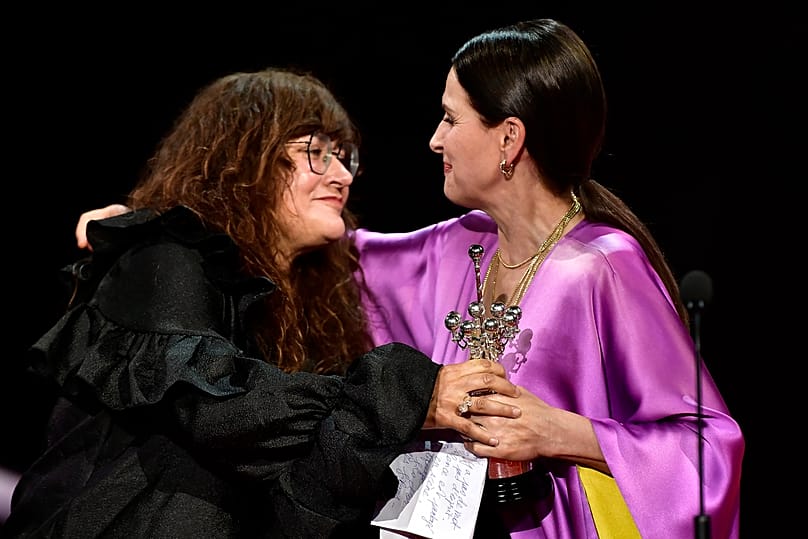
The filmmaker has been nominated four times for the Golden Bear at the Berlin Film Festival, and once (for "Map of the Sounds of Tokyo") for the Palme d'Or in Cannes. Over the course of her career she has also won eight Goya Awards, as a director, screenwriter and documentarian. Since 2015 she has been a Chevalier of the Order of Arts and Letters in France, and she has received Spain's National Film Award as well as the Gold Medal of Fine Arts in 2009.
The Caja de las Letras at the Institute stores almost 1,800 tributes in the vault at its Madrid headquarters, a tradition that began in 2007 for all kinds of figures - individuals and institutions, living or dead - from the Spanish-speaking cultural world.