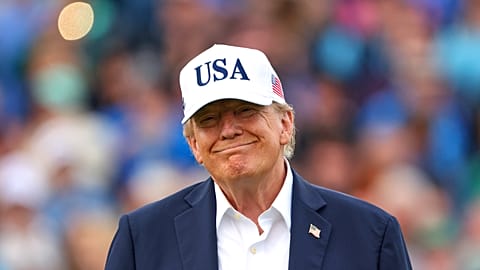
















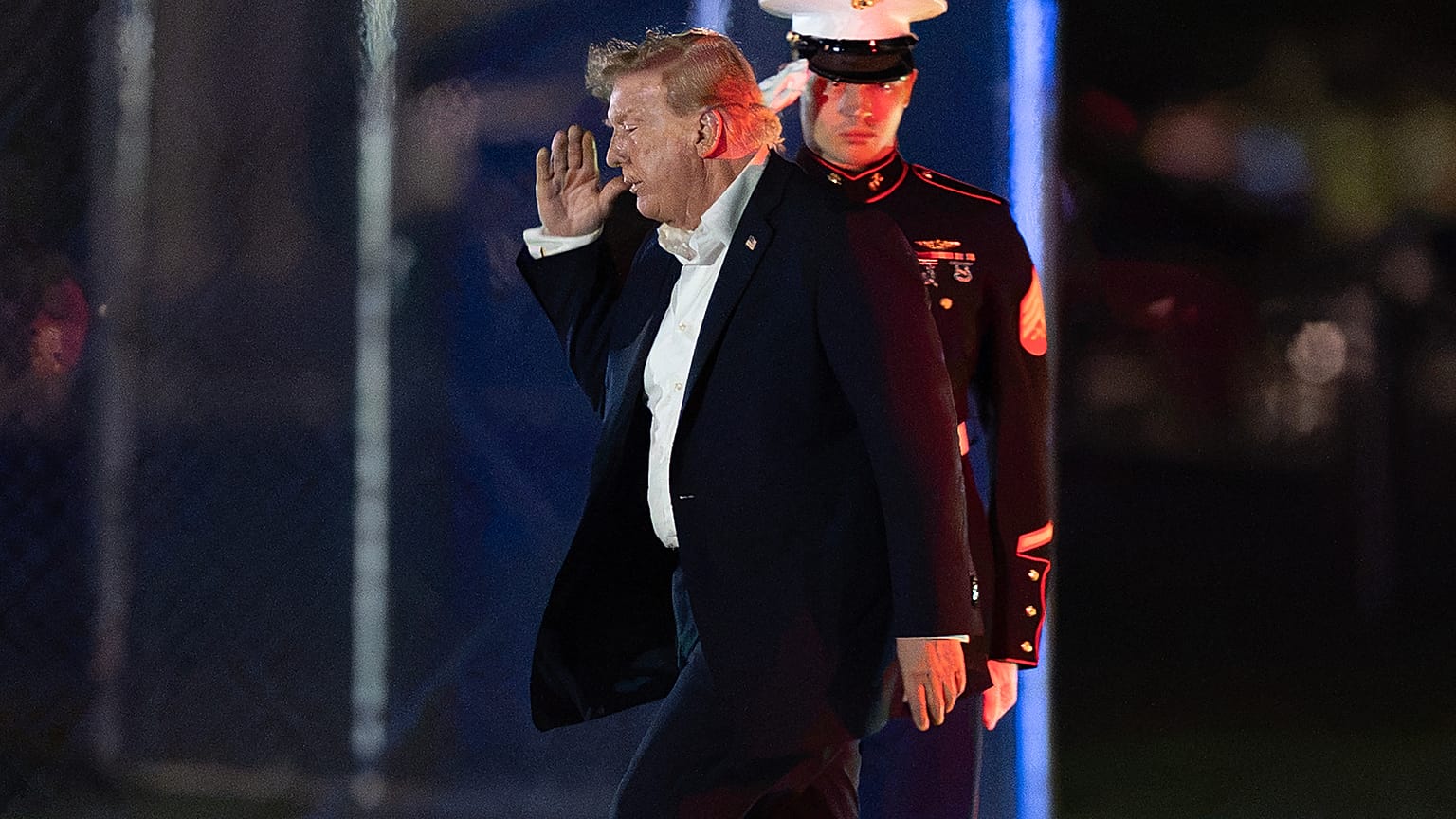













US President Donald Trump has accepted ethics restrictions he had long resisted, removing the final obstacle to the CLARITY Act, the most significant crypto legislation ever attempted in the US, which now faces a decisive Senate vote on Tuesday.
The bill that would finally tell American crypto companies which regulator governs them is moving again.
 ADVERTISEMENT
ADVERTISEMENT
ADVERTISEMENT
Republican senators released what they called the final text over the weekend, containing a revised ethics package that US President Donald Trump has agreed to after months of deadlock.
The CLARITY Act, formally the Digital Asset Market Clarity Act, would divide supervision of digital assets between the US Commodity Futures Trading Commission and the Securities and Exchange Commission, replacing a fragmented system in which classification has largely been settled through enforcement actions and litigation.
The House passed its version in July 2025 by 294 votes to 134, and the sticking point since then was Trump himself.
The US president's financial disclosures showed crypto-linked income of between $1.4 billion (€1.2bn) and $2.2 billion (€1.9bn), including the TRUMP memecoin and World Liberty Financial, a decentralised finance venture tied to his family.
Democrats wanted enforceable restrictions that the White House resisted until now.
Under the agreed text, federal officials and their spouses must divest significant crypto holdings or place them in a blind trust, and are barred from issuing or sponsoring digital assets while in office.
State attorneys general will be able to enforce those rules, a concession the White House had previously rejected because it exposes the president to prosecutors he does not appoint.
US Senator Cynthia Lummis, the Wyoming Republican who has led crypto legislation in the Senate since co-authoring the Responsible Financial Innovation Act in 2022, published the text alongside Banking Committee chair Tim Scott and Agriculture chair John Boozman, whose panels oversee the two agencies the bill divides power between.
In a social media post, Lummis stated that Trump "voluntarily agreed to new ethics provisions."
Last week, US Treasury Secretary Scott Bessent had already pressed lawmakers publicly to get the bill moving.
Markets move but the vote is only procedural
Bitcoin rose 1.3% on Monday morning to roughly $77,700 following the news.
The sharper move came in HYPE, the token behind Hyperliquid, up more than 3% to around $80.
Hyperliquid runs the largest decentralised exchange for perpetual futures, contracts with no expiry date, and handles a substantial share of all on-chain derivatives volume.
Wall Street has warmed to it quickly, with three US spot ETFs launched in May and S&P Dow Jones licensing the S&P 500 for a perpetual contract. Yet, American users still cannot trade on the platform directly and legislation defining how decentralised protocols are regulated is precisely what would change that.
However, caution is warranted on timing as Tuesday's vote is a cloture motion, which merely opens debate and requires 60 votes.
Republicans hold 53 seats, so at least seven Democrats must cross over, and amendments, final passage and House agreement would all still need to fit into a shrinking calendar before the midterm campaign.
Senator Lummis has warned that failure now could delay the legislation until 2030, leaving it in the hands of the next US administration.
Europe already has its rules and is revising them
As it is often the case, the EU moved first on regulation.
The Markets in Crypto-Assets Regulation, known as MiCA, has applied across the bloc since December 2024, giving Europe a single licensing regime while Washington argued about jurisdiction.
Asset-referenced tokens and e-money tokens, the stablecoins pegged to currencies or baskets of assets, face the strictest treatment, with issuers required to hold reserves, publish a whitepaper and obtain authorisation before going to market.
Everything else, from Bitcoin to smaller tokens, falls under lighter disclosure rules.
Separately, exchanges, custodians and brokers must register as crypto-asset service providers, subject to capital requirements, governance standards and rules on handling client funds.
The regime's main attraction for business is "passporting" as a firm licensed in one member state can operate across all 27 without seeking approval again, the same principle that underpins European banking and fund management.
MiCA also bans insider dealing and market manipulation in crypto, and requires providers to warn customers that their holdings may not be protected by compensation schemes.
However, this framework is now under review.
The European Commission is running a consultation on how MiCA has worked in practice, which closes on 30 September after a one-month extension.
Among the questions is how the rules should handle decentralised finance, the same issue holding up the American bill.