
















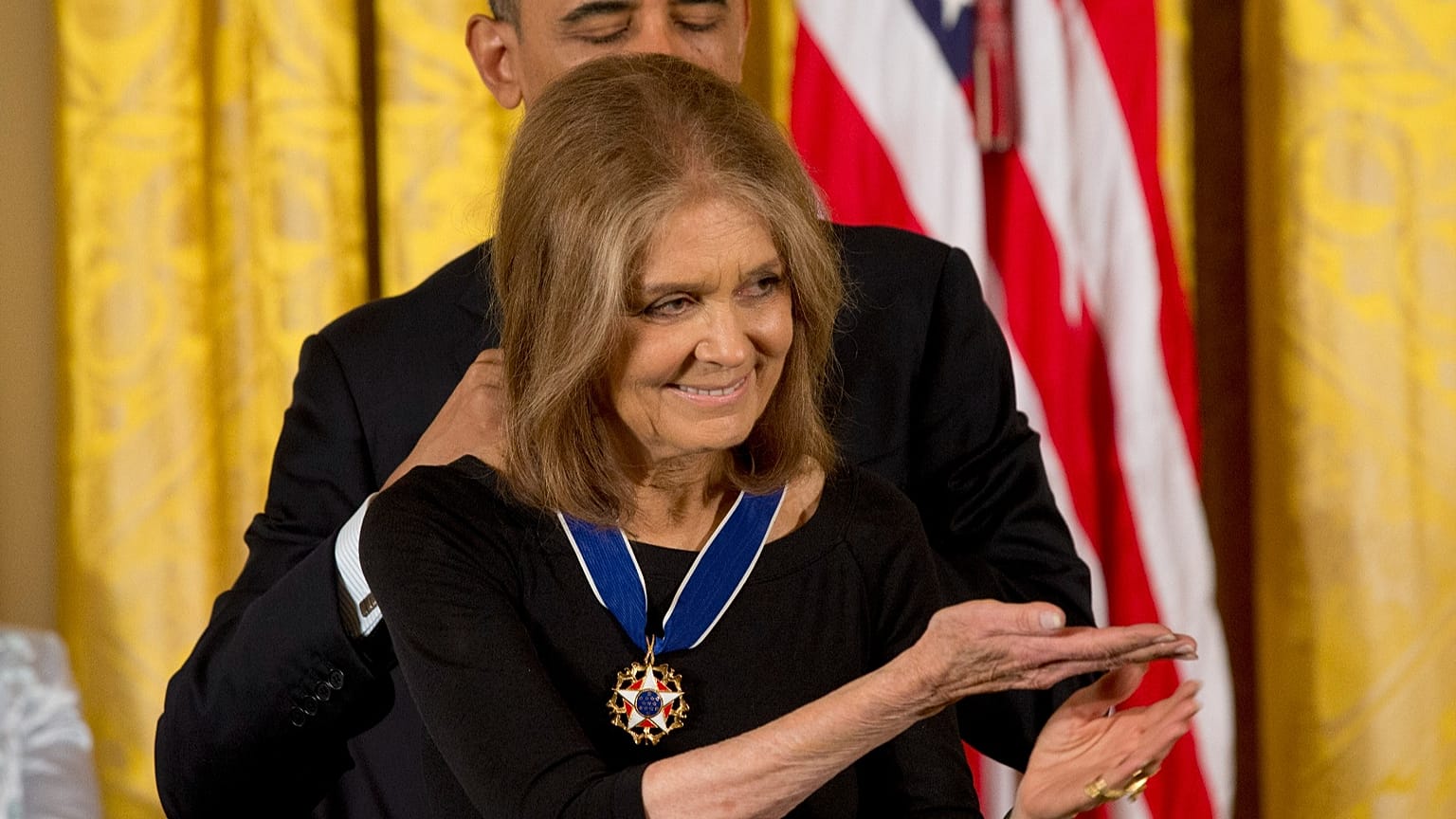













Gloria Steinem, the feminist trailblazer, writer and activist who helped define the modern women’s movement in the US, has died at 92.
Gloria Steinem, the celebrated author, feminist activist and one of the most famous voices of the US’ women’s movement, has died aged 92.
 ADVERTISEMENT
ADVERTISEMENT
ADVERTISEMENT
She died on Wednesday at her home in New York City, according to her and her foundation’s social media pages.
“Gloria’s near-century on earth were years well-lived, and she continued working for equality until the very end,” read the statement. “Gloria’s greatest gift was her ability to listen to others, to make others feel seen and heard. Her words, actions, and example gave people permission to be their truest selves. Gloria lived true to her independent spirit, always with curiosity and a great sense of humor.”
The statement continued: “She spent her recent years doing the two things she loved most: being in community with others and writing. She has welcomed hundreds of guests into her living room for Talking Circles, a tradition she insisted will continue long after she is no longer with us. As Gloria wrote in her forthcoming book, 𝘈𝘯 𝘜𝘯𝘦𝘹𝘱𝘦𝘤𝘵𝘦𝘥 𝘓𝘪𝘧𝘦, “I have now lived for more than fifty years in this brownstone, in rooms that have witnessed lives before mine, and will know others after I am gone.” This book, along with her commitment to her home becoming a center for social justice movements, are among the many gifts Gloria has given the world with the hope they have ripple effects for generations to come. Gloria often quoted the adage: “The flap of a butterfly’s wing can change the weather hundreds of miles away.”"
It concluded: “In lieu of flowers, Gloria has asked that those wishing to honor her with a gift, may make a donation to Gloria’s Foundation.”
No cause of death was given, but Steinem battled breast cancer in the 1980s and was diagnosed with trigeminal neuralgia, a painful nerve condition, in the 1990s.
Born on 25 March 1934, in Toledo, Ohio, Steinem was one of the leading figures of "second-wave feminism" and one of the pioneers of the women's movement in the US in the 1960s.
She began her career as a freelance journalist in New York and got her breakthrough in 1963 when she went undercover as a Playboy Bunny for Show magazine. Her exposé revealed the working conditions faced by women in Hugh Hefner’s clubs.
In 1968, Steinem helped found New York magazine, where she worked as an editor and political writer. She published an article, "After Black Power, Women's Liberation" the following year, a piece which brought her national attention and positioned her as a feminist leader.
Steinem began to dedicate her life to causes such as reproductive freedom and domestic violence prevention, as well as workplace and political gender inequalities.
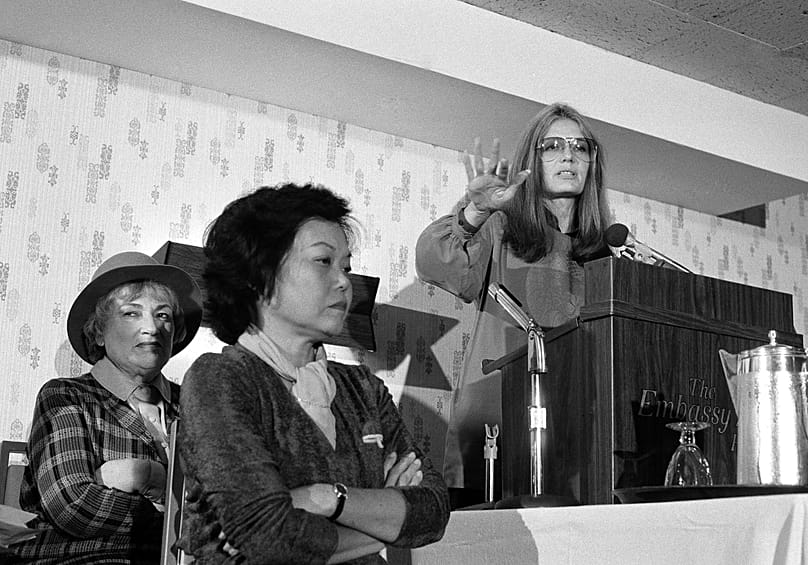
In 1971, she joined fellow activists Bella Abzug, Betty Friedan, Shirley Chisholm in establishing the National Women’s Political Caucus (NWPC), aiming to increase women’s participation in politics.
She delivered the famous speech "Address to the Women of America", one mostly remembered for the following quotation: "This is no simple reform. It really is a revolution. Sex and race because they are easy and visible differences have been the primary ways of organizing human beings into superior and inferior groups and into the cheap labor on which this system still depends. We are talking about a society in which there will be no roles other than those chosen or those earned. We are really talking about humanism."
A year later, she co-founded Ms. magazine, which became one of the defining publications of the feminist movement, bringing topics like domestic violence, sexual harassment and abortion into the mainstream. Steinem herself had an abortion in 1957 when the procedure was still illegal - something she only publicly revealed in 1969.
Steinem went on to found other organizations including the Ms. Foundation for Women and the Women’s Media Center.
Steinem was also a prolific author, with books like “Outrageous Acts and Everyday Rebellions” (1983), “Revolution From Within: A Book of Self-Esteem” (1992), “Moving Beyond Words” (1993), “The Truth Will Set You Free, But First It Will Piss You Off!” (2015) and her celebrated memoir “My Life on the Road” (2016).
In 1998, she faced controversy for an opinion piece for the New York Times, in which she supported then-President Bill Clinton in the face of sexual harassment allegations. “He is not guilty of sexual harassment,” she wrote, only “a gross, dumb, and reckless pass at a supporter during a low point in her life”.
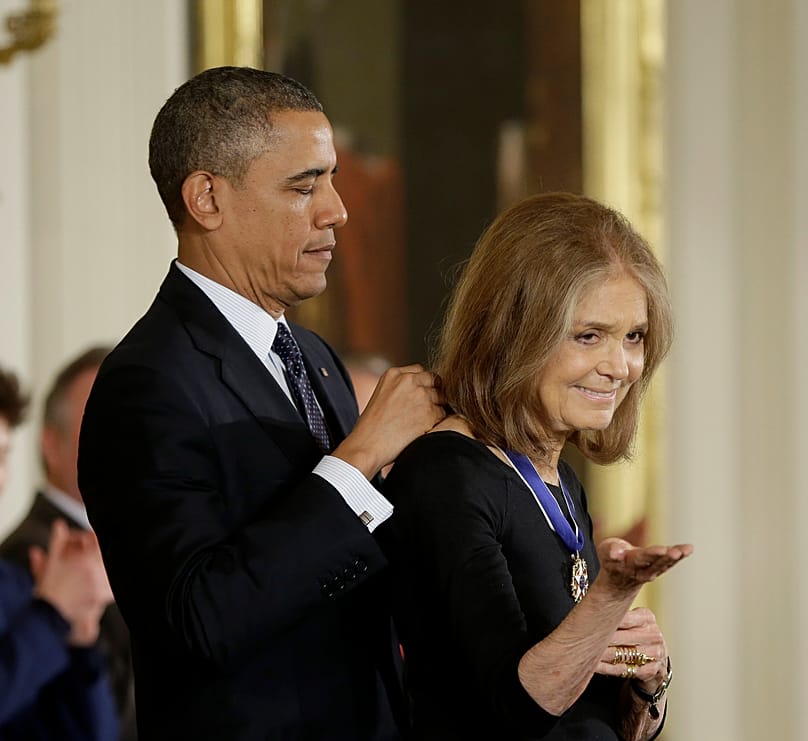
In 2013, President Barack Obama awarded her the Presidential Medal of Freedom, the highest US civilian honour.
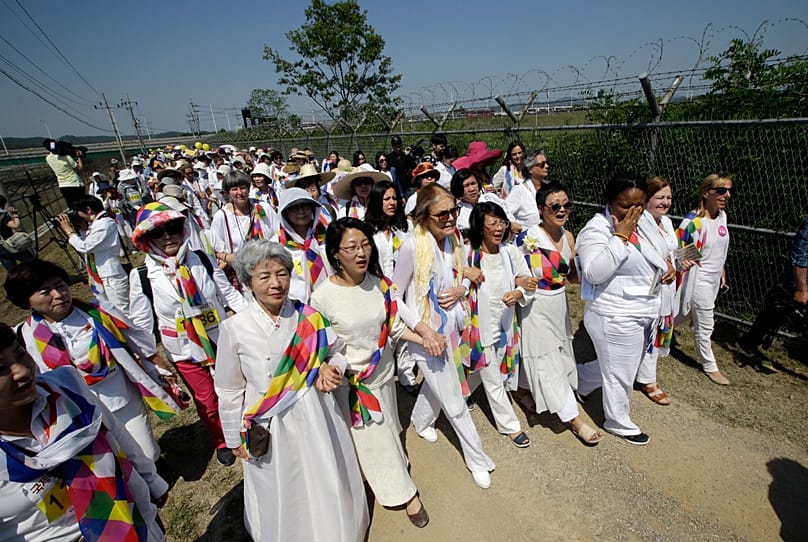
Steinem remained an outspoken advocate for equality into her 90s and continued speaking and writing about women’s rights, including supporting female reproductive rights, LGBTQ rights, and the Times Up movement.
In September 2020, while Donald Trump was president, Steinem told The New York Times: "The most painful criticism or attacks come from people who share your values, not people who don’t share your values. If Trump spoke well of me, I would shoot myself.”
After years of dismissing marriage as an institution that ruined relationships, Steinem married environmental activist David Bale in 2000. She remained close with her stepson, the actor Christian Bale, after his father’s death in 2003.
When asked why she changed her mind about marriage, she told National Geographic: “If I had married when I was supposed to get married, I would have lost my name, my legal residence, my credit rating, many of my civil rights." She added: “That’s not true anymore. It’s possible to make an equal marriage.”
She told The New York Times in 2020: “Even if I live to 100, which I have every intention of doing, it’s not that long left. I just hope that I don’t die saying, ‘But! Wait!’."